Hans Bol
1534–1593 · Habsburg Netherlands · Northern Mannerism, Renaissance, Flemish art
The story
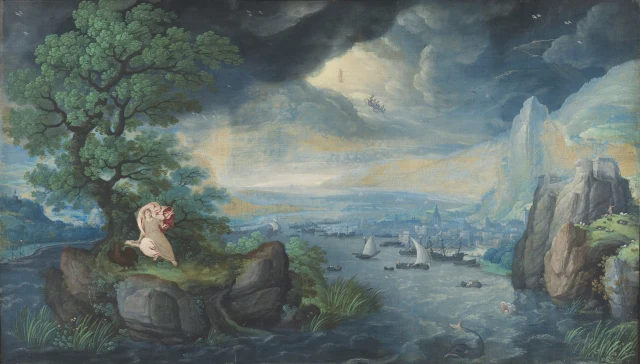
Hans Bol came out of Mechelen, a Flemish town with an odd local specialty: painting in watery distemper on cloth rather than oil on panel, a cheap craft he learned as a boy from his two uncles. He carried that lightness of hand into something rarer, small jewel-like watercolour miniatures of landscapes and Bible scenes, packed with tiny figures and painted so finely they were meant to be held close and studied.
The wars of religion uprooted him. When Spanish troops besieged Antwerp in 1584, Bol left the southern Netherlands for good and settled in Amsterdam in the new Dutch Republic. He said he gave up the miniatures there because they were too easy to copy without his leave.
His real mark was made through print. His many landscape designs, engraved and sold, and his prints after Pieter Bruegel the Elder helped carry the Flemish way of seeing the countryside north, where the next generation of Dutch painters built a whole tradition of landscape on it. His pupil Frans Boels and his own workshop kept the manner alive.