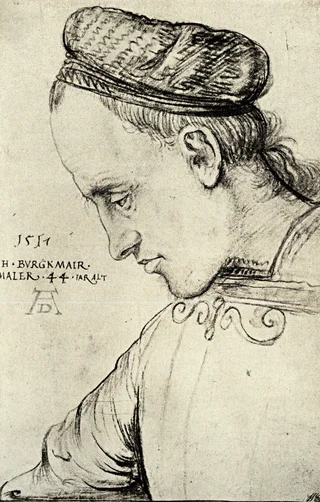
Hans Burgkmair the Elder
1473–1531 · Holy Roman Empire · Renaissance, Northern Renaissance
The story
The Holy Roman Emperor Maximilian I wanted a monument grander than any stone could give him, so he ordered one printed on paper. His Triumphal Procession, designed in the 1510s, was an enormous parade of woodcuts meant to be pasted in a row along a wall: musicians, hunters, knights, peoples from distant lands, wagon after wagon of the emperor's glory. Hans Burgkmair, a painter and printmaker from the south German city of Augsburg, cut nearly half of its 135 sheets.
Burgkmair had trained under Martin Schongauer, the great engraver of the upper Rhine, and had almost certainly crossed the Alps into Italy. He came back with something rare north of the mountains, an easy command of Italian Renaissance form, which he grafted onto German craft. Around 1508 he helped pioneer the chiaroscuro woodcut, printing an image from two or more blocks so that flat areas of colour did the work of light and shadow.
He worked for Maximilian for over a decade, until the emperor's death in 1519 halted the great projects. Of the more than 800 woodcuts later credited to him, most were never framed at all. They were made to illustrate books.
Works
6 works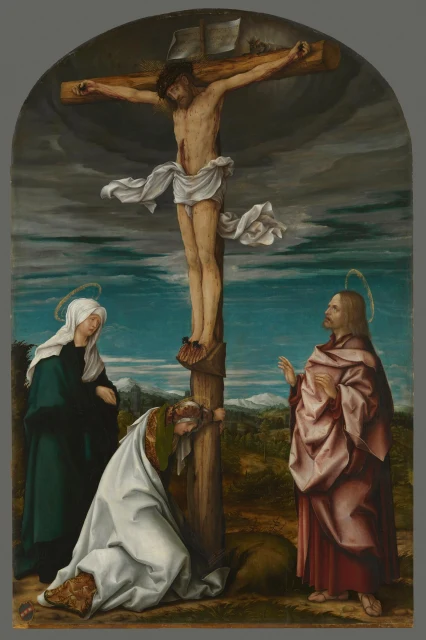 Crucifixion Altarpiece, Centre Panel: Christ on the CrossHans Burgkmair the Elder, 1519
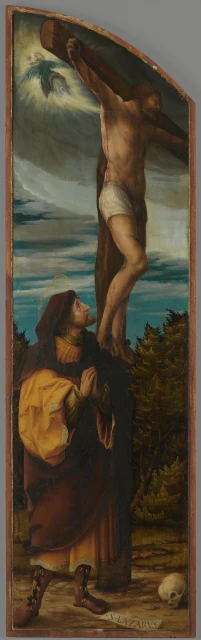 Crucifixion Altarpiece, Left Wing, Inner Face: The Good Thief and St LazarusHans Burgkmair the Elder, 1519
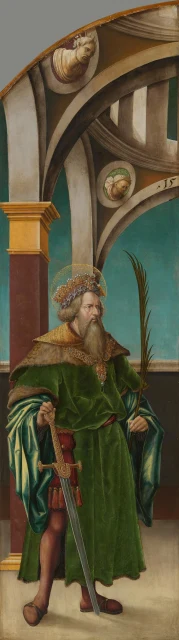 Crucifixion Altarpiece, Left Wing, Outer Face: St SigismundHans Burgkmair the Elder, 1519
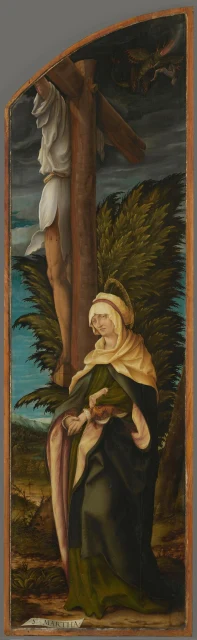 Crucifixion Altarpiece, Right Wing, Inner Face: The Bad Thief and St MarthaHans Burgkmair the Elder, 1519
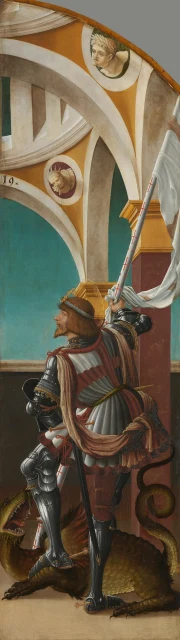 Crucifixion Altarpiece, Right Wing, Outer Face: St GeorgeHans Burgkmair the Elder, 1519
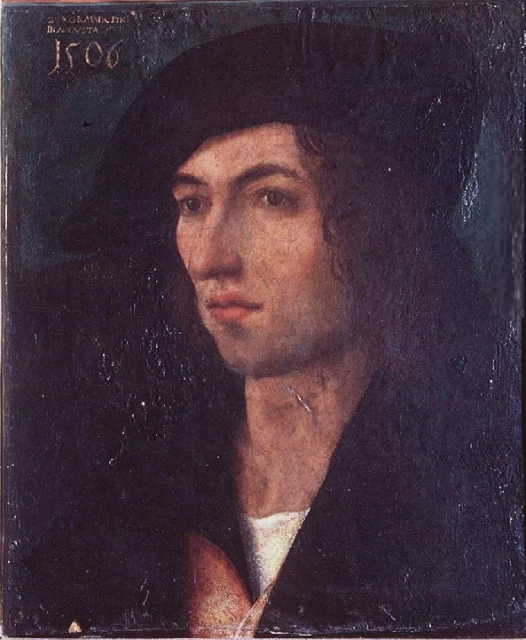 Portrait of a manHans Burgkmair the Elder, 1506