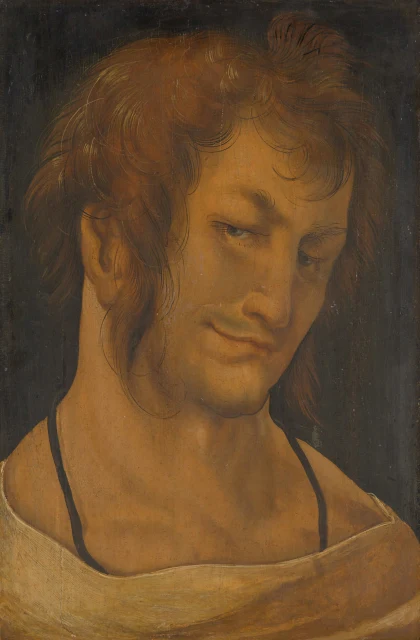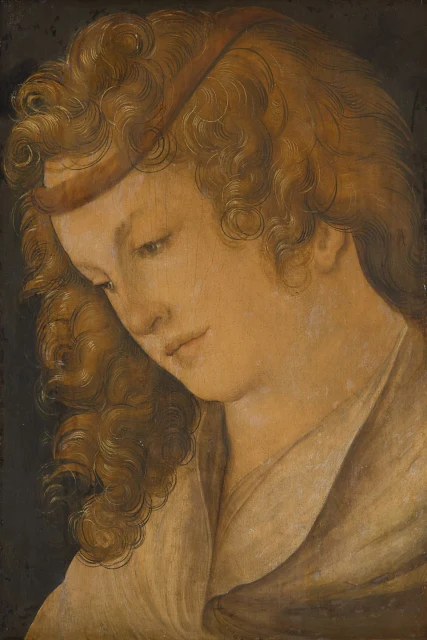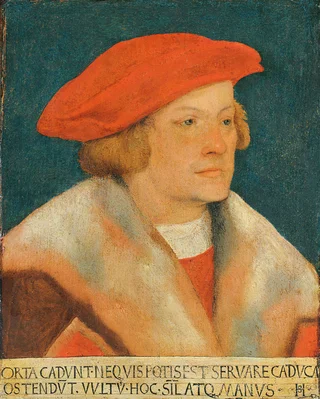
Hans Leonhard Schäufelein
Holy Roman Empire · Renaissance, Northern Renaissance, German Renaissance
The story
Around 1503 a young Hans Leonhard Schäufelein joined the workshop of Albrecht Dürer in Nuremberg, working beside two other young painters, Hans Baldung and Hans von Kulmbach. Dürer trusted him enough to leave him a whole altarpiece to carry out from his designs while the master travelled in Italy.
When Schäufelein set up on his own he became one of the hands behind Emperor Maximilian I's vast printed monuments to himself, the illustrated romance Theuerdank, the Weisskunig, and the huge woodcut Triumphal Procession, projects that set dozens of designers carving the emperor's glory into woodblocks.
In 1515 he settled in the small Swabian town of Nördlingen and ran his own shop there for the rest of his life, turning out altarpieces and well over a thousand woodcut designs. He marked many of them with a little rebus: a small shovel, a Schäuflein, a pun on his own name.