Henri Regnault
1843–1871 · France · Orientalism
The story
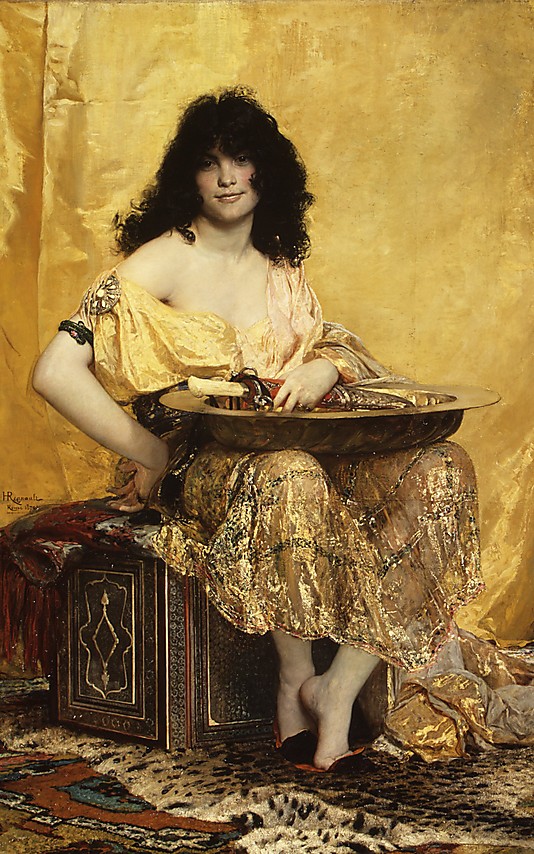
In the spring of 1870 Paris fell for a painting. Henri Regnault, not yet 30 and fresh from the Prix de Rome, the state prize that sent its winners to study in Italy, showed a young woman in gold and coral satin, a sword and a charger resting in her lap. He called her Salomé, the biblical dancer who asked for a man's head. The colour and swagger of it made him the most talked-about young painter in France. He had been working in Spain and Morocco, hungry for their strong light and colour, and that heat is all over the picture.
Within months the country was at war with Prussia, and Paris was under siege. As a Prix de Rome laureate Regnault was exempt from military service. He enlisted anyway. On the 19th of January, 1871, in a failed sortie from the city at Buzenval, he was shot and killed. He was 27.
His friend the composer Camille Saint-Saëns wrote a Marche héroïque in his memory. The Salomé that had made his name now hangs in the Metropolitan Museum in New York.