Henry Ossawa Tanner
1859–1937 · United States · Realism
The story
In 1891 Henry Ossawa Tanner boarded a ship for Paris, and he mostly stayed. He was the son of a minister in the African Methodist Episcopal Church, and he had trained in Philadelphia under Thomas Eakins, the most demanding American painter of the day. In the United States of the 1880s a Black artist met a wall no talent could climb. In France the juries looked at the canvas first.
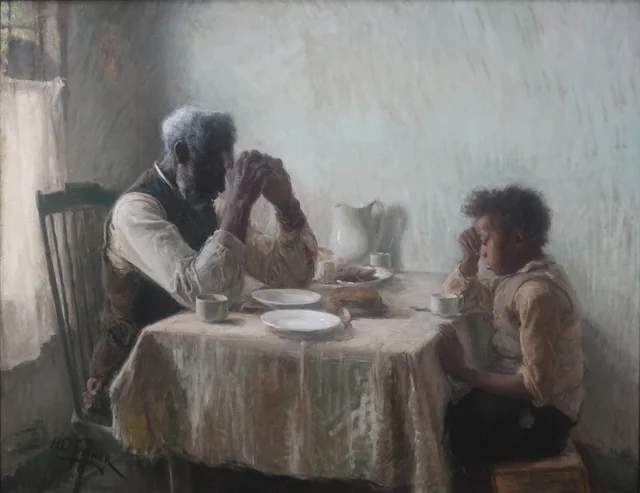
Before he left he painted The Banjo Lesson, in 1893: an old man guiding a boy's hands on the strings, in a plain room, treated with the seriousness usually reserved for gods and generals. It may be the first painting by an African American to show Black life as ordinary, interior, and worth a careful look.
Paris rewarded him. His Resurrection of Lazarus, shown at the Salon of 1897, won a medal and was bought by the French state for the Luxembourg gallery, the house collection of living artists. From then on Tanner painted mostly biblical scenes, drenched in a deep blue light he brought back from trips to the Holy Land. He settled in France for good and died there in 1937, honoured as the first African American painter to win an international name.