Herbert James Draper
1863–1920 · United Kingdom of Great Britain and Ireland · Classicism
The story
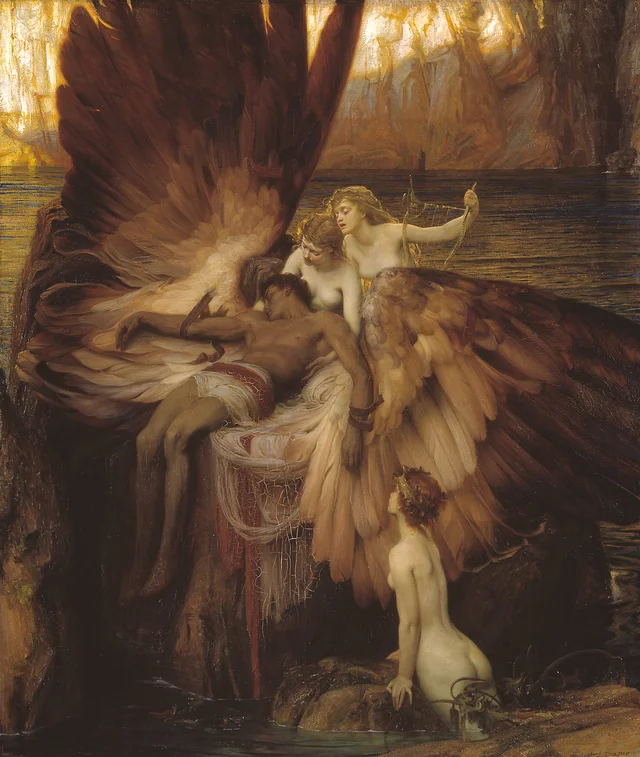
Herbert Draper painted the moment after the fall. In his best-known picture, The Lament for Icarus of 1898, the boy who flew too near the sun lies dead on a rock by the sea, his great scorched wings still on him, while three sea nymphs bend over the body. The Tate bought it straight from the Royal Academy show, and two years later it took a gold medal at the Paris world's fair of 1900.
Draper came late to a fashion that was already fading. He worked at the tail end of the Victorian taste for classical subjects, the world of Frederic Leighton and Lawrence Alma-Tadema, painters who dressed Victorian Britain in Greek and Roman scenes. He had earned his place the hard way, winning the Royal Academy's gold medal and travelling scholarship in 1889 and spending the years after it studying in Rome and Paris.
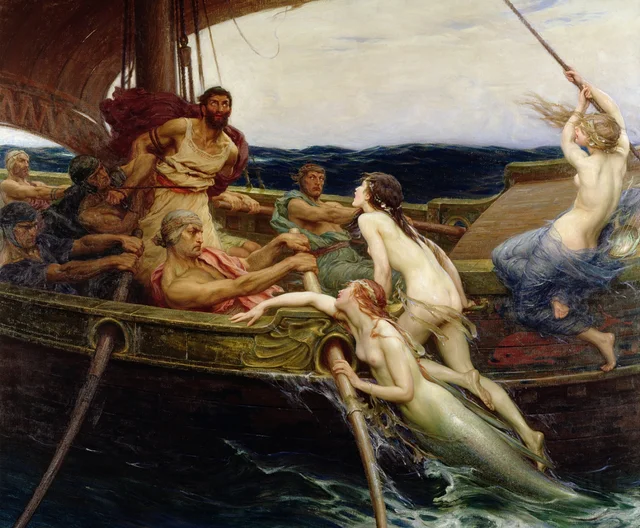
Greek myth stayed his subject. He returned to the sea again and again, in canvases like Ulysses and the Sirens of 1909, with its sirens clambering over the side of the boat. After about 1910 the taste for such pictures collapsed, and Draper spent his last decade largely on portraits.