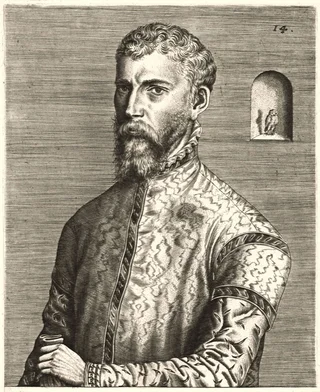
Herri met de Bles
Southern Netherlands · Northern Renaissance, Mannerism
The story
Herri met de Bles painted the world as if seen from a high hill: sweeping panoramas of blue distance, winding rivers and tiny travellers, with the real subject — a saint, a Bible story — often small in a corner. This kind of picture, the 'world landscape', had been pioneered in Antwerp by Joachim Patinir, to whom Bles was probably related and whose manner he carried on.
His very nickname says he was known by a white streak in his hair. 'Met de Bles' means roughly 'the one with the forelock'. In Italy, where his little panels were prized and collected, they gave him another name, Civetta, 'the little owl', because he liked to tuck a small owl somewhere into each scene for sharp-eyed viewers to find.
Almost nothing about his life is documented, and not one painting carries a firm signature by his hand. The owl became the signature instead, a small private mark hidden in the leaves that turns the hunt for it into part of looking at the picture.
Works
6 works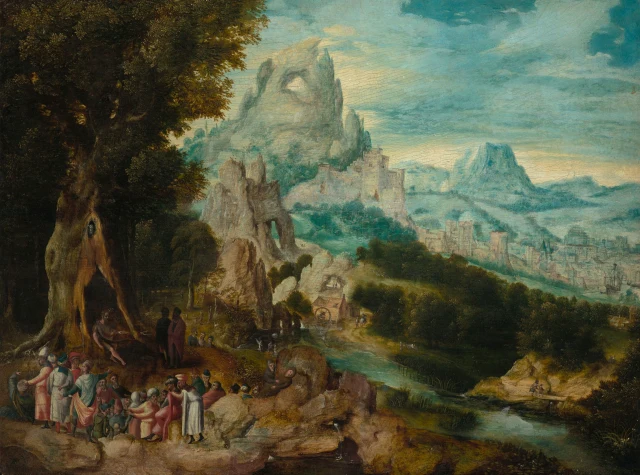 Landscape with Saint John the Baptist PreachingHerri met de Bles, 1537
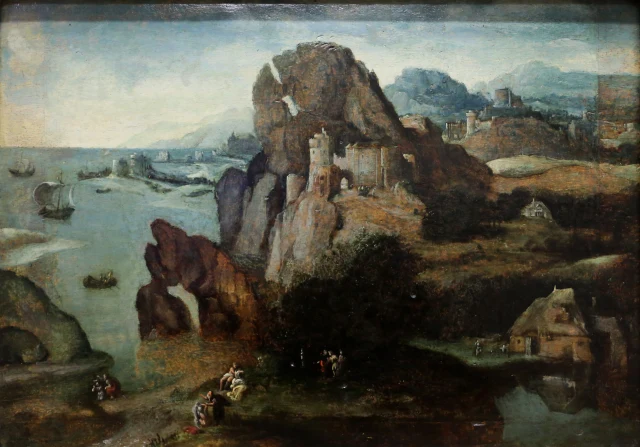 Landscape with the Baptism of Christ and the Road to EmmausHerri met de Bles
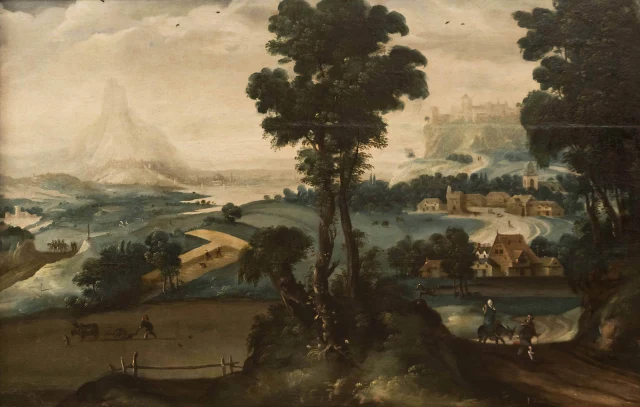 Landscape with the Flight into EgyptHerri met de Bles, 1540
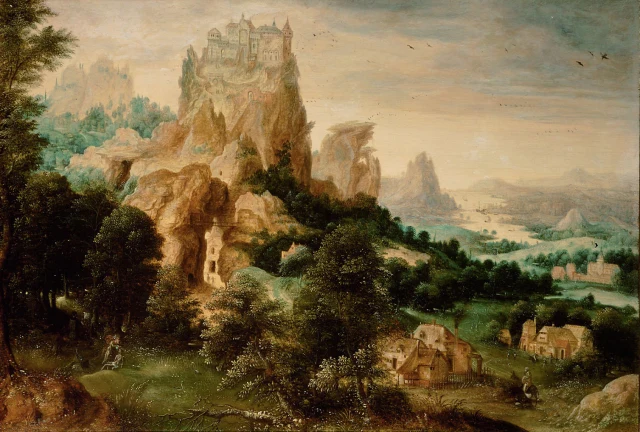 Landscape with the Parable of the Good SamaritanHerri met de Bles, 1540
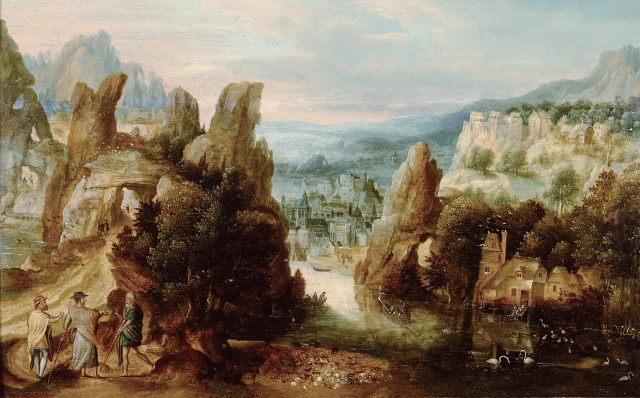 Landscape with the Road to EmmausHerri met de Bles, 1537
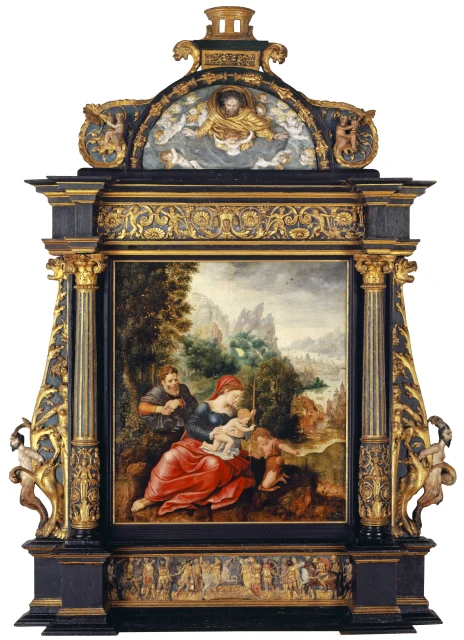 The Holy Family with the Infant Saint John the Baptist in a Mountain LandscapeHerri met de Bles, 1537