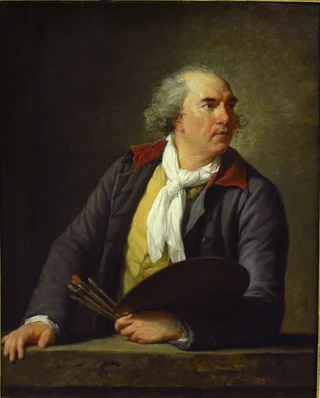
Hubert Robert
1733–1808 · France · Pre-romanticism
The story
In the 1790s Hubert Robert painted the great gallery of the brand-new Louvre museum twice. One picture shows it as it was, crowded with paintings and visitors. The other shows the same hall centuries in the future, its roof caved in, sky overhead, vines crawling over broken columns while a few tiny figures sketch among the rubble. He was the museum's curator at the time, imagining the place he ran as a magnificent ruin.
Robert had spent 11 years in Rome as a young man, and ruins became his whole subject. The philosopher Denis Diderot nicknamed him 'Robert des Ruines,' Robert of the Ruins, after seeing his Roman fantasies at the Salon of 1767, where real and invented monuments dissolve into overgrown stone. He designed gardens too, including work at Versailles.
Then the Revolution nearly ended him. He was arrested during the Terror in 1793 and held for about ten months, close enough to the guillotine that a man with a similar name is said to have been executed in his place. He was freed after Robespierre fell in 1794, went back to the Louvre, and kept painting its galleries until his sudden death in 1808.
Works
7 works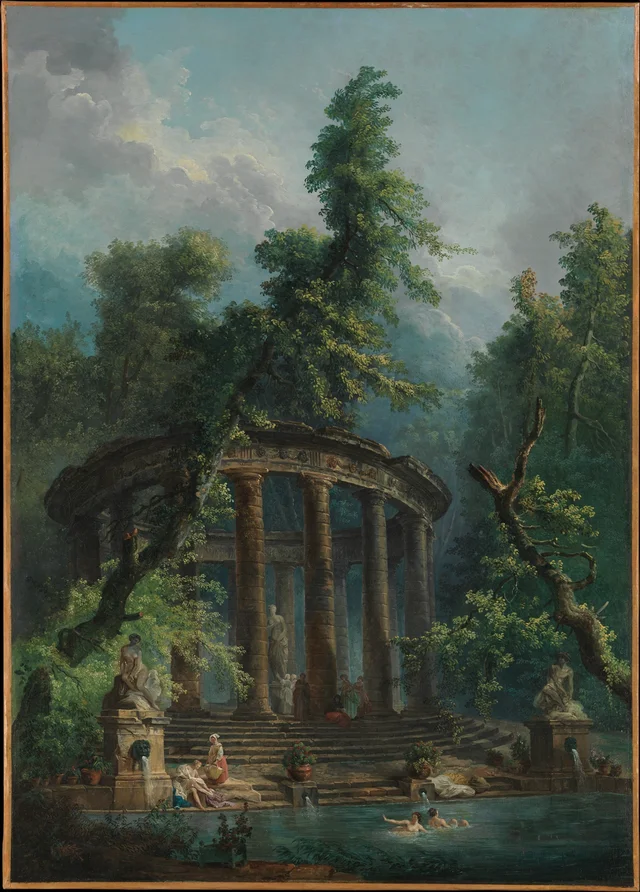 The Bathing PoolHubert Robert, 1780
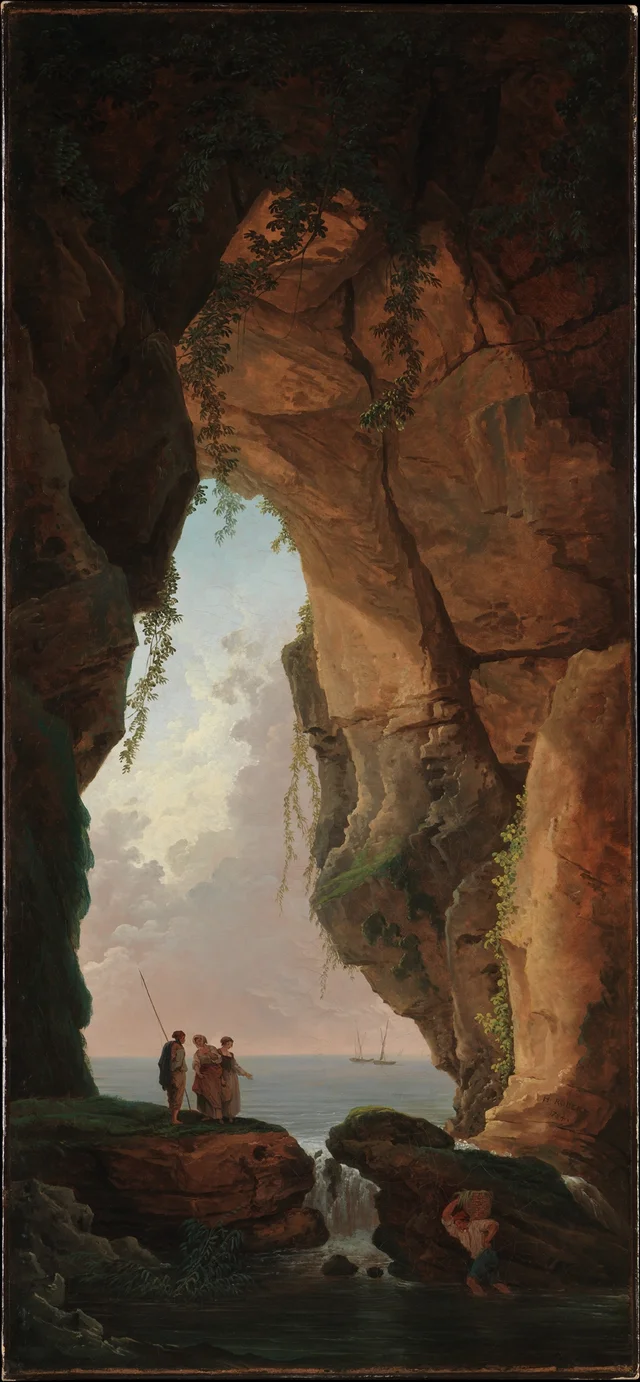 The Mouth of a CaveHubert Robert, 1784
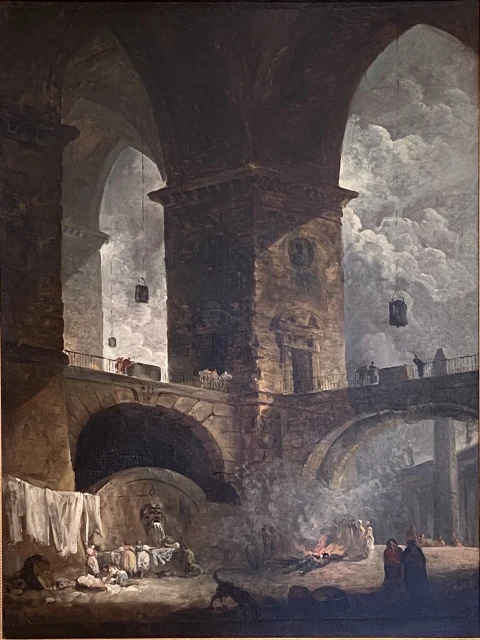 Architectural Capriccio with the Colonnades of St. Peter's in RomeHubert Robert, 1760
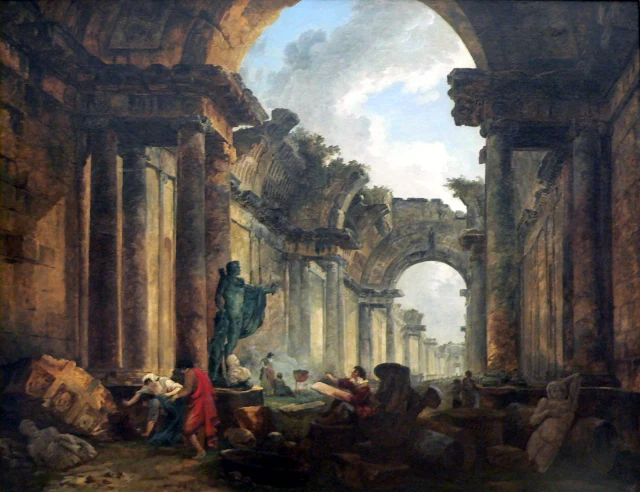 Imaginary View of the Grande Galerie of the Louvre in RuinsHubert Robert, 1796
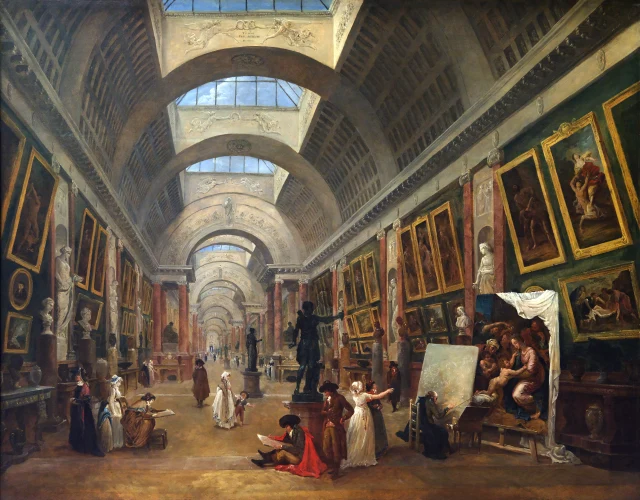 Project for the Transformation of the Grande Galerie of the LouvreHubert Robert, 1796
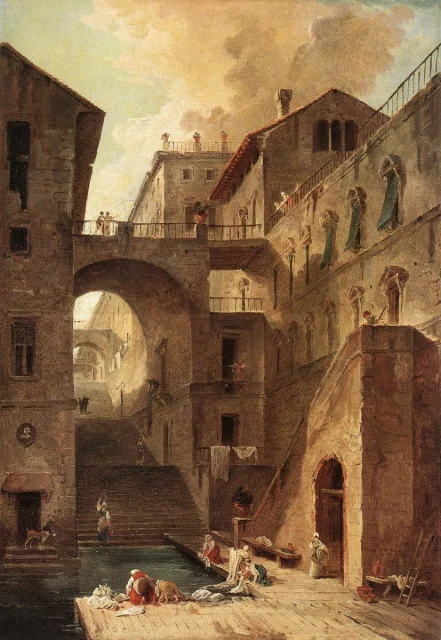 Stairway of the WasherwomenHubert Robert, 1796
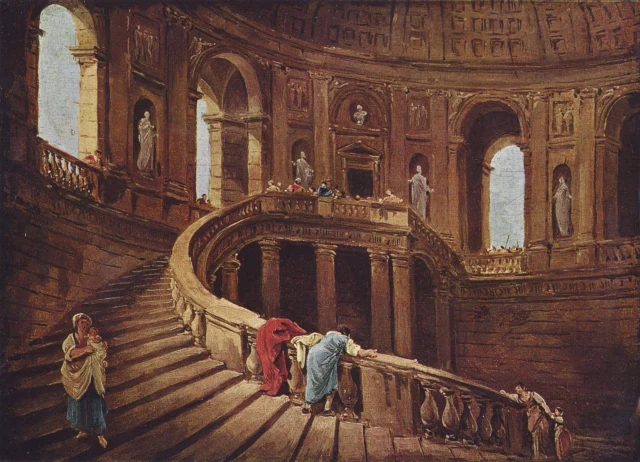 The Spiral Staircase of the Farnese Palace at CaprarolaHubert Robert, 1764