Ignacio Zuloaga
1870–1945 · Spain · Realism
The story
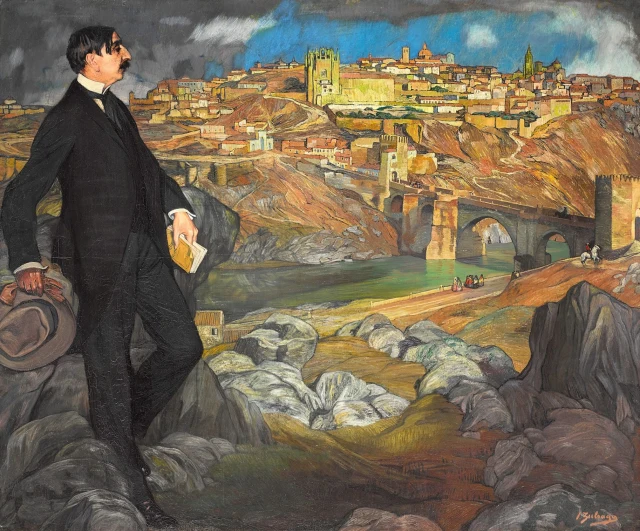
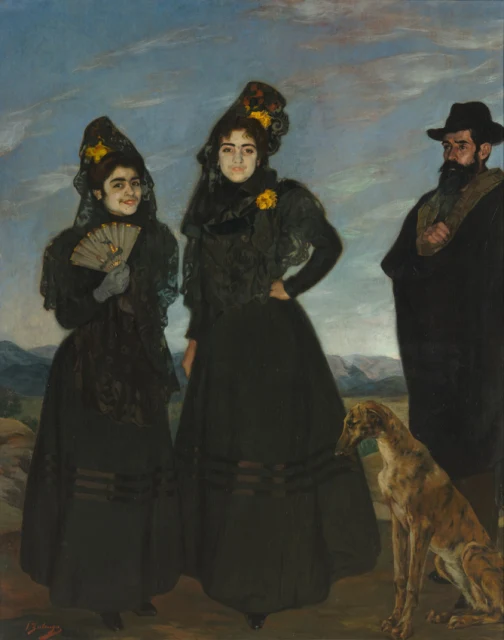
Around 1900 two Spanish painters were showing the world two opposite Spains. Joaquín Sorolla, from the Mediterranean coast, painted sunlight on water and children on bright beaches. Ignacio Zuloaga, a Basque from the rainy northern town of Eibar, painted the other country: bullfighters, gypsies, dancers and beggars, set against bare Castilian hills under heavy skies. Critics called his version España Negra, black Spain, and many of his countrymen resented him for it.
Abroad, that darker Spain made his name. From his studio in Paris he championed the old masters he felt stood behind him, above all El Greco, whose long distorted figures had fallen out of fashion for centuries. Zuloaga collected El Greco's canvases and showed them off to visitors like the sculptor Rodin and the poet Rilke, helping return that painter to the front rank where he sits today.
Zuloaga kept working through the fall of the Spanish monarchy and the civil war, painting portraits and Castilian scenes in the same earthen browns and blacks until his death in Madrid in 1945.