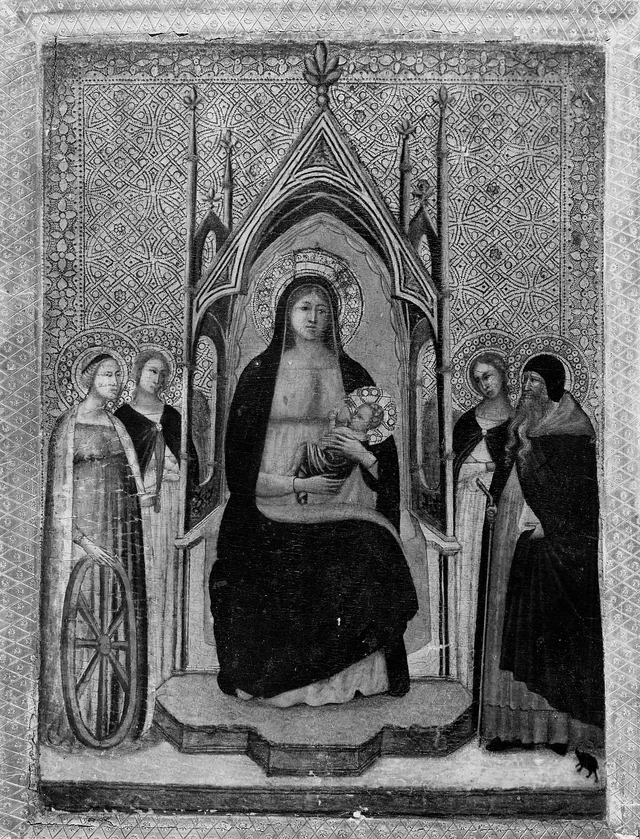
Imitator of Giotto
The story
Imitator of is the most distant of the labels a museum can set between a painting and a famous name. A pupil or an assistant of Giotto would be filed under his workshop or his followers, and a reproduction of one particular picture would be called a copy. An imitator is a later painter, sometimes centuries later, who set out to make something that looks like Giotto, whether as homage or to be sold as the real thing.
In the 19th century collectors in Britain and America began to want early Italian painting, the gold-ground Madonnas and saints they called primitives, and genuine 14th-century panels were scarce. Painters and restorers in Tuscany, above all in Siena, supplied the shortfall. The best known of them, Icilio Federico Joni, made gold-ground panels in the old manner for the trade for decades, and in 1932 he published his memoirs of that career.
A museum reaches for this label when the style of a picture points back to Giotto and the object itself, its materials or the way it was made, points to a much later date.