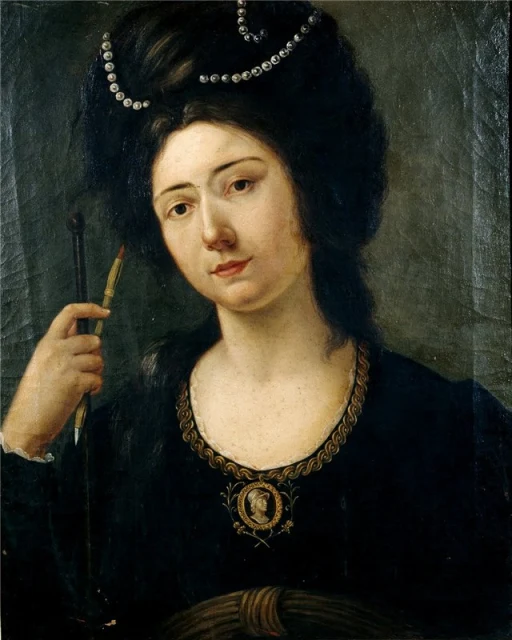
Irene Parenti Duclos
1754–1795 · Italian · Neoclassicism
The story
In 1773 a young Florentine named Irene Parenti Duclos asked for permission to set up her easel inside the Uffizi and copy the old masters hanging on its walls. Over the next twenty years she made thirty-nine oil copies there, many bought by British travellers on the Grand Tour who wanted a Raphael or a Titian to carry home.
Copying was one of the few ways a woman could build a serious reputation as a painter, and hers grew until several Italian academies gave her honours. She wrote poetry as well, and she experimented: she took part in the 18th-century revival of encaustic, the ancient art of painting with heated, pigmented wax that the Romans had used and later centuries forgot.
Two of her self-portraits survive in the Uffizi's own collection. In the one dated 1783 she shows herself well dressed and composed, holding the brushes and palette of her trade.