Isidre Nonell
1872–1911 · Spain · Modernisme, Post-Impressionism
The story
In the autumn of 1900, when the 19-year-old Pablo Picasso arrived in Paris for the first time, the Montmartre studio he moved into belonged to Isidre Nonell, a Barcelona painter nine years older who had already exhibited in the city. Both belonged to the crowd at Els Quatre Gats, the Barcelona café where the young modern artists met, and Nonell's sombre, compassionate pictures of the poor are often cited as one source of Picasso's Blue Period.
Nonell had found his subject early. In the summer of 1896, in the Vall de Boí in the Pyrenees, he drew villagers disfigured by cretinism, a condition caused by iodine deficiency. Shown in Paris at the gallery of the dealer Le Barc de Boutteville, these drawings won him notice in France well before Barcelona took him seriously.
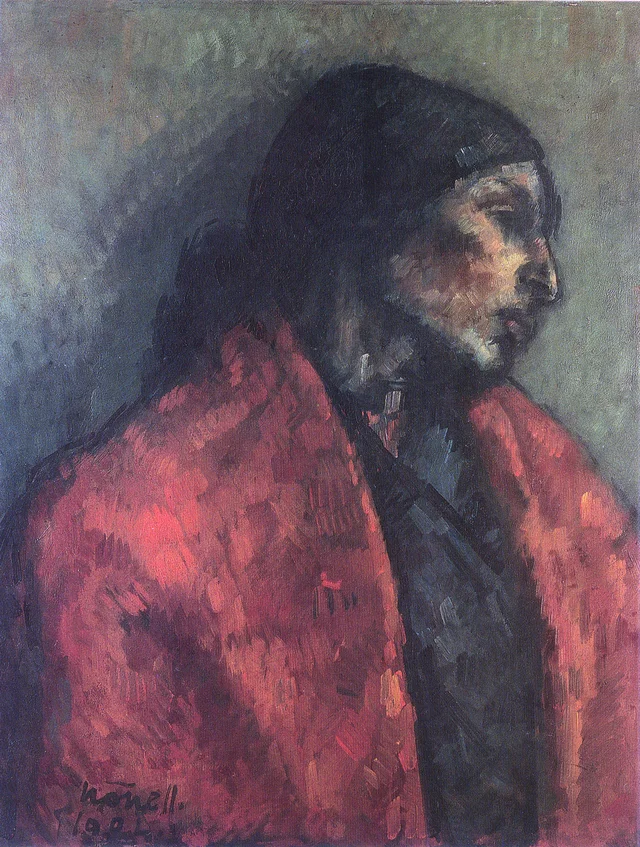
Back home after 1900 he painted almost nothing but Roma women and other outcasts of the city, hunched figures built from heavy, broken strokes. La Paloma, from 1904, belongs to this group. Barcelona buyers resisted these pictures for years, and in 1902 and 1903 he hardly sold a painting. That changed in 1910, when an exhibition at the Faianç Català gallery sold almost everything. About a year later, in February 1911, he died of typhoid at 38.