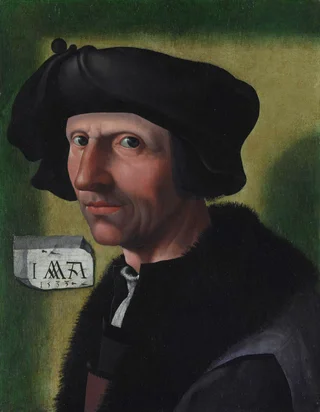
Jacob Cornelisz van Oostsanen
1533 · Habsburg Netherlands · Northern Renaissance, Woodcut
The story
Amsterdam in 1500 was a tidy provincial trading town, still a century away from the golden age that would make it famous. It had painters, but we know none of their names, with one exception. In that year a man from the nearby village of Oostzaan bought a house on the Kalverstraat and set up a workshop. He is the first Amsterdam artist history can actually name: Jacob Cornelisz van Oostsanen.
He worked two trades at once. As a painter he turned out richly detailed religious panels in the old Netherlandish manner, all fine surface and crowded incident. As a designer of woodcuts he was even busier, producing around 200 of them, prints that carried his invention far beyond the pictures a single patron could own.
The workshop outlived him. His son Dirck Jacobsz carried it forward, and a young pupil who trained there, Jan van Scorel, later went to Italy and returned to reshape Dutch painting. Van Oostsanen kept to the older, hand-crafted manner himself, and died in Amsterdam in 1533.
Works
6 works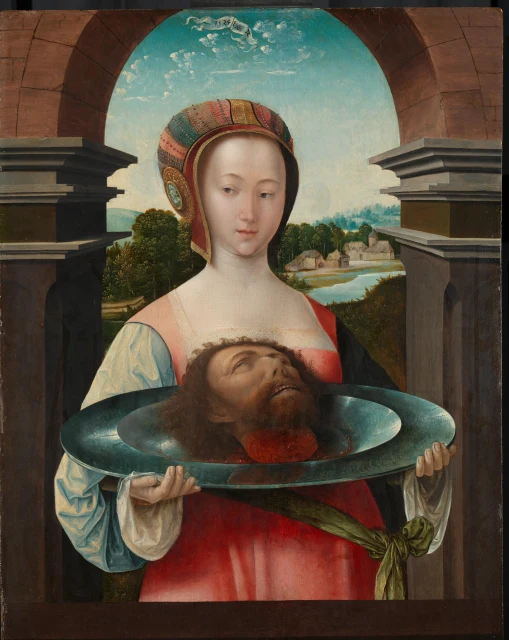 Salome and the Head of John the BaptistJacob Cornelisz van Oostsanen, 1524
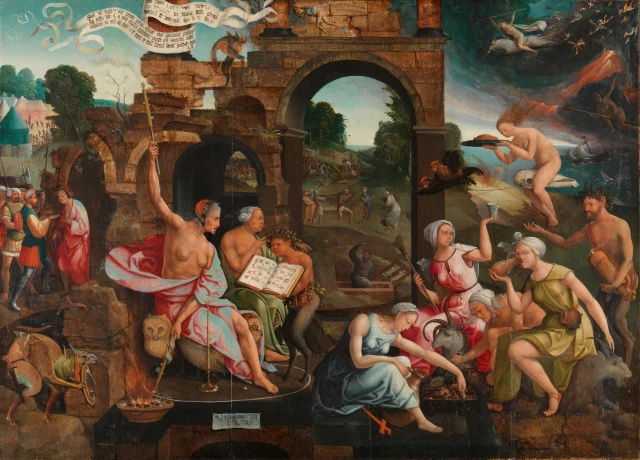 Saul and the Witch of EndorJacob Cornelisz van Oostsanen, 1526
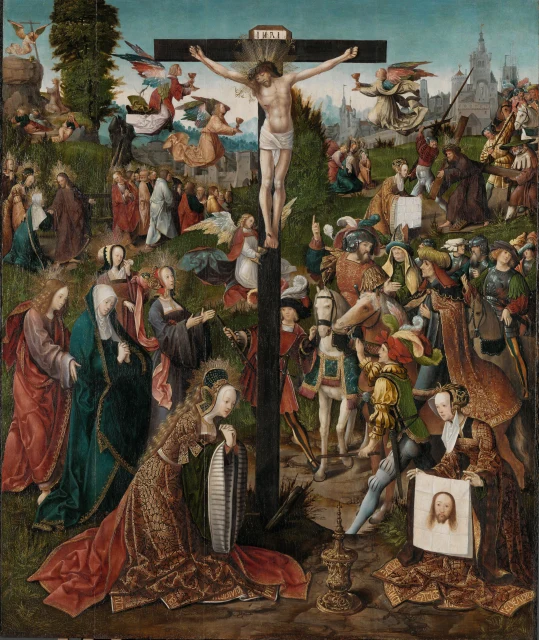 The CrucifixionJacob Cornelisz van Oostsanen, 1508
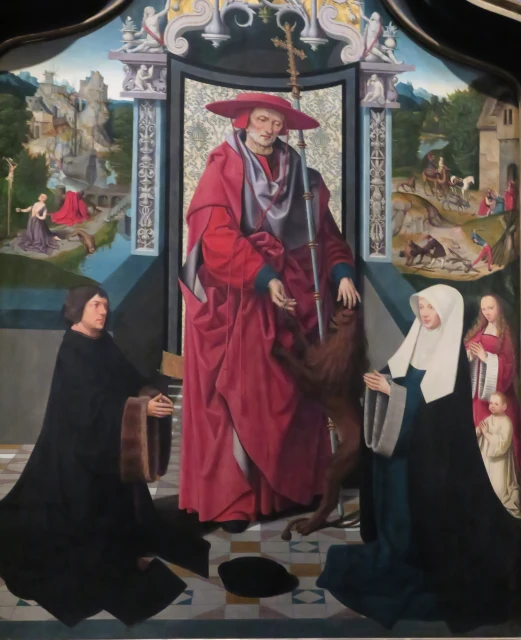 The Hieronymus AltarJacob Cornelisz van Oostsanen, 1511