Jacob de Wit
1695–1754 · Dutch Republic · Baroque, Rococo
The story
In 1711 and 1712 a teenage apprentice from Amsterdam worked in the Jesuit church in Antwerp, copying the ceiling paintings made there by Rubens, the great Flemish master, and his workshop. In 1718 lightning set the church on fire and the ceilings burned. The boy's drawings, engraved and published decades later by his pupil Jan Punt, became an important record of what had been lost.
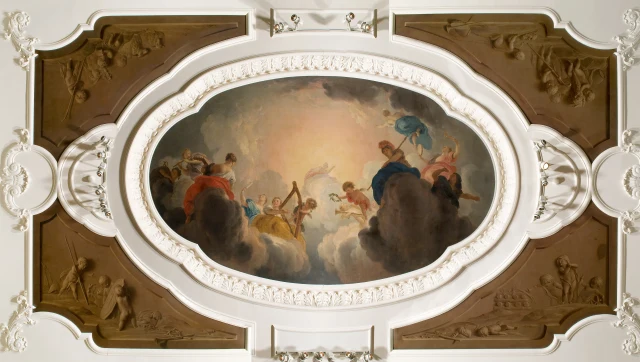
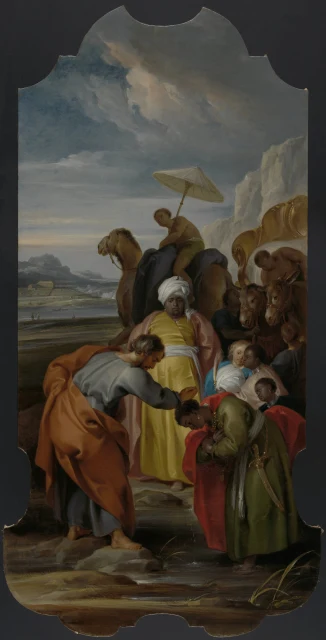
The boy was Jacob de Wit, and ceilings became his speciality. Back in Amsterdam from 1715, he filled the grand houses along the Herengracht and Keizersgracht canals with painted skies full of gods and clouds. He was a Catholic in a city where Catholics worshipped in hidden churches behind ordinary house fronts, and some of his first commissions were altarpieces for those churches. His largest picture was for the city itself. In 1737 he painted Moses choosing the 70 elders for the council chamber of Amsterdam's City Hall, now the Royal Palace on Dam Square, a canvas roughly 5 by 12 metres.
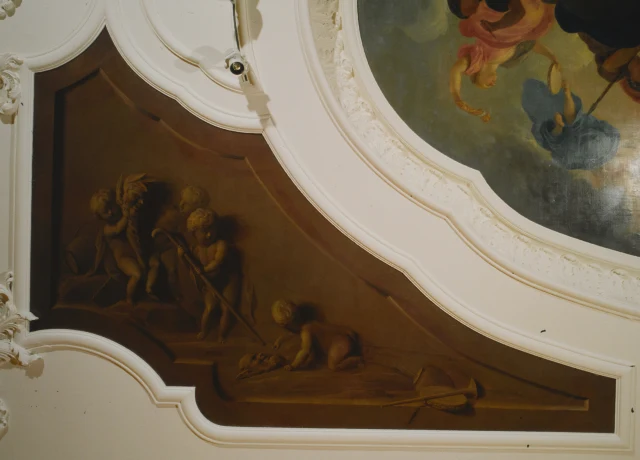
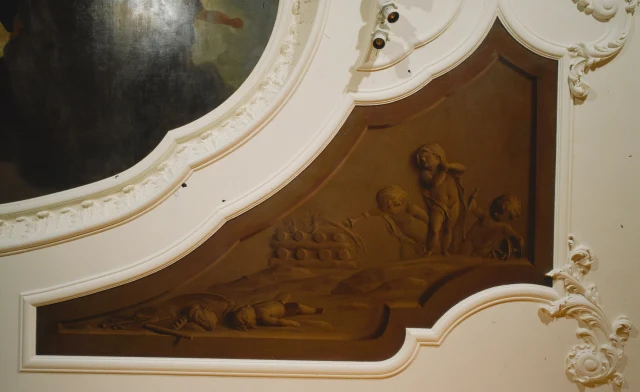
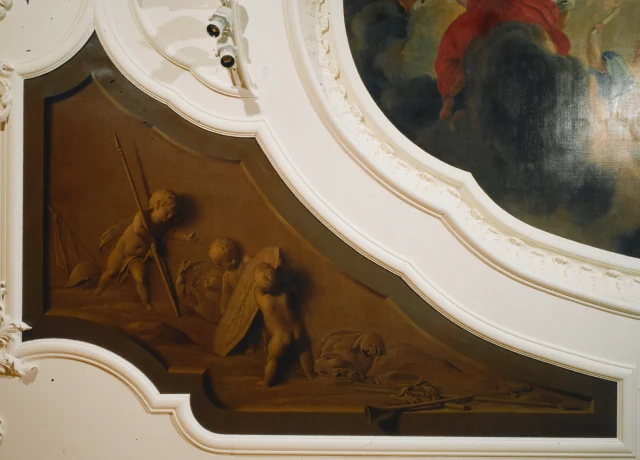
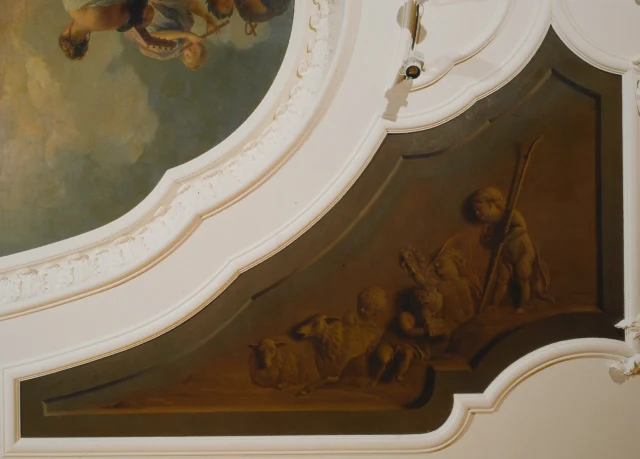
His other speciality was a trick of the eye. In tones of grey and white he painted what looks like carved stone relief, often with playing children and garlands, meant to be taken for sculpture from below. Such pictures came to be called witjes, "little whites", a pun on his name. In 1742 his yearly income was assessed at 4,000 guilders, which made him, with the portraitist Jan Maurits Quinkhard, one of the best-paid painters in Amsterdam. He lived on the Keizersgracht, with his studio in the back building, until his death in 1754.