Jacob Peter Gowy
1610–1644 · Southern Netherlands · Flemish Baroque, Baroque
The story
In November 1636 Philip IV of Spain ordered around 60 mythological pictures for a hunting lodge outside Madrid, the Torre de la Parada, and the commission went to Rubens in Antwerp. Rubens was in his late fifties and increasingly crippled by gout. He painted the small oil sketches himself and handed the full-size canvases out to painters around the city, Jacob Jordaens and Cornelis de Vos among them, and a young master named Jacob Peter Gowy.
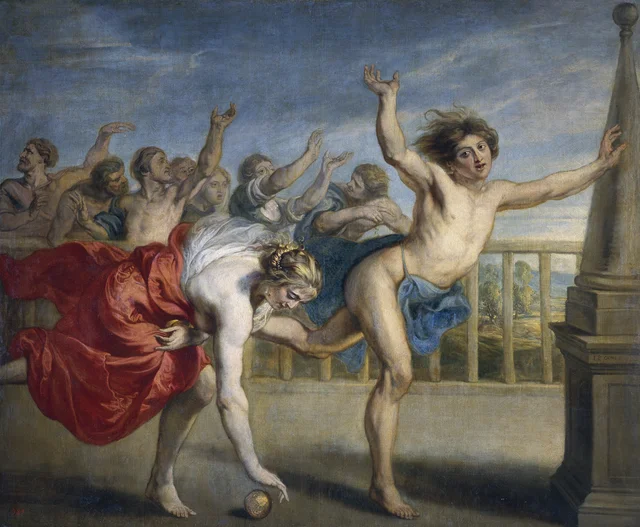
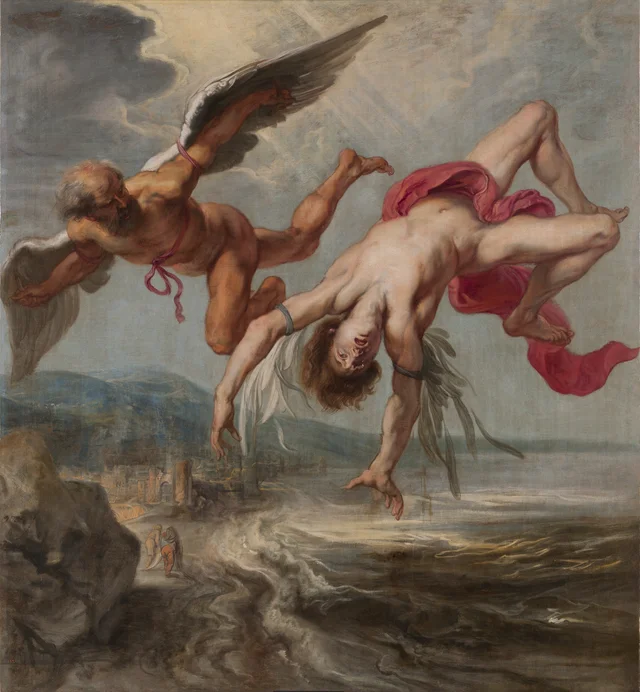
Gowy had entered the Antwerp painters' guild as an apprentice in 1632 and qualified as a master four or five years later, just in time. Two of his Torre de la Parada canvases are in the Prado. One is Hippomenes and Atalanta, from the myth of the footrace won by dropping golden apples. The other is The Fall of Icarus, the boy already upside down in the air with his wings coming apart while his father keeps flying. Set beside Rubens's sketch, Gowy changed very little.
The lodge was wrecked during the war over the Spanish succession and the surviving pictures went into the royal collection. Gowy himself worked for a time in England as a portraitist. Later accounts place him back in Antwerp, retired, serving as a priest at the church of St Walburga. He is last documented in 1644 and was dead by 1664; the year in between is not recorded.