Jacobus Mancadan
1602–1680 · Dutch Republic · Dutch Golden Age painting
The story
The Fries Museum in Leeuwarden calls Jacob Sibrandi Mancadan the greatest Frisian landscape painter of the 17th century, and for much of his life painting was not his main business. He was born around 1602 in Minnertsga, a village near the Frisian coast, into a well-off family, and most of his income came from property. In the 1630s he served as burgomaster of Franeker, the Frisian university town.
In 1658 he went into peat. Cutting peat for fuel was big business in the Dutch Republic, and Mancadan was among the men who opened up the bogs of south-east Friesland, helping to start the canal dug towards Bakkeveen to carry the turf away. For a time he lived out by the diggings, at Siegerswoude.
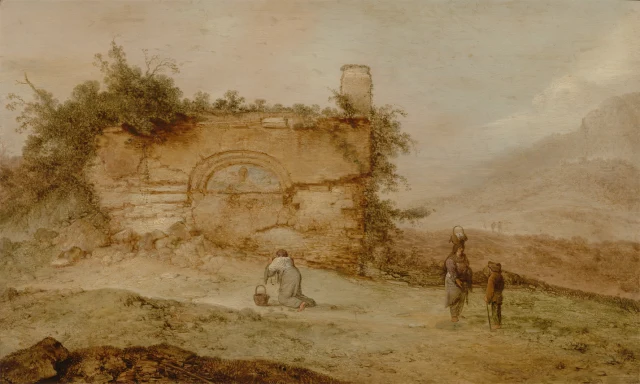
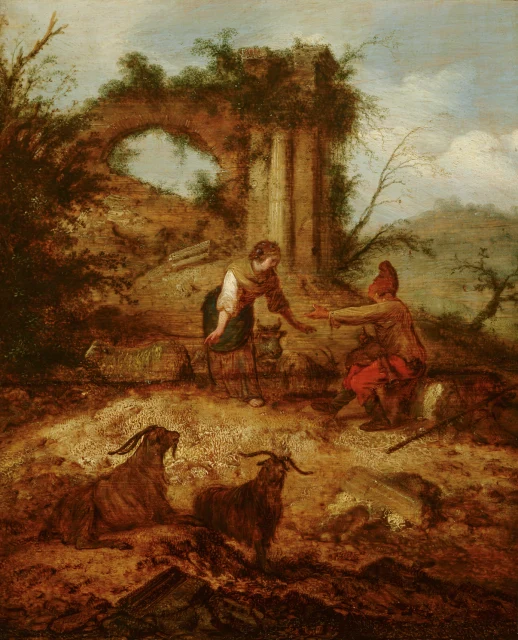
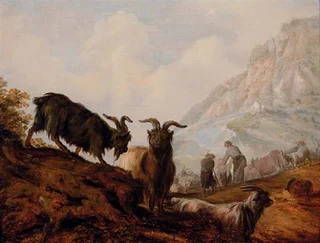
His paintings were made far from the art markets of Holland. They are mostly small panels in browns, greys and yellowish tones, with herdsmen, cattle and sheep among rocky slopes and ruins. After his wife died in 1669 he went to live with his daughter at Beetsterzwaag, and in October 1680 he was buried in Leeuwarden.