Jacopo di Cione
Republic of Florence · Italian Gothic, Florentine school, Medieval art
The story
In 1368 Andrea di Cione, known as Orcagna and the leading painter in Florence, died and left a large panel unfinished. It showed Saint Matthew with four stories from his life, ordered by the money-changers' guild for a pillar of Orsanmichele, the guild church in the middle of the city. The job passed to his younger brother Jacopo, and the panel, now in the Uffizi, is where Jacopo's own career comes into view.
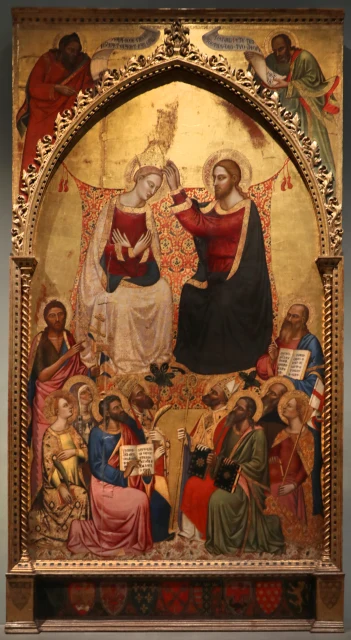
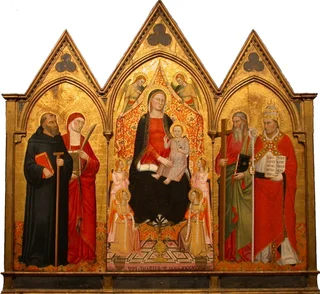
Nobody recorded when he was born, probably in the 1320s. He first appears in 1365, named as an heir in the will of another brother, the painter Nardo, and some documents call him by a nickname, Robiccia. In 1369 he joined the guild of physicians and apothecaries, the guild Florentine painters belonged to. He took over the family workshop and worked mostly in partnership, above all with Niccolò di Pietro Gerini, a Florentine painter of his own generation. The great altarpiece for the church of San Pier Maggiore, paid for in 1370 and 1371, is credited to the two of them, and its 12 main panels are now in the National Gallery in London. In 1372 and 1373 they painted a large Coronation of the Virgin for the Florentine mint.
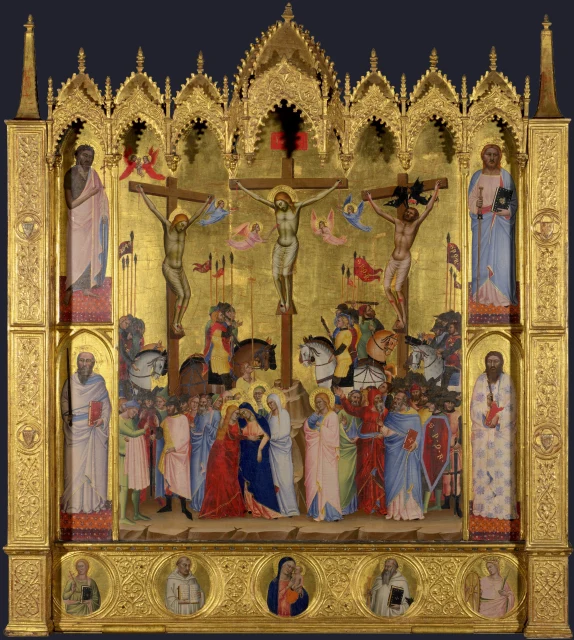
The London panels show him as an inventive storyteller who tried new mixtures of pigment. A Crucifixion of about 1369, still in its gabled gilt frame, hangs there too. He served three times as consul of his guild, in 1384, 1387 and 1392. His name turns up in the Florence tax rolls for the last time in 1400 with no payment recorded, which suggests he had died shortly before.