Jacques-Émile Blanche
1861–1942 · France · Portraiture, Modernism
The story
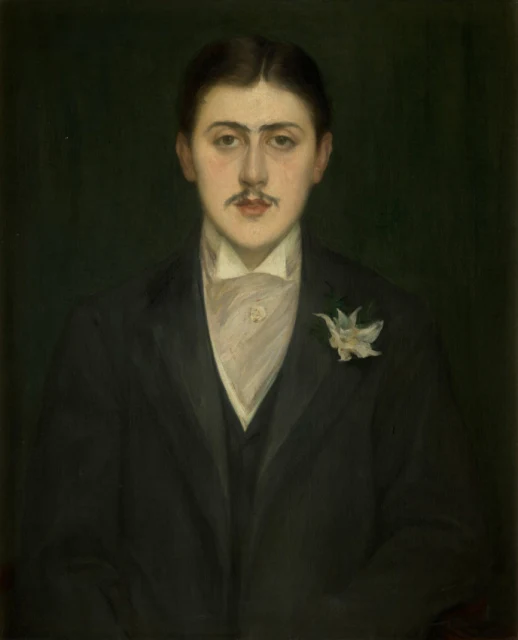
If you have seen a photograph of the young Marcel Proust as a pale dandy with a flower in his buttonhole, you have probably seen a painting by Jacques-Émile Blanche. He made it in 1892, when both men were young, and it became the image of Proust the writer we carry in our heads. Proust returned the favour, folding features of Blanche into Elstir, the painter in In Search of Lost Time.
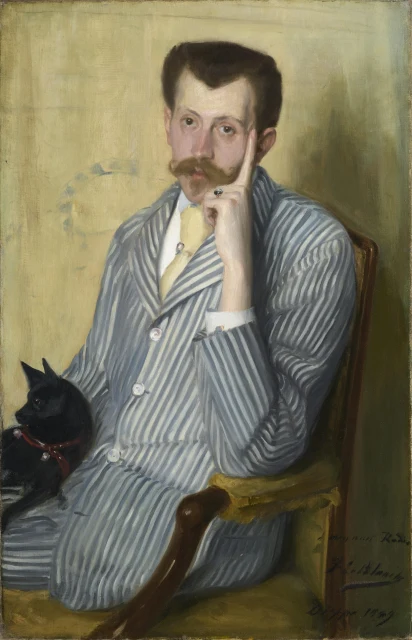
Blanche grew up inside a strange advantage. His father, Dr. Émile Blanche, ran a fashionable psychiatric clinic in Passy, on the edge of Paris, where wealthy and famous patients came and went, and where the boy learned to watch nervous, sensitive faces up close. He turned into the portraitist the whole cultural world sat for: Debussy and Stravinsky, Degas and Rodin, Cocteau, Colette, James Joyce, Virginia Woolf, Thomas Hardy.
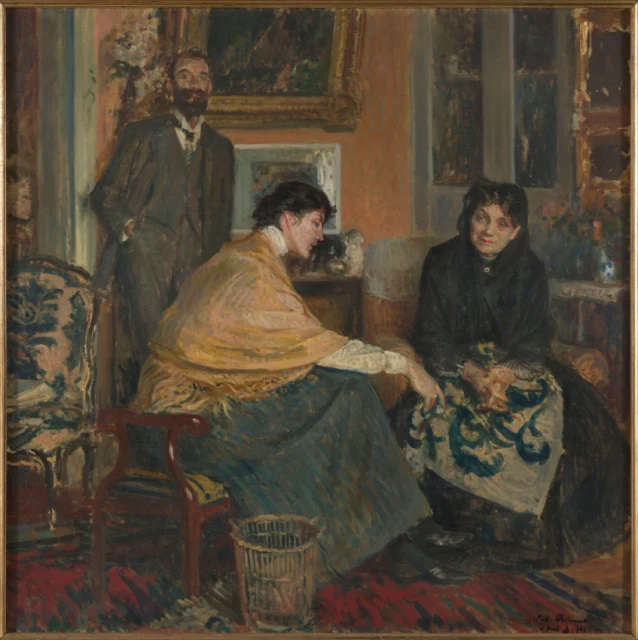
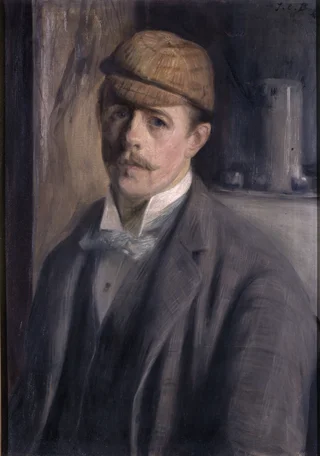
He worked fast and fluent, in a bright, brushy manner he picked up partly from Manet's circle, and he moved easily between Paris and London society. He also wrote, leaving sharp memoirs of the artists and writers he knew. Blanche lived until 1942, long enough to see the confident belle-époque world of his sitters swept away by two wars, and he kept painting its survivors nearly to the end.