Jacques Fouquier
1590–1655 · Southern Netherlands, France · Baroque
The story
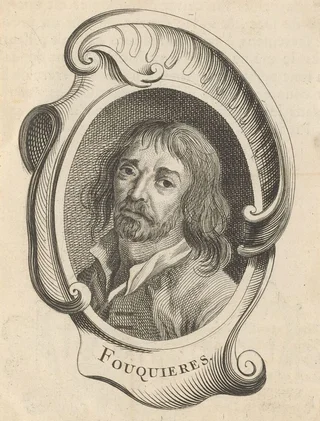
In 1641 Nicolas Poussin, summoned from Rome, was put in charge of decorating the Grande Galerie of the Louvre. He found the job already occupied. For 15 years Jacques Fouquier had held the commission to paint views of the king's cities along that gallery, and he had no intention of handing it over. In Poussin's letters he appears as 'le baron Foucquier', a jab with a fact inside it: Louis XIII really had ennobled the Flemish painter, in 1626.
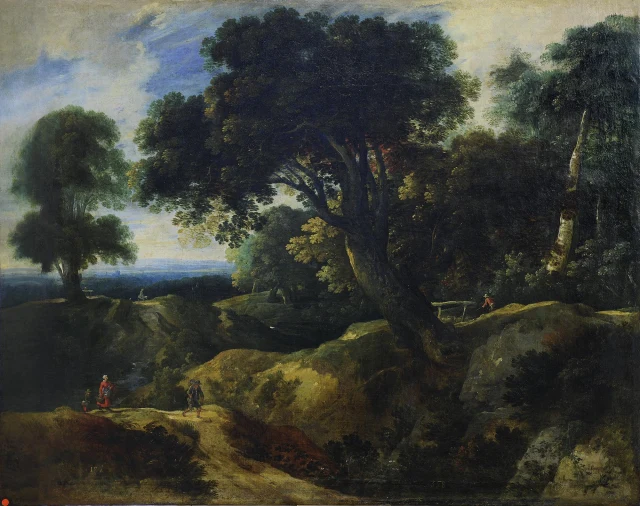
Fouquier came from Antwerp, where he was registered as a master in the painters' guild in 1614 and learned landscape in the orbit of Jan Brueghel the Elder and Joos de Momper, both specialists in wide panoramic views. From 1616 he worked at Heidelberg Castle for Frederick V, the Elector Palatine, on rooms fitted out for the elector's English wife Elizabeth Stuart. Rome followed, then Paris by 1621 and a post as painter to the French king. Between 1626 and 1633 he was travelling to Toulon, Marseille and Aix-en-Provence, gathering the material for those gallery views.
Very few of his paintings survive, his 17th-century fame rested partly on engravings made after them, and admirers called him the Flemish Titian. The Louvre gallery was never finished. When he died in Paris in 1655, the inventory taken of his goods showed how little was left.