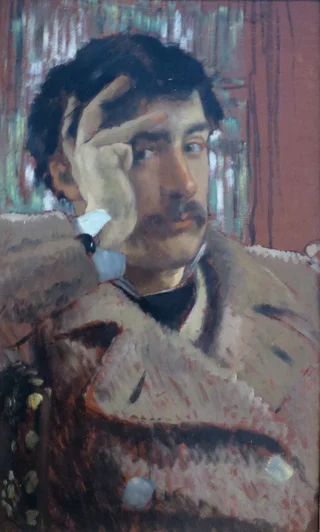
James Tissot
1836–1902 · France · Japonisme
The story
James Tissot spent the first half of his career painting beautifully dressed women and the second half painting the life of Christ. A Frenchman who trained in Paris alongside Degas, he grew rich depicting fashionable modern society, elegant figures in rustling gowns on ship decks and in gardens, every ribbon and reflection exactly observed.
After the upheaval of the Paris Commune in 1871 he moved to London and prospered there too. His great subject in those years was an Irish divorcee named Kathleen Newton, who lived with him and appears again and again in his London pictures, radiant in his garden and drawing room. When she died of tuberculosis in 1882, still in her twenties, Tissot abandoned London within days.
Back in Paris he underwent a religious reawakening. He travelled repeatedly to the Middle East to get the settings right and spent his last years illustrating the Bible, producing hundreds of watercolours of the life of Christ that were exhibited to huge crowds and reproduced everywhere. He died in 1902 at his family château in eastern France, at work on scenes from the Old Testament.
Works
6 works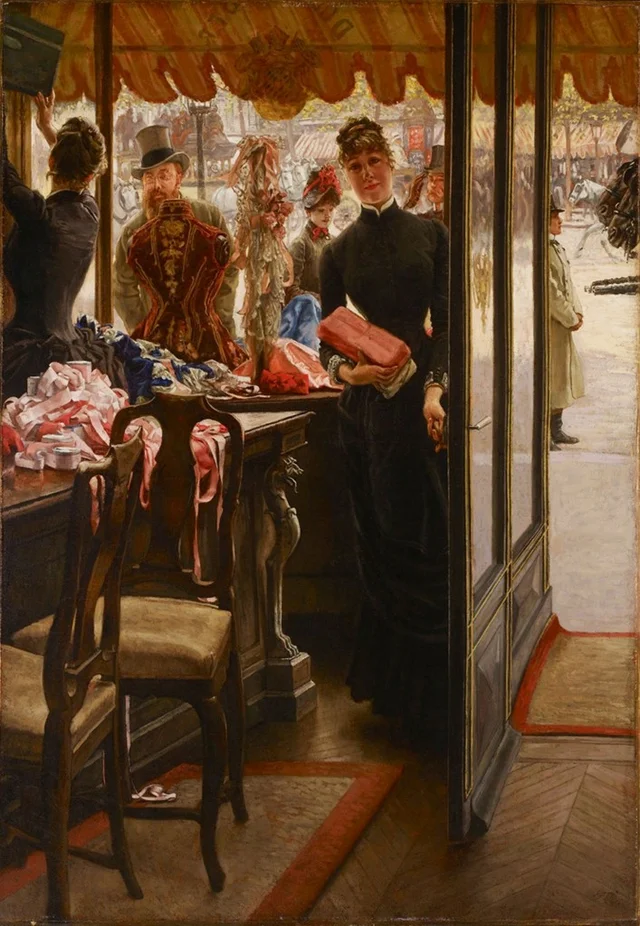 The Shop GirlJames Tissot, 1883
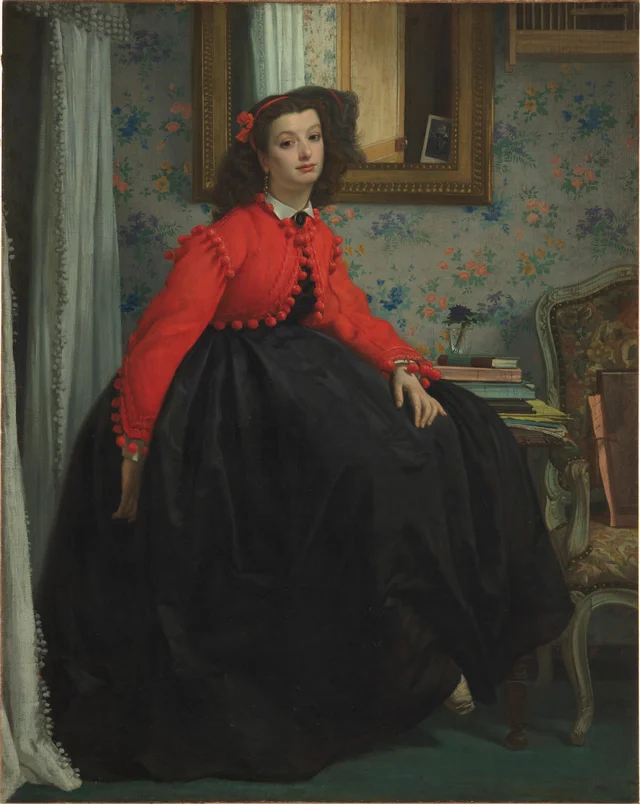 Portrait of Miss L. L.James Tissot, 1864
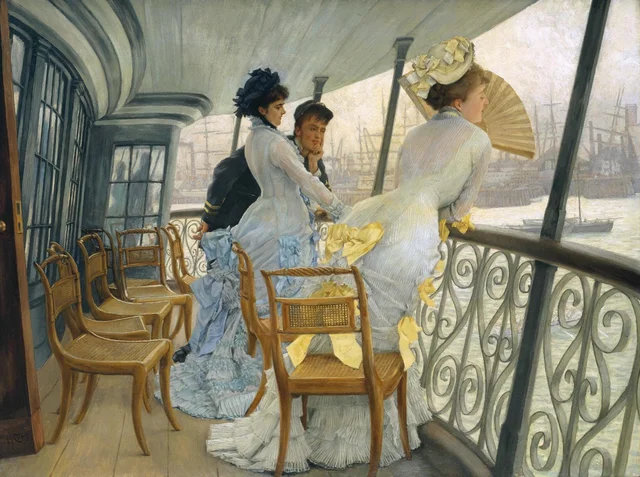 The Gallery of HMS Calcutta (Portsmouth)James Tissot, 1876
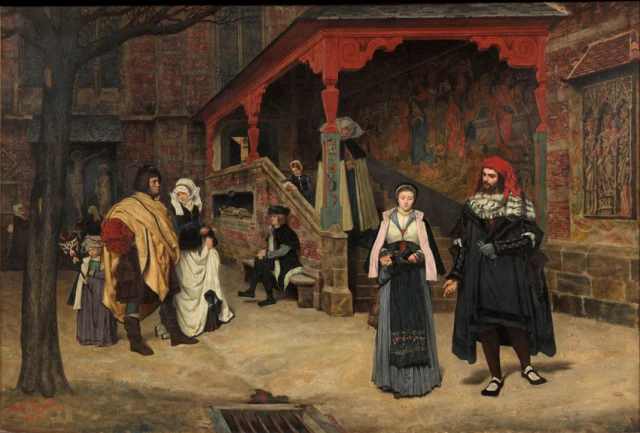 Meeting of Faust and MargueriteJames Tissot, 1860
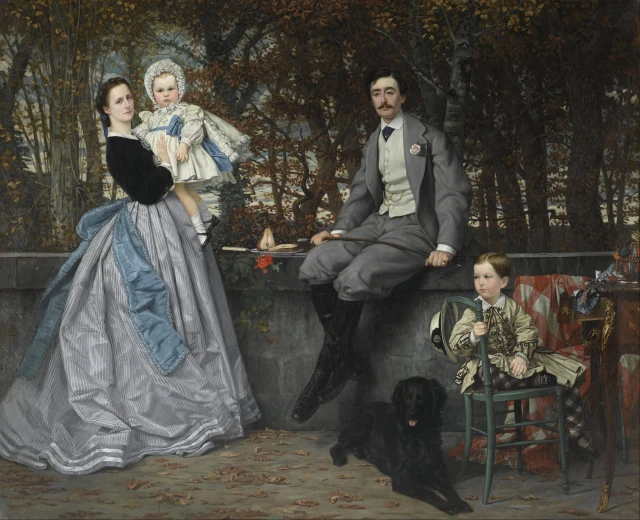 Portrait of the Marquis and Marquise de Miramon and Their ChildrenJames Tissot, 1865
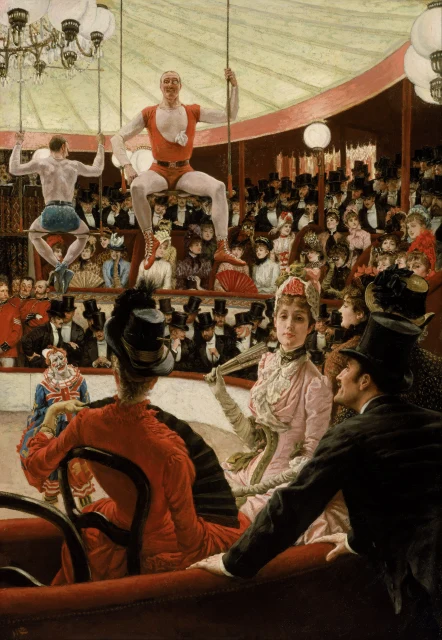 Women of Paris: The Circus LoverJames Tissot, 1885