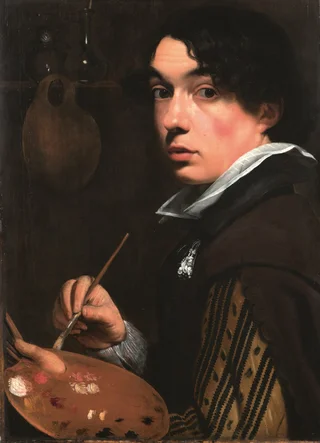
Jan Cossiers
1600–1671 · Habsburg Netherlands · Flemish Baroque painting
The story
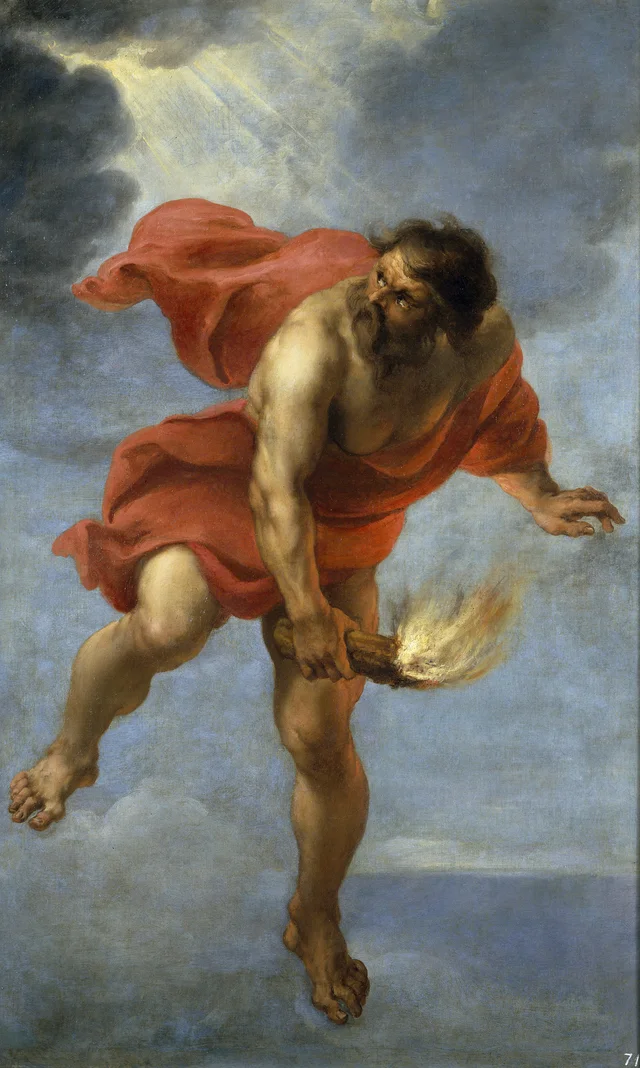
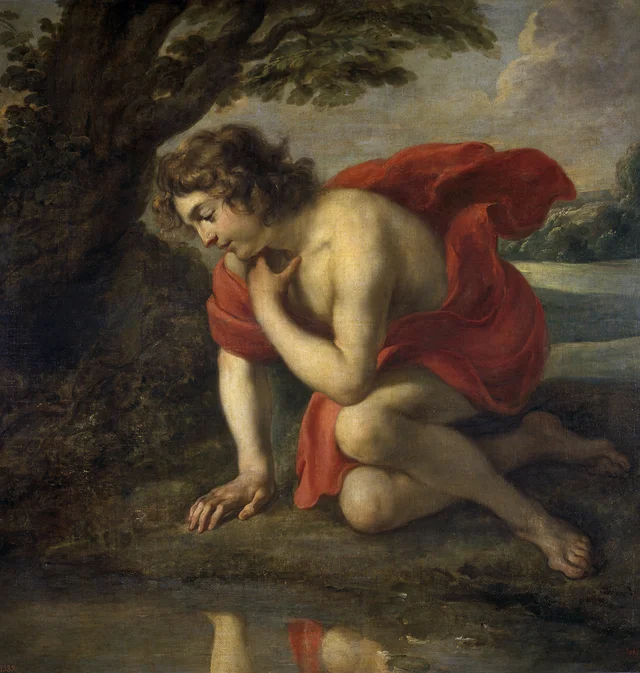
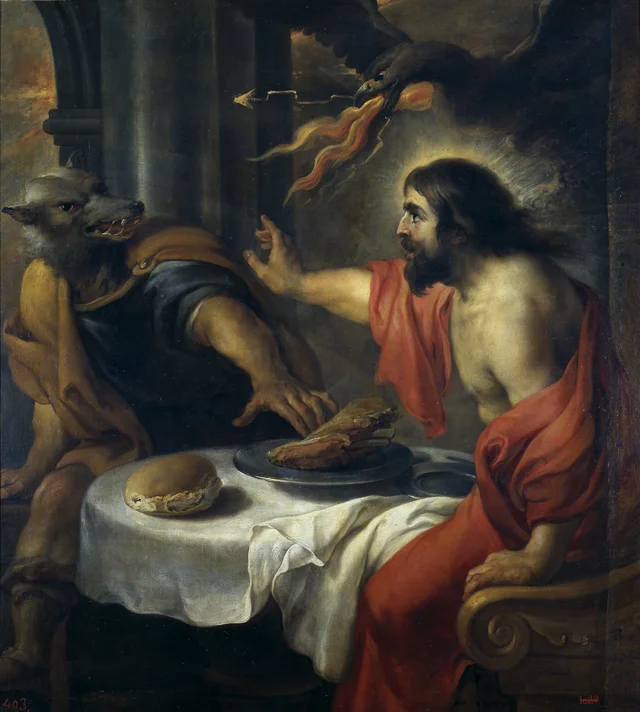
In 2015 a researcher at the Prado, Ana Alicia Suárez, looked closely at a canvas of Prometheus carrying fire down from the gods and found a signature painted into the flame of the torch. It read Jan Cossiers. The picture belonged to a set of about 60 mythological scenes ordered in 1636 by Philip IV of Spain for the Torre de la Parada, his hunting lodge outside Madrid. Rubens supplied the small oil sketches and a crowd of Antwerp painters enlarged them onto full-size canvas, which has left scholars arguing ever since over whose hand did what.
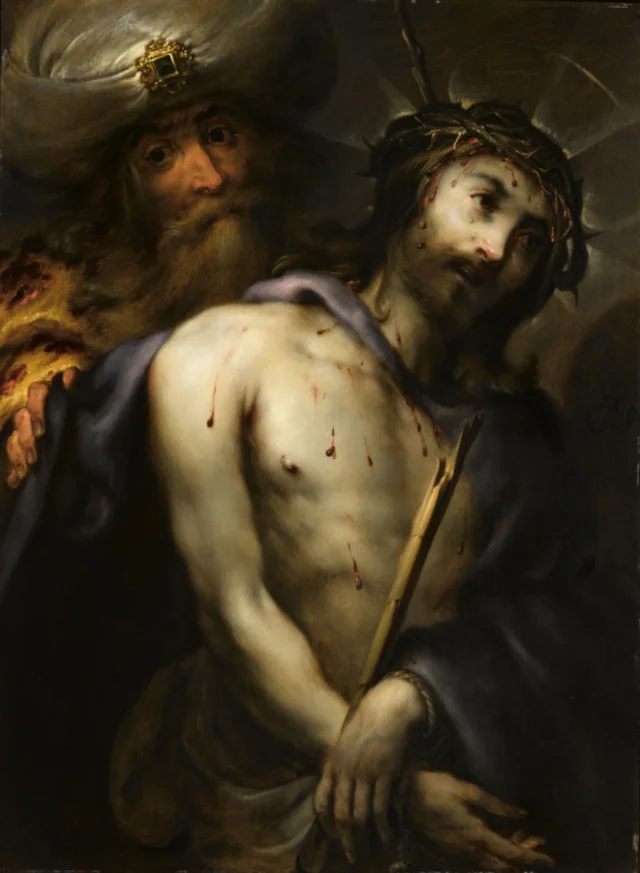
Cossiers was born in Antwerp in 1600, the son of a painter, and he took the long way into that job. In the 1620s he worked in Aix-en-Provence in southern France and then in Rome, where the hard shadowed manner of Caravaggio stuck to him. Back home he painted card players, fortune tellers and tavern rooms lit from one side.
After Rubens died in 1640 Cossiers became one of the leading history painters left in the city and turned mostly to altarpieces for its churches. In 1658 he drew a series of chalk portraits of his own children.