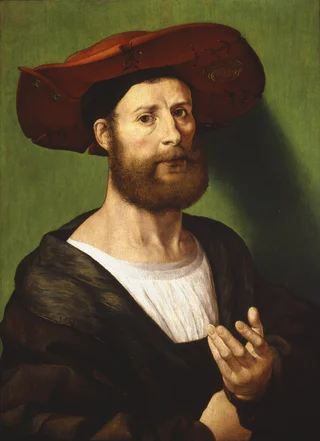
Jan Gossaert
1532 · Holy Roman Empire · Romanism, Dutch and Flemish Renaissance, Renaissance
The story
Around 1508 a Flemish painter named Jan Gossaert travelled to Rome in the company of a Burgundian prince, and he came home changed. Gossaert, also called Mabuse after his hometown, filled sketchbooks with ancient statues and Roman ruins, and he became one of the first artists of the Low Countries to build his pictures around the classical nude and pagan mythology rather than only Christian subjects.
Back north he painted gods and lovers with a hard, gleaming Flemish finish, Neptune and his sea-wife standing nude in a temple, or Danae receiving a shower of gold, muscular southern bodies rendered with northern precision down to every hair and jewel.
He kept a busy portrait practice besides, working mainly for aristocratic patrons. Gossaert died in 1532, by then a favourite of the Netherlandish nobility, who hung his pagan gods and goddesses in the private rooms of their houses.
Works
17 works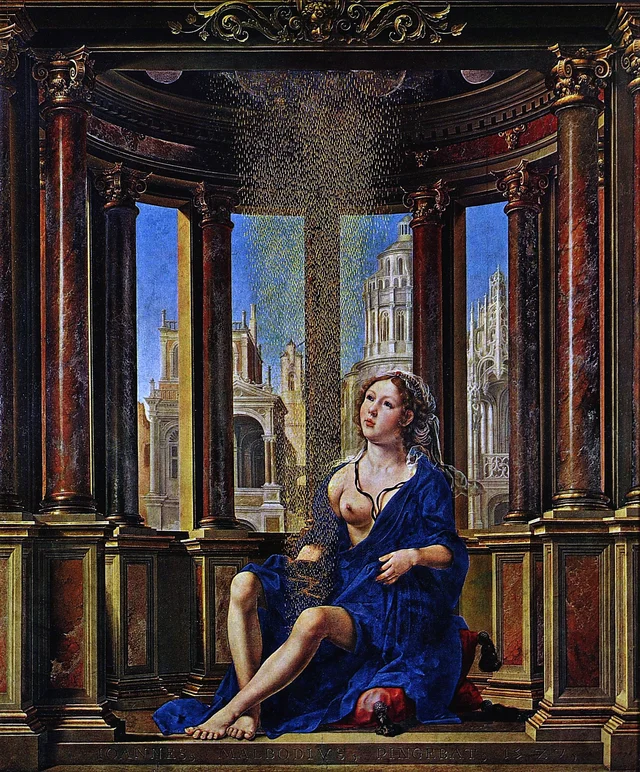 DanaeJan Gossaert, 1527
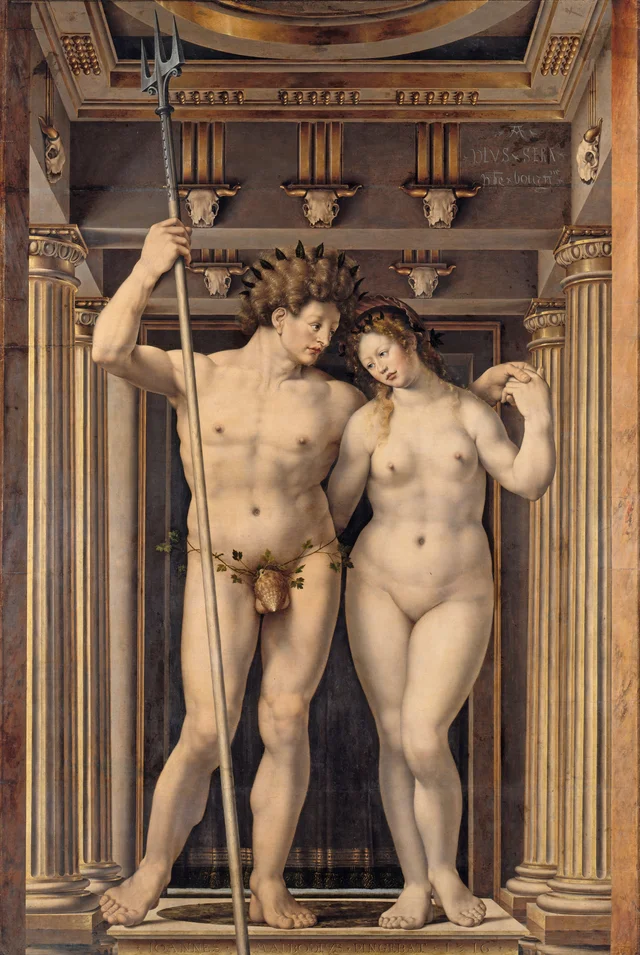 Neptune and AmphitriteJan Gossaert, 1516
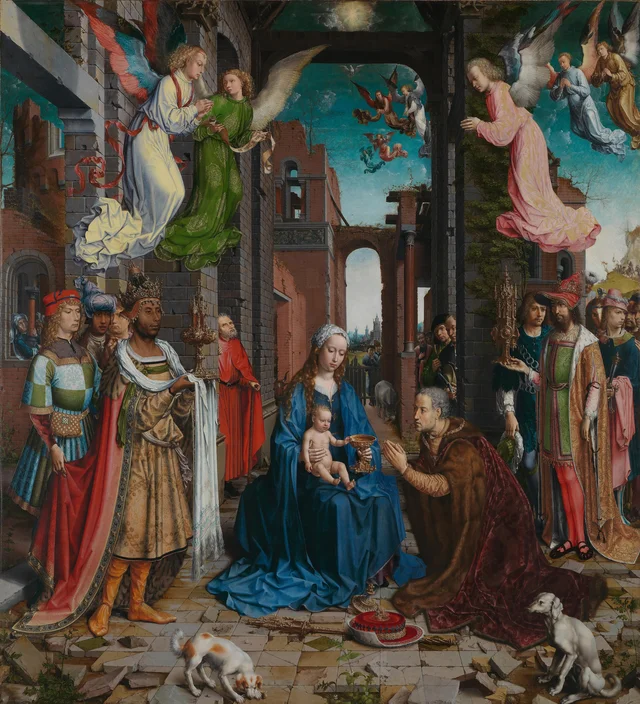 The Adoration of the KingsJan Gossaert, 1510
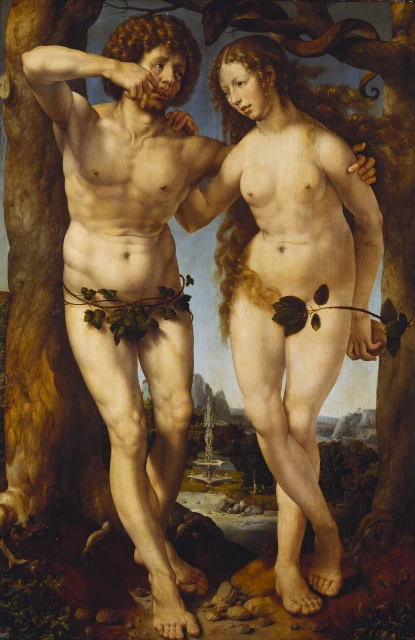 Adam and EveJan Gossaert, 1520
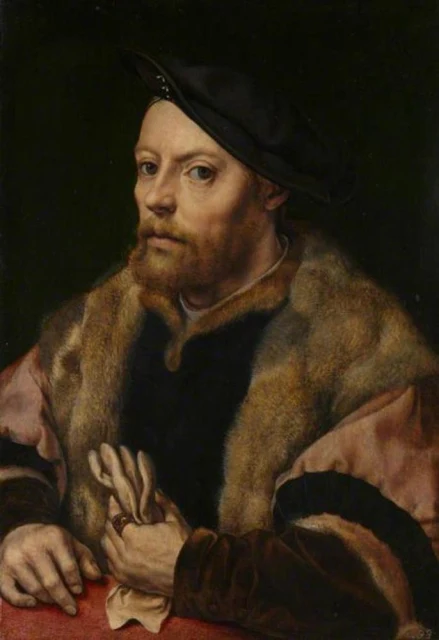 A Man holding a GloveJan Gossaert, 1530
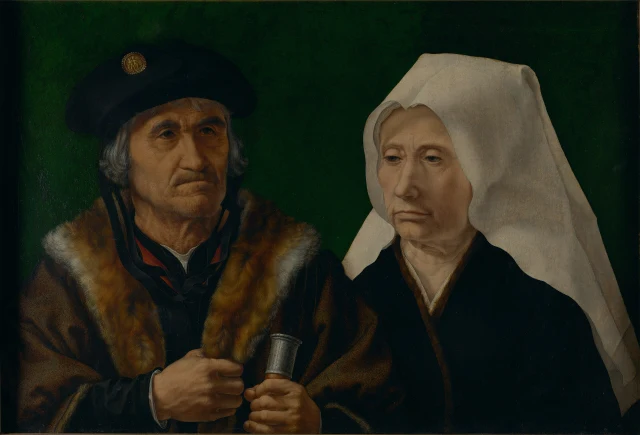 An Elderly CoupleJan Gossaert, 1520
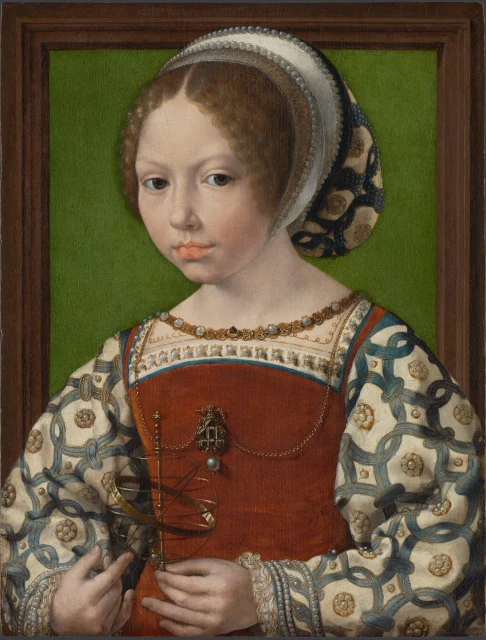 A Young Princess (Dorothea of Denmark?)Jan Gossaert, 1531
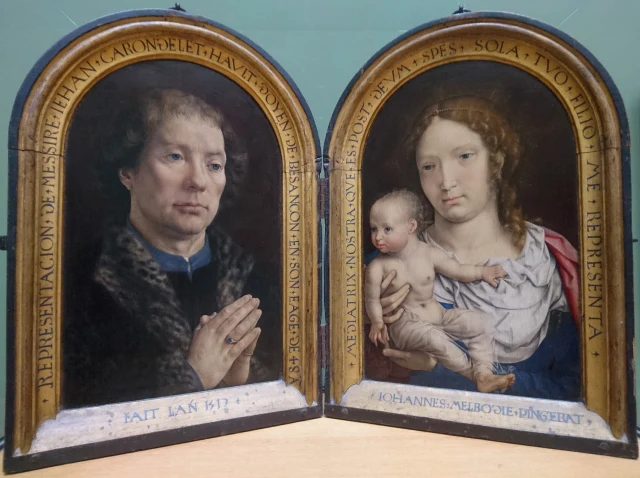 Diptych of Jean CarondeletJan Gossaert, 1517
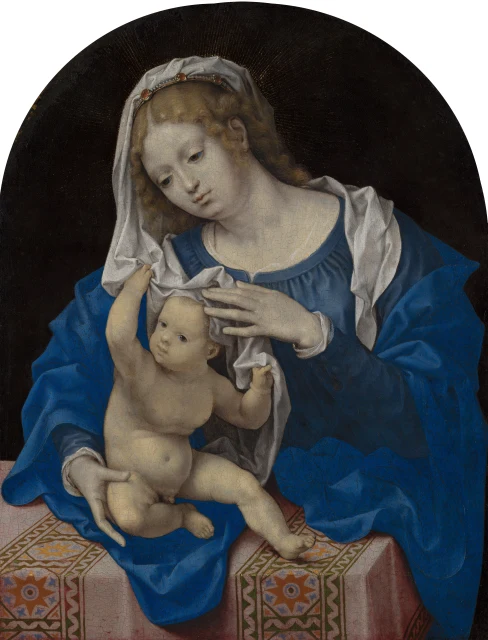 Madonna and ChildJan Gossaert, 1520
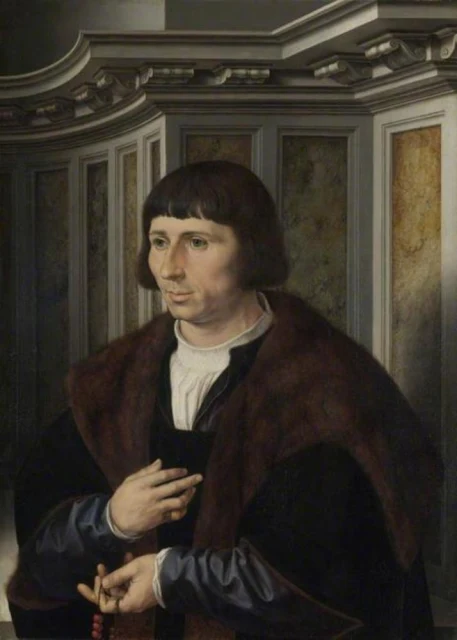 Man with a RosaryJan Gossaert, 1520
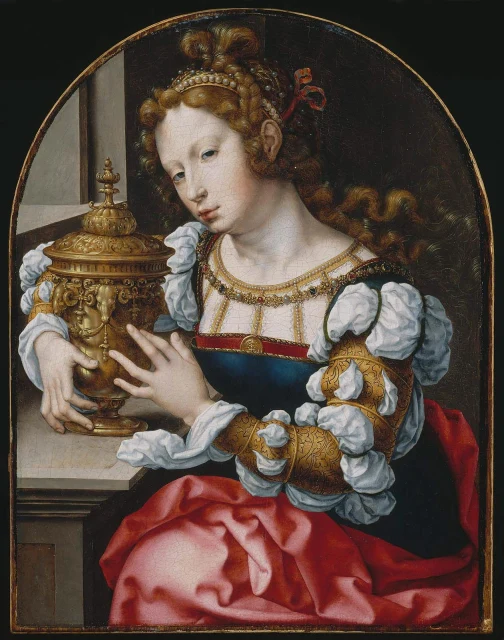 Mary MagdalenJan Gossaert, 1527
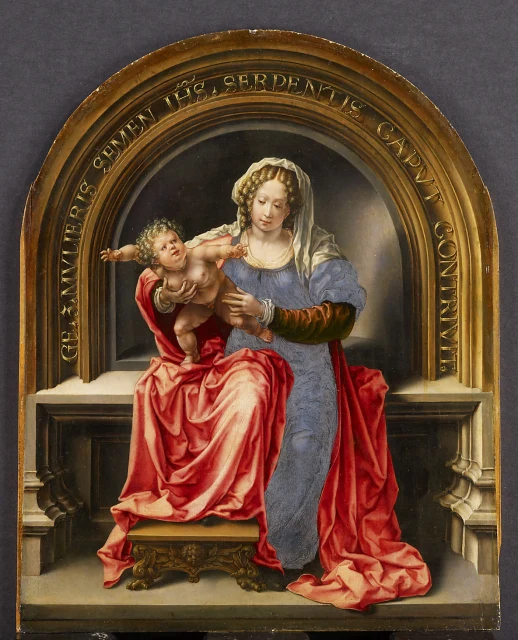 Mary with the ChildJan Gossaert, 1526
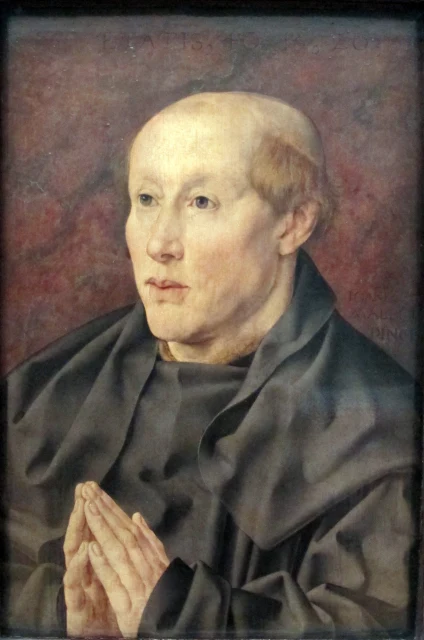 Portrait of a Benedictine Monk (?) Aged Forty, at PrayerJan Gossaert, 1526
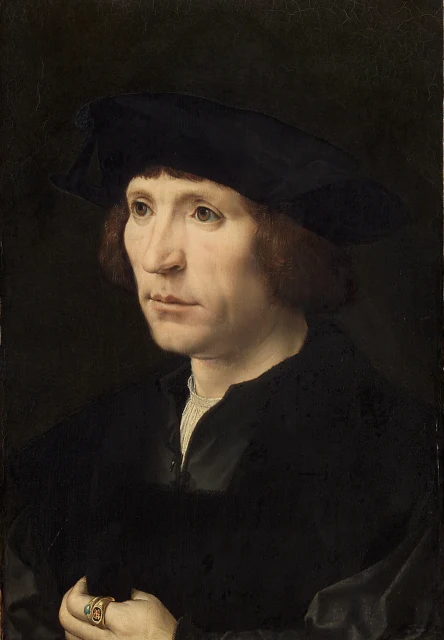 Portrait of a ManJan Gossaert, 1525
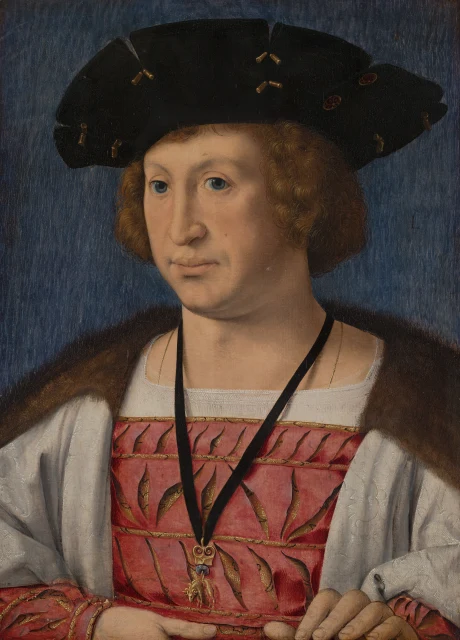 Portrait of Floris van Egmond (1469-1539)Jan Gossaert, 1519
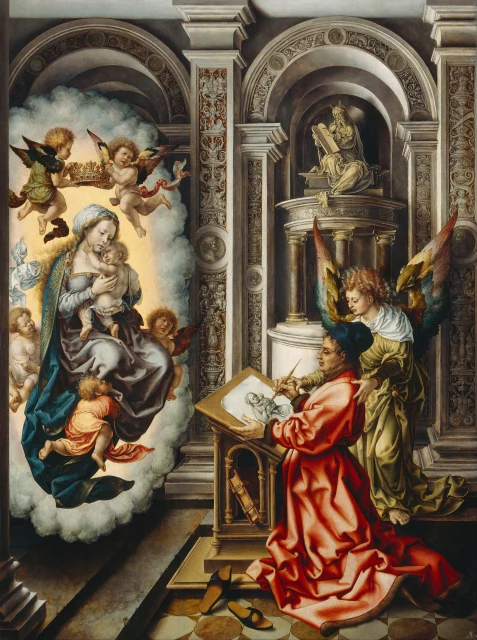 St. Luke Painting the MadonnaJan Gossaert, 1520
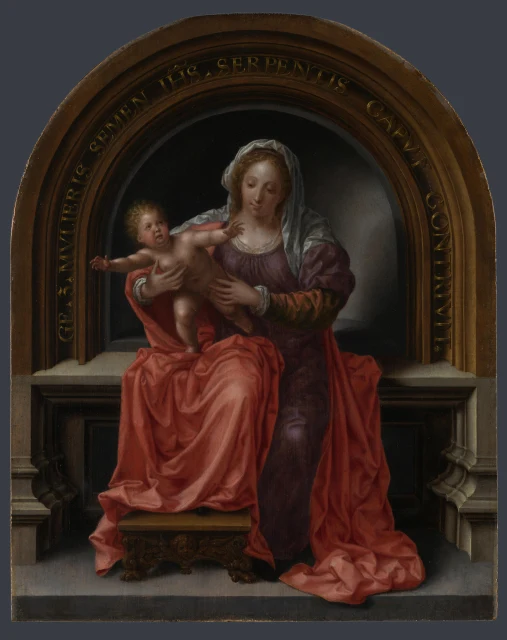 The Virgin and ChildJan Gossaert, 1527