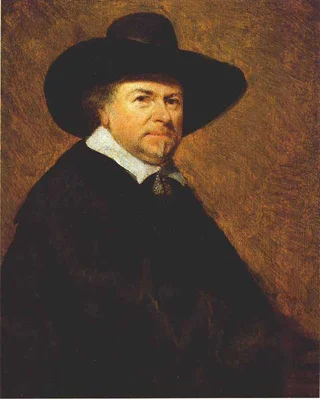
Jan van Goyen
1596–1656 · Dutch Republic · Dutch Golden Age painting
The story
Jan van Goyen painted the ordinary Dutch outdoors more often, perhaps, than any artist of his century: flat river banks, dunes, ferries, church towers seen across wet fields, thousands of drawings and hundreds of panels. He pared his colour down to browns, greys, and greens washed under wide skies, a quiet tonal way of seeing that let air and weather fill the picture.
He gave the sky most of the panel and pushed the horizon low, so that clouds do much of the work. The effect looks effortless, and he could produce it fast, which he needed to, because he sold cheaply and had many mouths depending on him.
Painting did not make him secure. Van Goyen speculated in property and, famously, in tulip bulbs during the mania of the 1630s, and lost badly. He died in The Hague in 1656 with his debts larger than his estate, so that his goods, including his own paintings, had to be sold off after him.
Works
8 works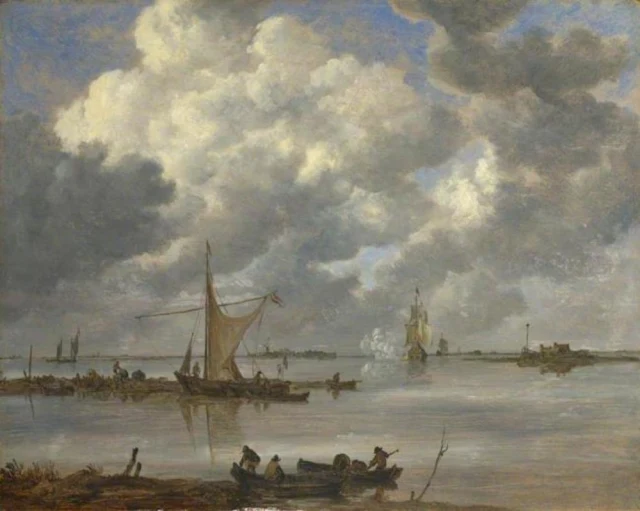 An Estuary with Fishing Boats and Two FrigatesJan van Goyen, 1653
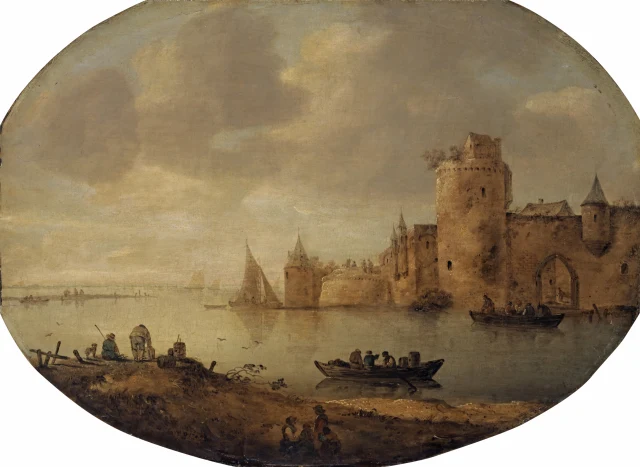 Bay with Old FortificationJan van Goyen, 1650
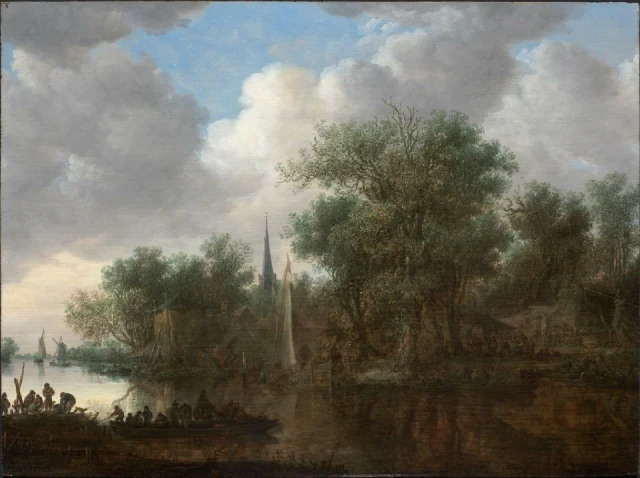 River Landscape with Peasants in a FerryboatJan van Goyen, 1648
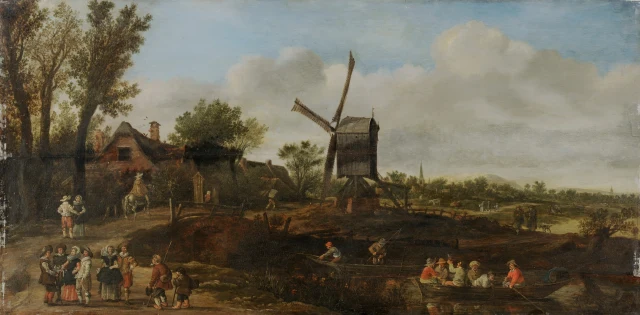 River Landscape with Windmill and BoatsJan van Goyen, 1625
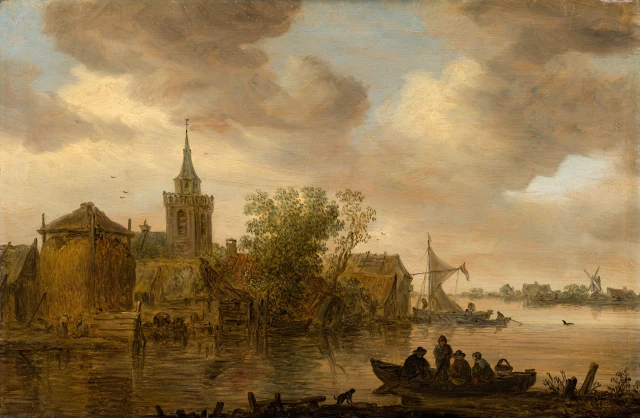 River View with Church and FarmhouseJan van Goyen, 1653
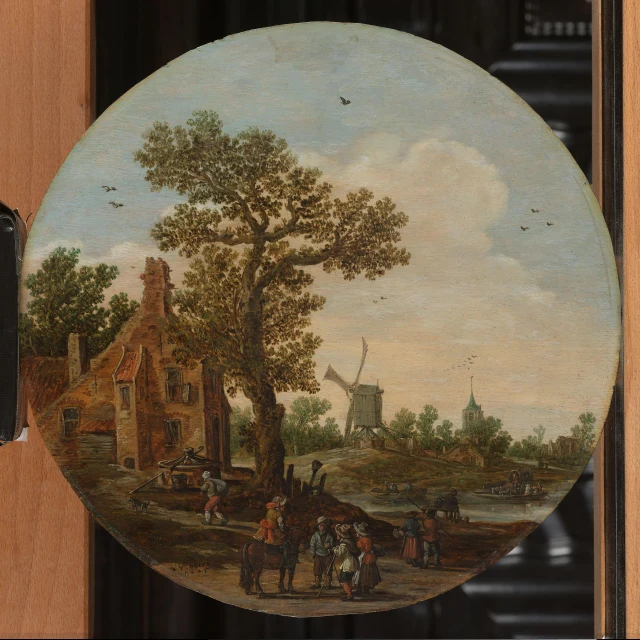 SummerJan van Goyen, 1625