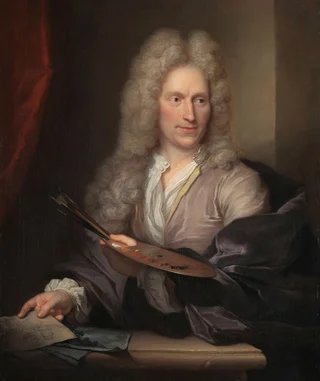
Jan van Huysum
1682–1749 · Dutch Republic · Dutch Golden Age, Baroque, Floral painting
The story
Look closely at a Jan van Huysum flower piece and the season falls apart. Tulips of spring stand beside the roses and ripe fruit of late summer, blossoms that never opened in the same week, gathered into one vase. Van Huysum painted from fresh-cut flowers, and to assemble a single bouquet he would sometimes keep a canvas a year or more, adding each bloom as it came back into season. He often dated such pictures across two years for exactly that reason.
Working in Amsterdam in the early 1700s, he was famously secretive. He took no pupils and let no one into his studio, brothers included, for fear they would learn how he ground and laid on his colours, and how he lifted his backgrounds from the dark tones of the older still life to a pale, luminous ground. Princes and collectors paid for the result: in his day his flowers could fetch several times the price of a Rembrandt, which made him about the highest-paid Dutch painter alive.
Works
9 works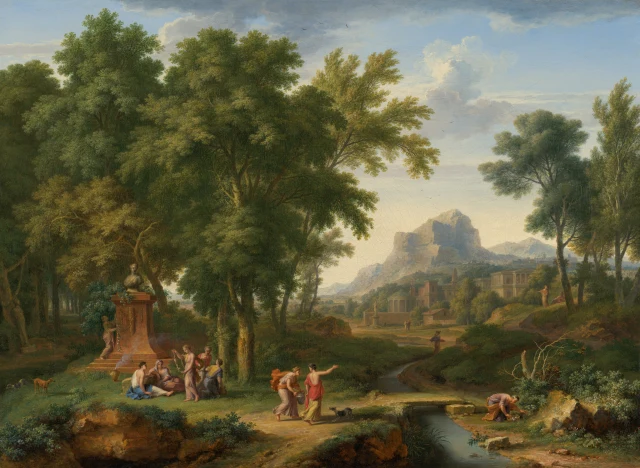 Arcadian Landscape with a Bust of FloraJan van Huysum, 1725
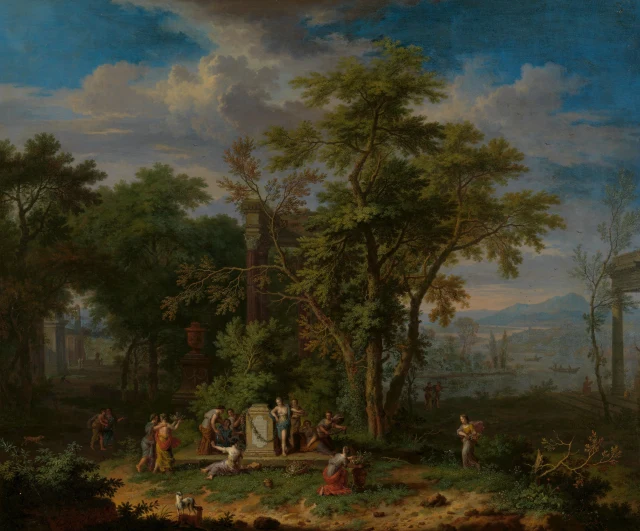 Arcadian Landscape with a Sacrificial FeastJan van Huysum, 1724
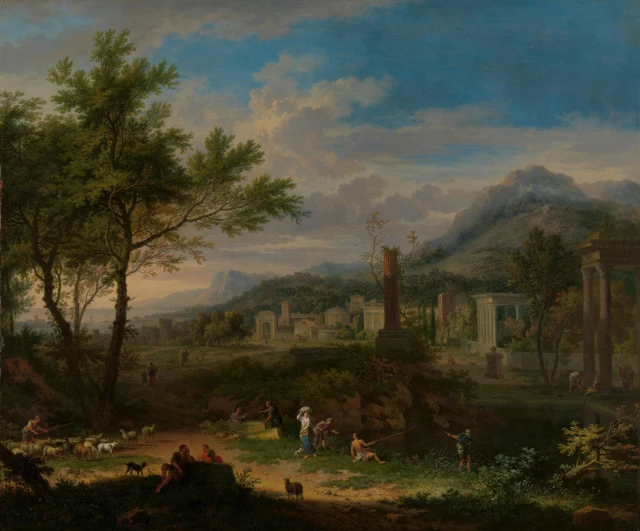 Arcadian Landscape with FishermenJan van Huysum, 1724
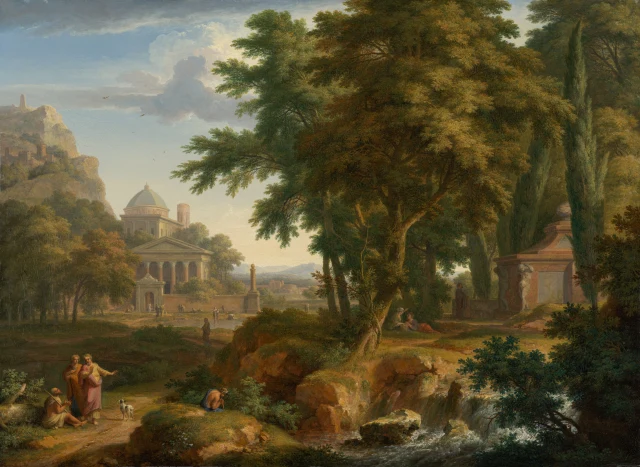 Arcadian Landscape with Saints Peter and John Healing the Lame ManJan van Huysum, 1725
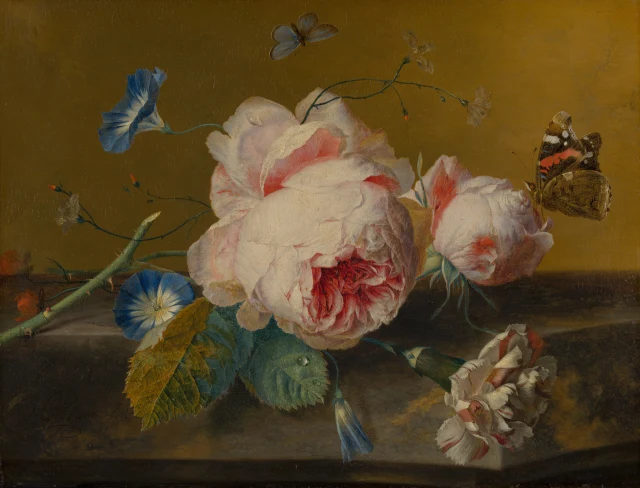 Flower Still LifeJan van Huysum
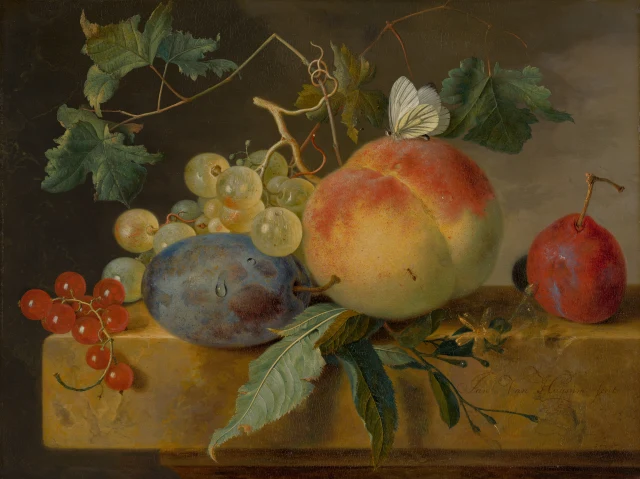 Fruit Still LifeJan van Huysum
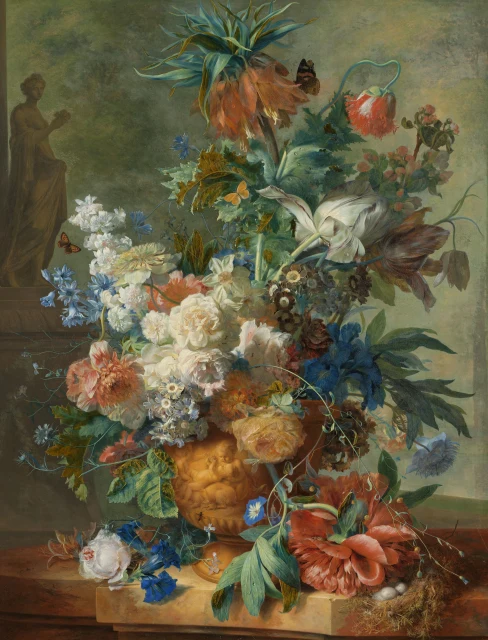 Still Life with FlowersJan van Huysum, 1723
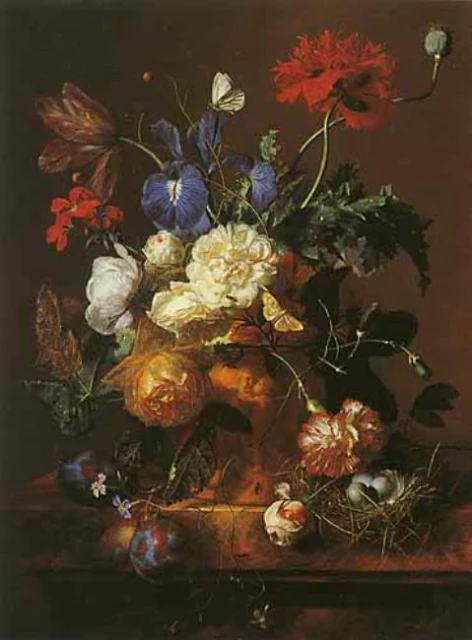 Vase of FlowersJan van Huysum, 1721
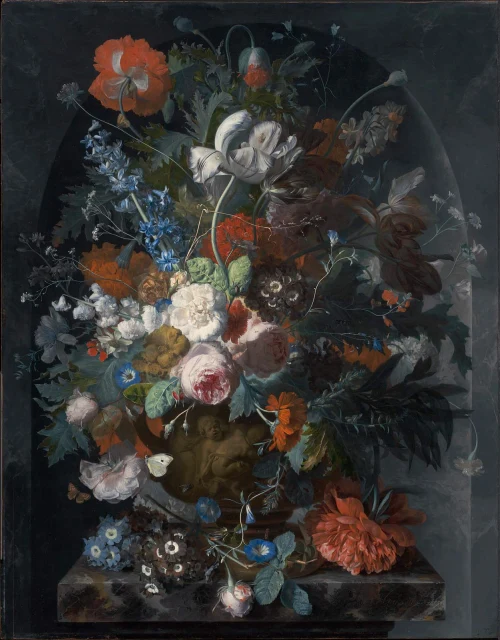 Vase of Flowers in a NicheJan van Huysum, 1715