Jean-Baptiste Regnault
1754–1829 · France · Neoclassicism
The story
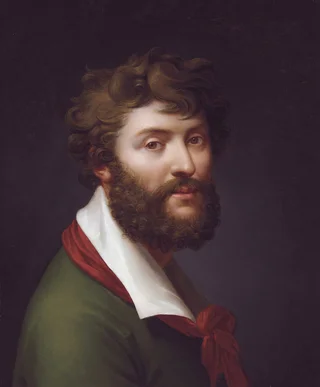
Around 1800 the leadership of French painting was a two-man contest. On one side stood Jacques-Louis David, the severe Neoclassical master of the Revolution. On the other stood Jean-Baptiste Regnault, who ran the rival studio and for years matched David for pupils and prestige.
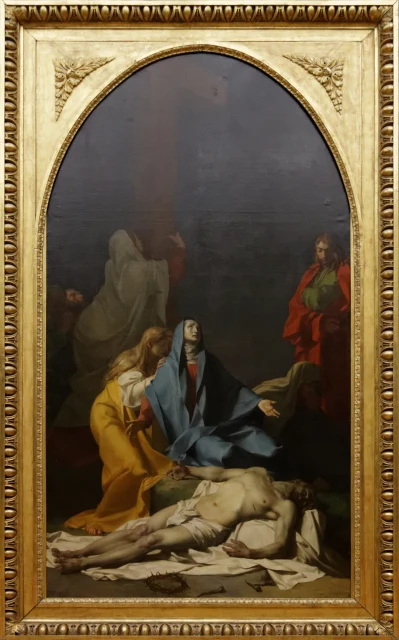
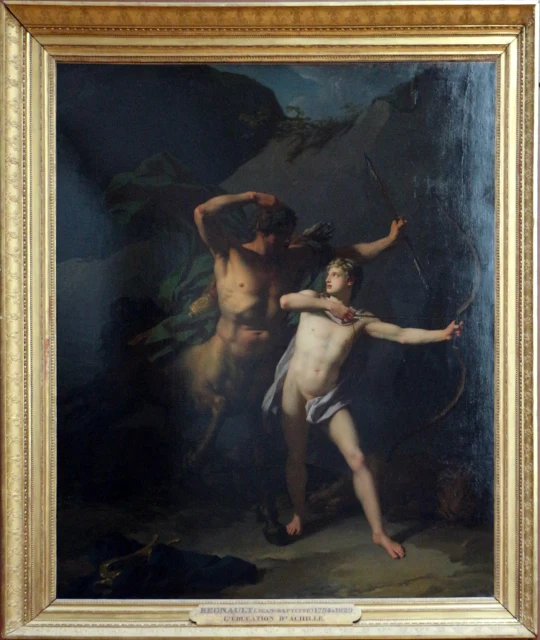
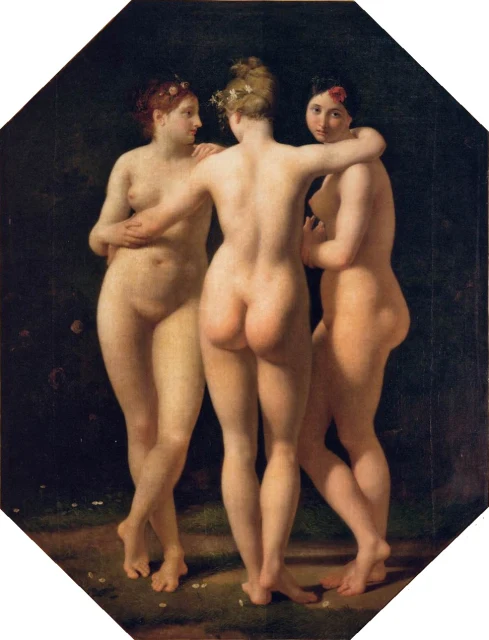
Regnault had won the Prix de Rome as a young man and spent years studying in Italy, and his taste stayed smoother and more sensuous than David's sculptural manner. His Three Graces of the 1790s, three nudes turning in a soft circle, is exactly the kind of polished mythological subject David mostly avoided. He also painted grand religious and history works, among them a Descent from the Cross for the royal chapel at Fontainebleau, the palace outside Paris, and The Education of Achilles, now in the Louvre.
He lived through the Revolution, Napoleon's empire and the return of the monarchy, adjusting to each in turn, and kept showing at the Salon almost to the end. One of the painters trained in his studio, Pierre-Narcisse Guerin, would go on to teach both Gericault and Delacroix, the young men who carried French art into Romanticism.