Jean Béraud
1849–1935 · France · Realism, Academic art
The story
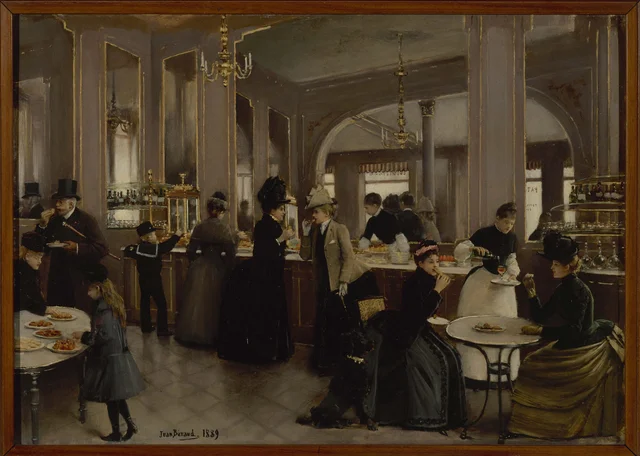
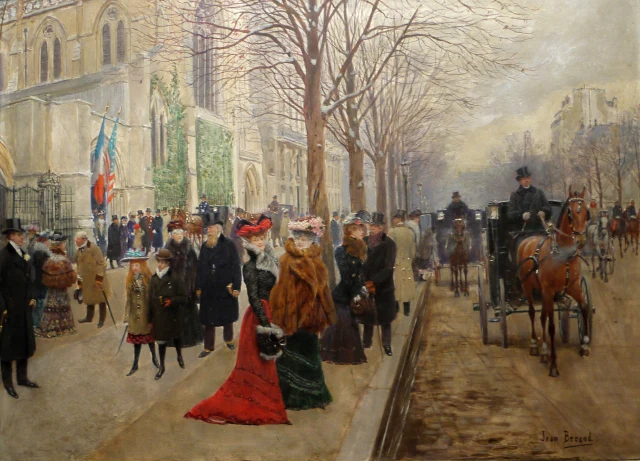
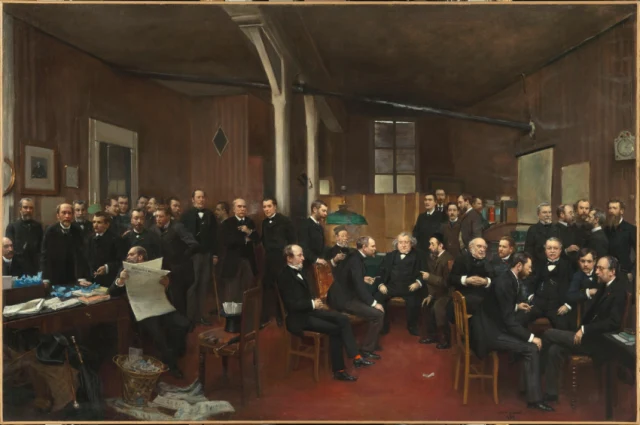
Walk through Paris in the 1880s and you would find a city rebuilt: Baron Haussmann's wide new boulevards, gaslit cafés, department stores, and crowds on the Champs-Élysées. Jean Béraud made this his subject. He painted the boulevards and cafés, Montmartre and the banks of the Seine, with a precise, illustrator's eye for what people wore and how they stood.
He came to it late, and by accident. Born in Saint Petersburg in 1849, where his father, a sculptor, was likely at work on the great St Isaac's Cathedral, he was raised in Paris and studied to become a lawyer. The Franco-Prussian War and the German siege of the city in 1870 broke that plan. He entered the studio of the portraitist Léon Bonnat and first showed at the Salon in 1872.
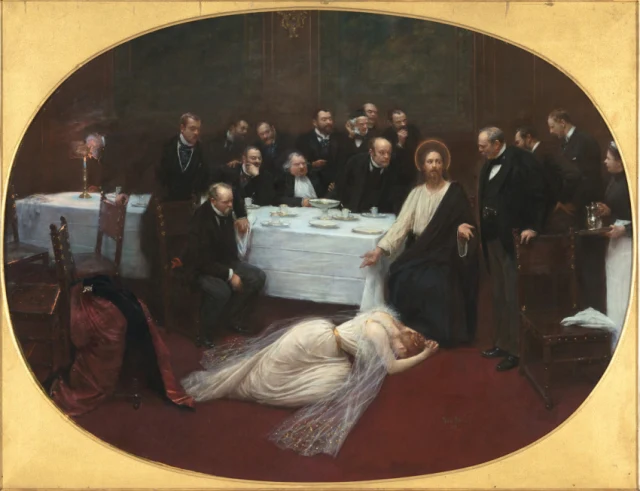
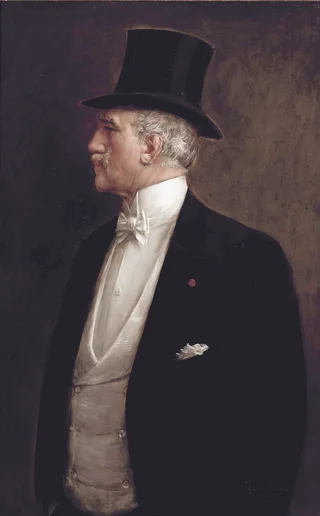
His pictures sit deliberately between two worlds, the polished academic art the Salon rewarded and the looser painting of the Impressionists. He also liked to needle his own society. In one series he dropped biblical figures into modern Paris, setting Mary Magdalene at a fashionable dinner among men in evening dress, which caused a stir when it was shown.
He was made a chevalier of the Légion d'honneur in 1894. His Paris scenes now hang in the Louvre, the Met in New York, and the National Gallery in London.