Jean Fouquet
1420–1480 · Kingdom of France · Renaissance
The story
Jean Fouquet was the finest French painter of the 15th century, and he left one of the strangest religious images of his age. In the Melun Diptych, painted around 1452, his Virgin Mary sits pale and impossibly smooth-skinned, one breast bared, surrounded by bright red and blue cherubs. The court whispered that her cold, perfect face was modelled on Agnès Sorel, the recently dead mistress of King Charles VII, which turned a devotional panel into something close to a royal portrait.
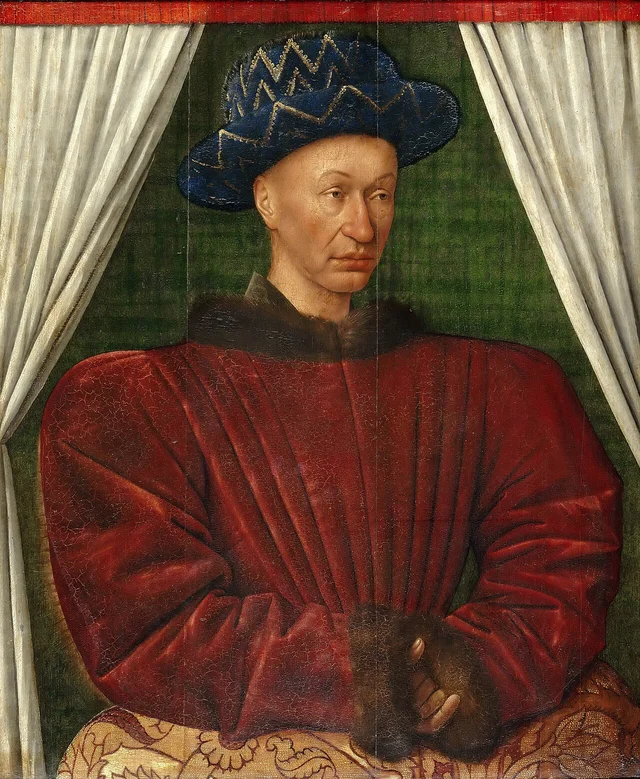
Fouquet came from Tours, in the Loire valley, and travelled to Italy as a young man, where he absorbed the new Renaissance sense of perspective and solid form and carried it back north. He painted King Charles VII from life and served the French crown.
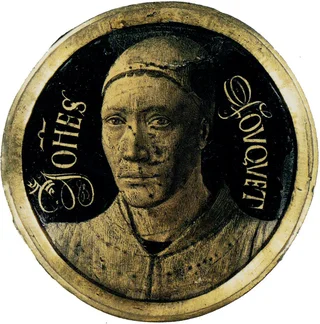
Much of his genius went into tiny things. His illuminations for the Hours of Étienne Chevalier, a royal treasurer, set biblical scenes against recognisable views of medieval Paris and the Loire. On one small enamel he left a round self-portrait in gold on black, among the earliest self-portraits by a named artist in European painting.