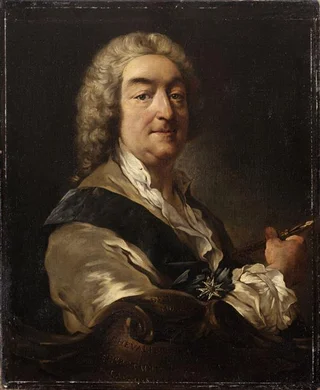
Jean-François de Troy
1679–1752 · France · Rococo, History painting, Genre painting
The story
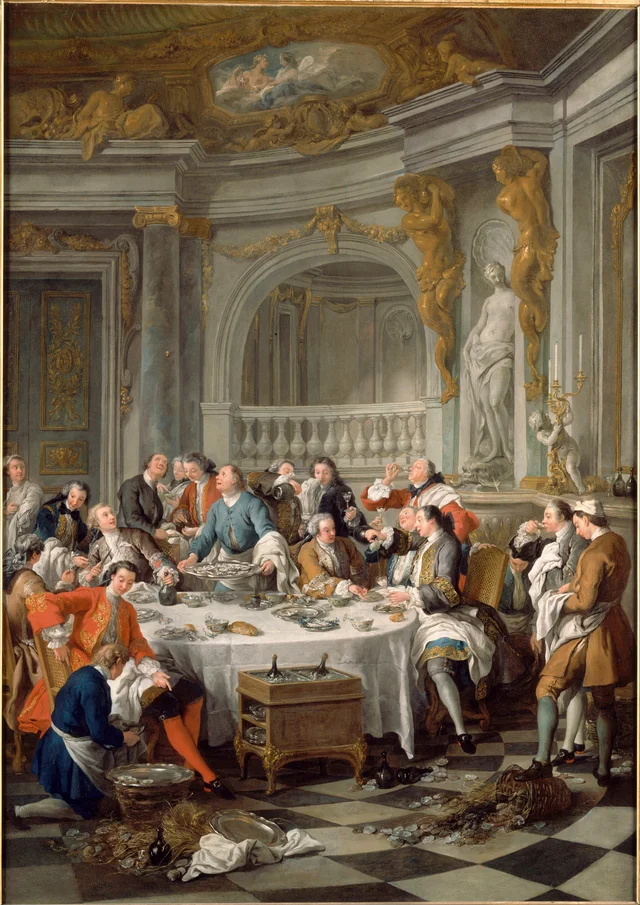
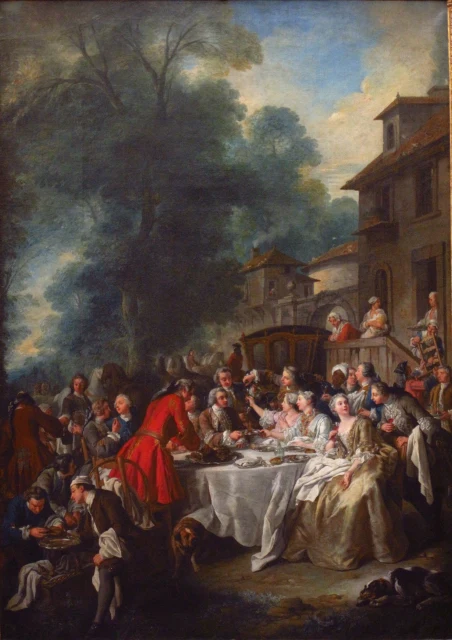
In the Paris of the 1720s, high society wanted to see itself, and Jean-François de Troy gave it what he called tableaux de mode — small, polished scenes of fashionable men and women reading, flirting, tying a garter, hesitating over a confession of love. His painting The Declaration of Love catches that exact moment between a well-dressed couple in a garden, and it made him the artist the aristocracy of the Regency turned to when it wanted its own manners framed as art.
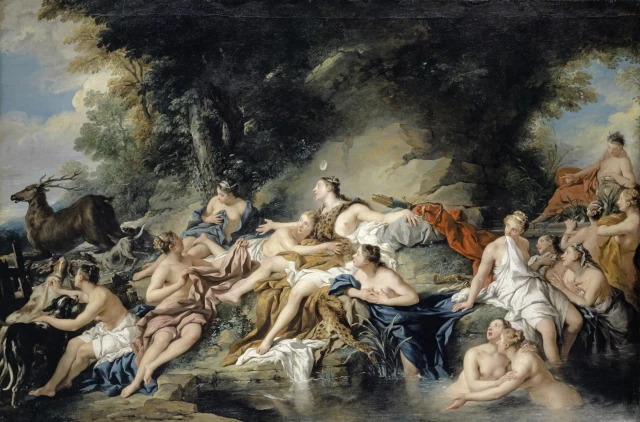
He had come to it the long way. His father, the portraitist François de Troy, paid for six years in Italy after young Jean-François failed the Prix de Rome, the state scholarship that sent promising students to study the old masters. There he learned the grand machinery of history painting, and back in France he could work at any scale, from an altarpiece to a cartoon for the royal Gobelins weavers.
In 1738 he left Paris for good to run the French Academy in Rome, the training house for France's state artists, and stayed its director until near his death. He is buried in the city where his career had begun four decades earlier, as a student who had just been turned down.