Jean-François Raffaëlli
1850–1924 · France · Naturalism, Impressionism
The story
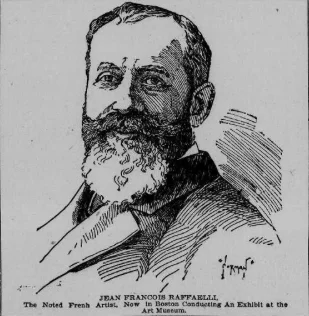
When the Impressionists mounted their exhibition of 1880, one man nearly took it over: Jean-François Raffaëlli, who hung 37 works and was not an Impressionist at all. Edgar Degas had insisted on inviting him, and the choice split the group. Claude Monet, disgusted, refused to show, grumbling that their little chapel had become a school open to any dauber who wandered in.
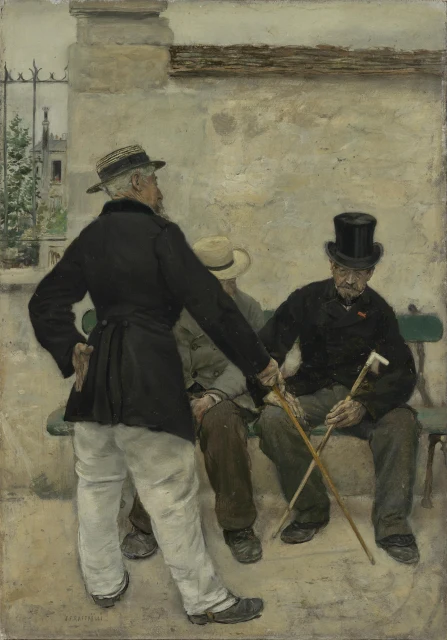
Raffaëlli was a Parisian of Italian descent whose whole training amounted to three months in the studio of the academic painter Gérôme. He found his subject in the poor of the city's ragged outskirts, the beggars and the ragpickers, the men who scavenged the streets at dawn. His painting The Ragpicker of 1879 made his name, championed by the writer Huysmans, a sharp critic of the day.
He kept to those edges of Paris for the rest of his career, the muddy suburbs and river villages along the Seine, working in a realism brushed with Impressionist light. Late in life he turned increasingly to printmaking, and it is the color drypoints of Parisian streets that many collectors know him by.