Jean Hey
France, Duchy of Burgundy · Early Netherlandish, Northern Renaissance
The story
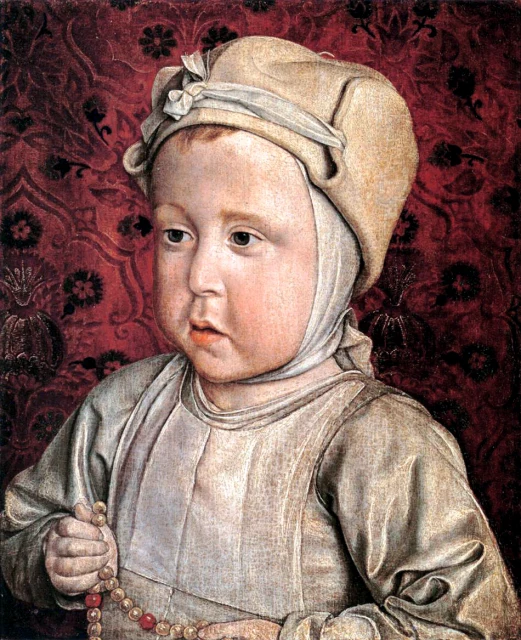
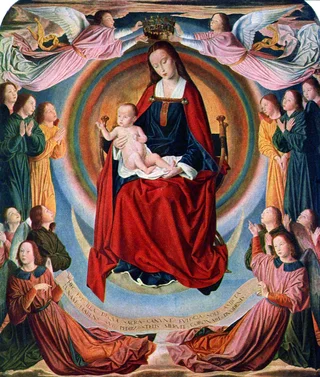
For a long time he had no name, only a painting. Art historians called him the Master of Moulins, after a magnificent triptych in the cathedral of Moulins in central France, and gathered the rest of his work around it by eye. The name Jean Hey came later, from an inscription on the back of a damaged panel in Brussels that called him a German and a famous painter.
He had trained in the Netherlands, probably in Ghent under Hugo van der Goes, one of the great Flemish painters of the day, and by about 1480 he was working in France for the Bourbons, the family that ruled a large duchy in the country's centre. The Moulins triptych, painted around 1500, shows Duke Pierre II, his formidable wife Anne de Beaujeu, who had governed France during the young king's minority, and their daughter kneeling before the Virgin.
That Flemish precision in the faces, set against Italian ideas of space and light, is what marks his hand. The triptych still stands in Moulins Cathedral, and for years those panels were the fixed point from which the rest of his paintings could be recognised.