Jean-Jules-Antoine Lecomte du Nouÿ
1842–1923 · France · Orientalism
The story
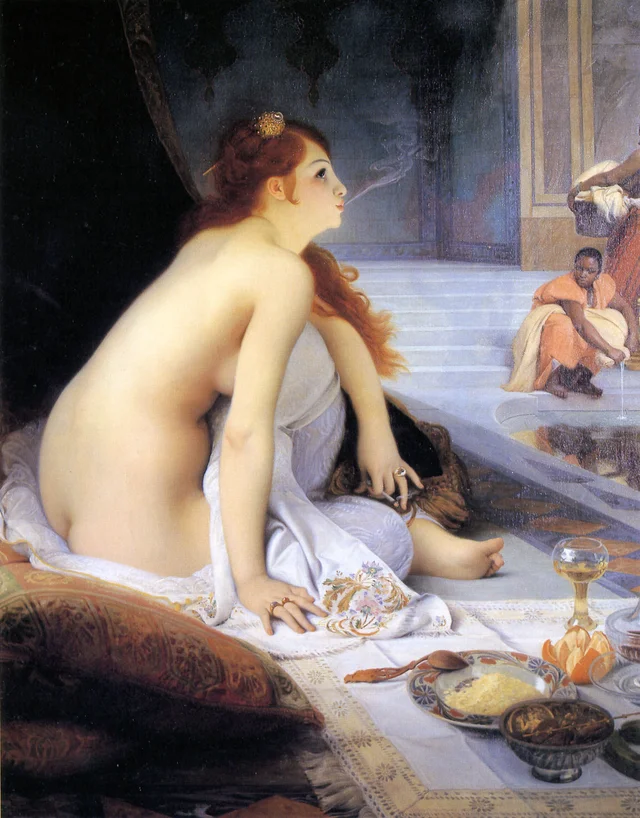
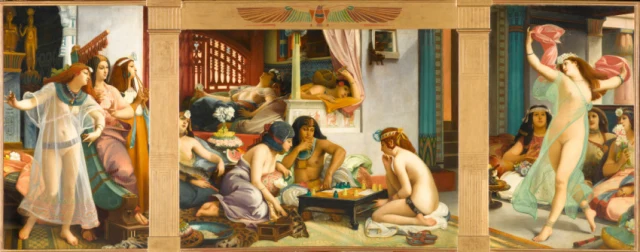
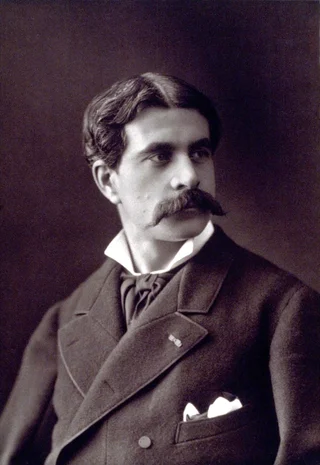
His teacher was Jean-Léon Gérôme, the most exacting of the French academic painters, and Lecomte du Nouÿ learned the lesson completely. Every tile, every fold of silk, every glint of brass is rendered as if it could be touched. He travelled to Greece, Turkey and Egypt for his subjects, and the Orientalist scenes he brought back made his name. The best known is The White Slave of 1888, a nude in a Cairo bath painted with the cool, polished finish that Paris salons prized.
There was another side to his career that few of his Paris admirers saw. From the 1880s he worked for the young kingdom of Romania, painting portraits of King Carol I and Queen Elisabeth and decorating churches that his brother André, an architect, was helping to restore. He spent long stretches in Bucharest, and much of his religious and decorative work stayed there, in Romania.
By the time he died in 1923, his kind of meticulous academic painting had been out of fashion for a generation, pushed aside by the Impressionists he had outlived. His studio still held dozens of the small, jewel-like Eastern scenes that collectors would rediscover decades later.