Jēkabs Kazaks
1895–1920 · Russian Empire, Latvia · Expressionism
The story
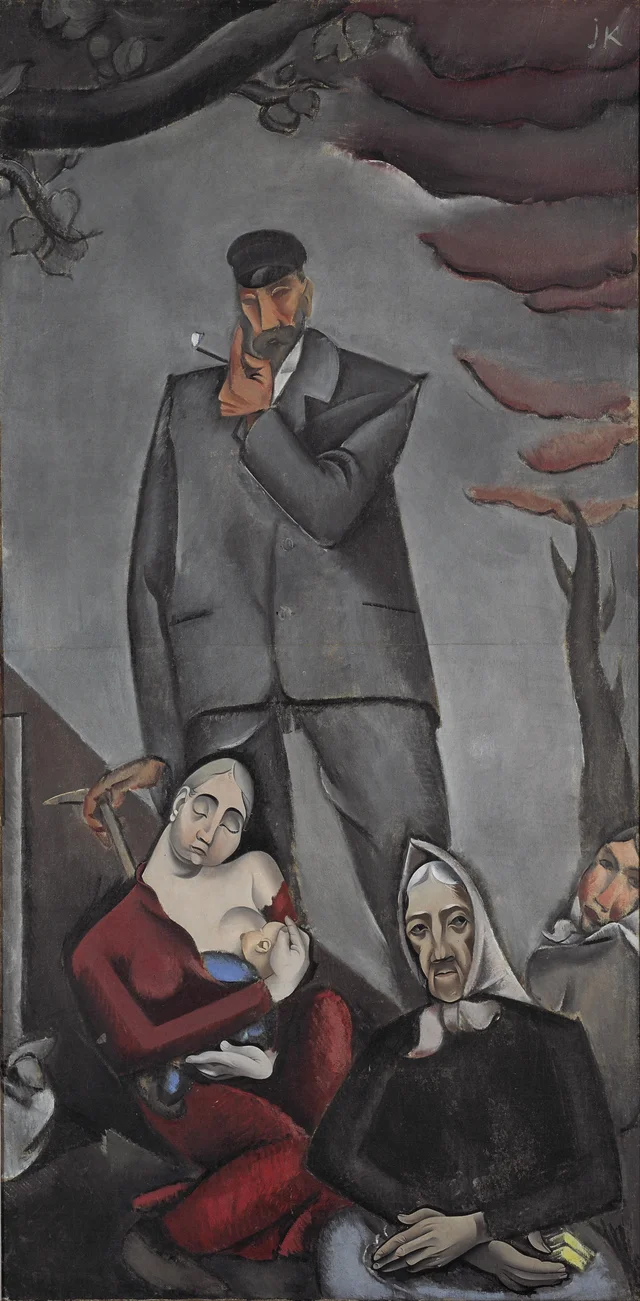
Three generations of a peasant family stand close together, a mother holding her child and the grandparents with them, painted in dark, lead-grey tones. Jēkabs Kazaks painted Refugees in 1917, when he was himself a wartime refugee. Two years earlier, as the German front reached Courland, the western part of Latvia, tens of thousands of people had fled east into Russia. The canvas, more than two metres tall, is now in the Latvian National Museum of Art and is part of the Latvian Cultural Canon, the national list of key works.
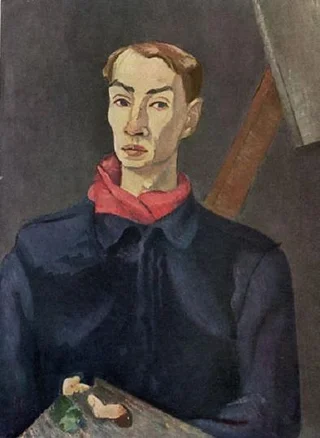
Kazaks was a street sweeper's son from Riga. He studied at the Riga art school under Vilhelms Purvītis, the leading Latvian landscape painter, then continued in exile at the art school in Penza, in Russia. Back in Riga, he helped form the Expressionists' Group in 1919, which became the Riga Artists' Group, the main circle of the young modernists, and he was its first chairman. He died in 1920, at 25, from tuberculosis.