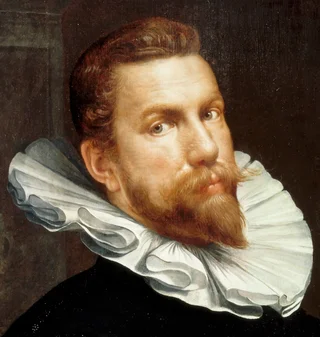
Joachim Wtewael
1566–1638 · Dutch Republic · Mannerism
The story
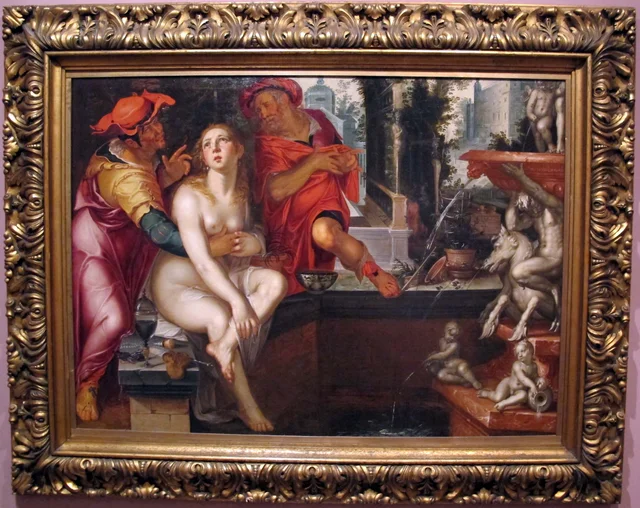
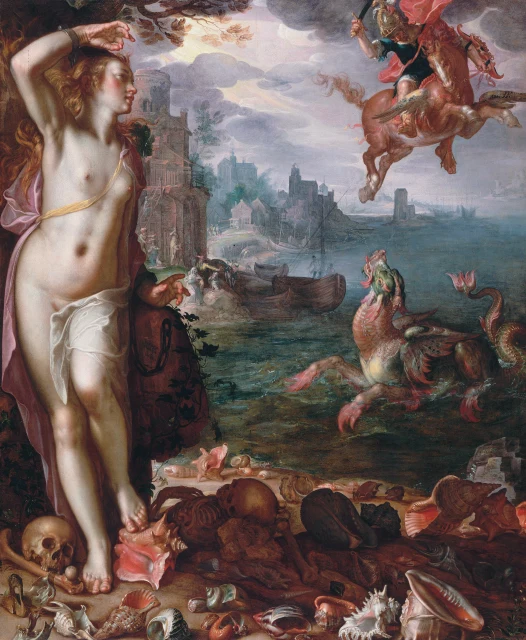
Joachim Wtewael made his money in flax, the fibre spun into linen, and sat on the town council of Utrecht in the Dutch Republic. Painting was almost a sideline, and perhaps that freedom is why he never changed his style. While Dutch artists around him turned toward plain, naturalistic scenes, Wtewael kept working in the elaborate manner known as Northern Mannerism, all polished, twisting figures in bright enamel colour, decades after it had gone out of fashion.
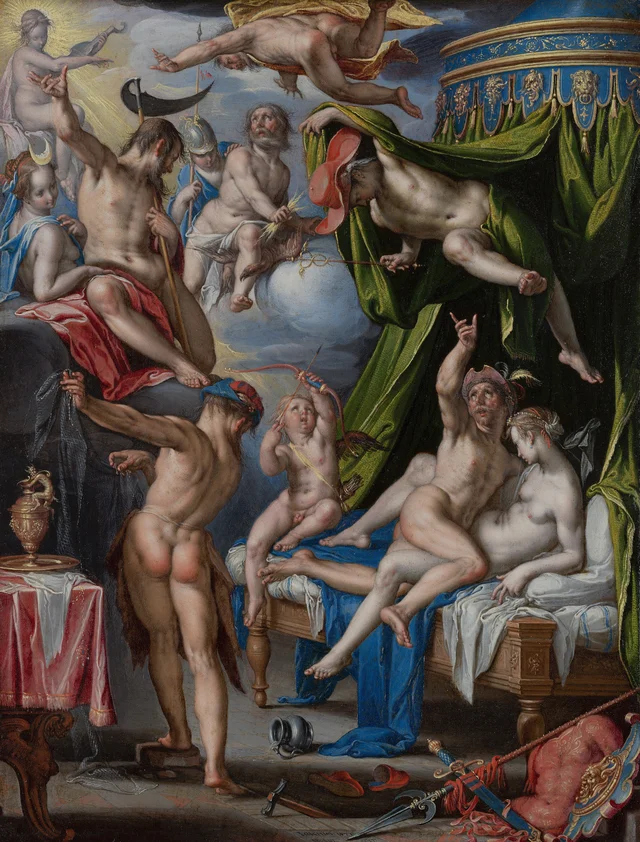
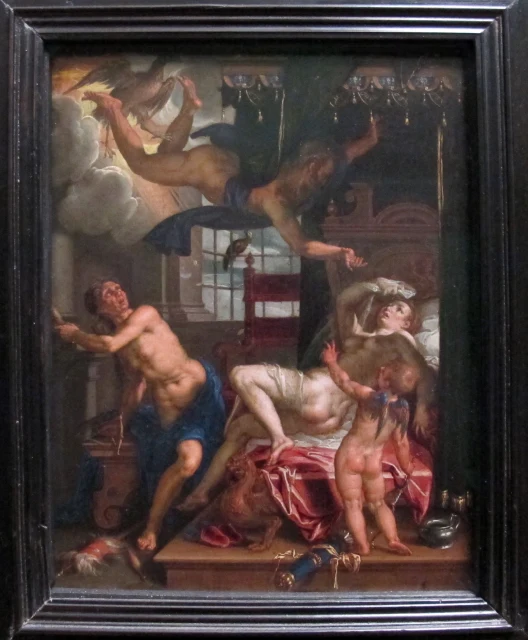
He loved a small, awkward, human story. His favourite came from Ovid's Metamorphoses: Vulcan, the lame smith of the gods, catches his wife Venus in bed with Mars and drops a fine net over the pair to shame them before the other gods. Wtewael painted the scene more than once. One version is barely eight inches high yet packs in 11 figures across three spaces, every limb finished like a jewel.
He worked most of his life in Utrecht and left about a hundred paintings, along with drawings and designs for stained glass. Many are cabinet pictures, small enough to hold in the hand, painted on copper so the colours stay hard and glossy.