Johan Lundbye
1818–1848 · Kingdom of Denmark · Realism
The story
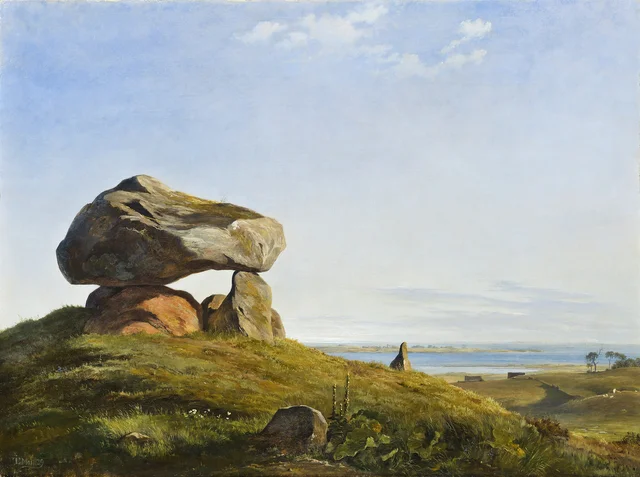
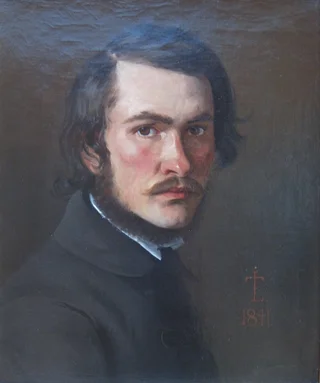
Johan Thomas Lundbye had a program for his art before he was 20: to paint Denmark as Danish. He had taken to heart the art historian Niels Laurits Høyen, who urged the young generation to drop borrowed foreign subjects and paint their own country, and Lundbye did exactly that, filling his canvases with the gentle hills, grazing cattle and open coasts of the island of Zealand.
He belonged to the last wave of the Danish Golden Age, a burst of painting in a small, then-bankrupt kingdom. His landscapes are quiet and exact, and his animals, especially cattle, are among the most loved in Danish art. He kept detailed journals, only recently studied in full, that show a thoughtful and often anxious young man behind the sunlit views.
In 1848, when war broke out over the duchies of Schleswig and Holstein on Denmark's southern border, Lundbye volunteered. He never reached the fighting. In April 1848, in Schleswig, a comrade's rifle went off by accident and killed him. He was 29. Many of his Zealand landscapes now hang in the Hirschsprung Collection in Copenhagen, assembled by a tobacco manufacturer who prized his generation.