Johannes Bosboom
1817–1891 · Kingdom of the Netherlands · Hague School
The story
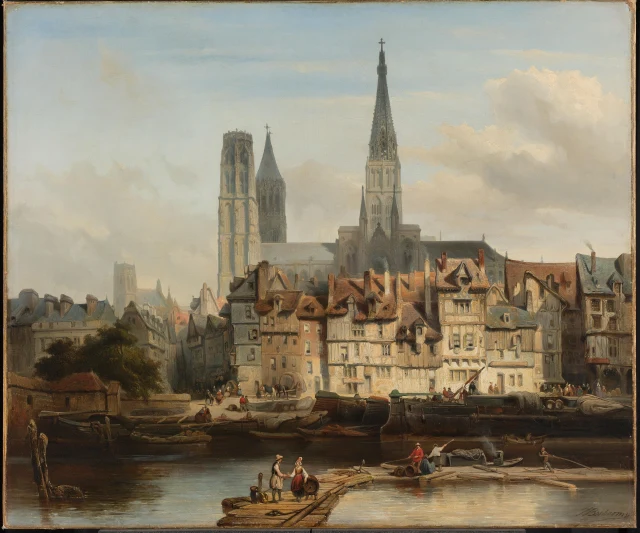
Step into almost any Bosboom and you are standing in the cool half-light of a Dutch church, its whitewashed vaults climbing away into shadow while a few small figures cross the stone floor. He built a whole career on that one subject. Born in The Hague in 1817, he trained under the city-view painter Bartholomeus van Hove and travelled young to the Moselle and to Rouen, where a view of the cathedral won him a silver medal.
The genre he chose was already two centuries old. Painters like Pieter Saenredam and Emanuel de Witte had made the empty Protestant church interior a Dutch specialty back in the 1600s, and Bosboom picked the thread up again, chasing the way light pools and fades across plaster and old wood. That set him a little apart from his friends in the Hague School, who mostly painted dunes, cattle and grey coastal weather, though his real interest was the same as theirs: atmosphere, caught in muted tone.
He married the novelist Anna Louisa Geertruida Toussaint, one of the best-known Dutch writers of the day, and their house in The Hague became a gathering point for artists. After 1880 he worked almost only in watercolour, loosening his brush until the columns and pulpits seem to dissolve into their own shade.