Johannes Jelgerhuis
1770–1836 · Kingdom of the Netherlands · Romanticism
The story
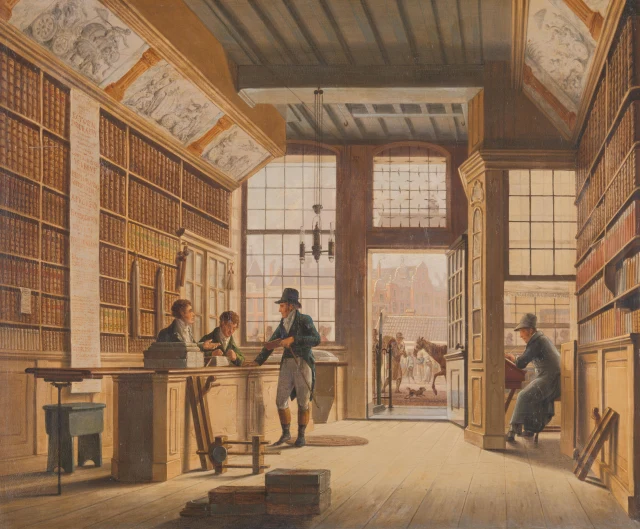
Look at Johannes Jelgerhuis's painting of a bookshop on the Vijgendam in Amsterdam and it feels like a theatre set. The shelves run back in steep perspective, a printing press stands on the floor, and the open shopfront frames a view of the city like a painted backdrop. There is a simple reason for that. Jelgerhuis spent much of his life on a real stage.
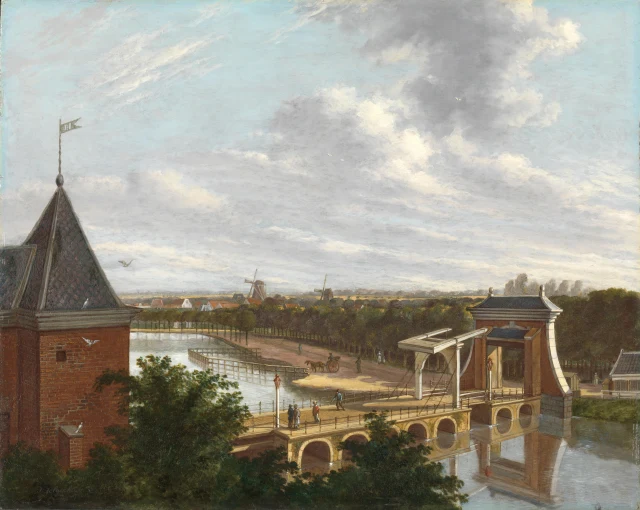
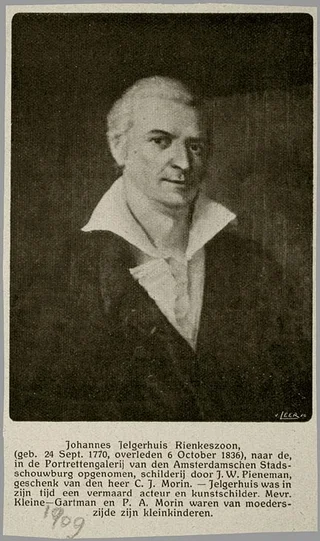
Born in Leeuwarden, in Friesland, in 1770, he learned to paint from his father Rienk, also a painter, and from the decorative painter Pieter Barbiers. In the first decade of the 1800s he joined the Stadsschouwburg, Amsterdam's city theatre, where he became a well-known character actor and also sketched costumes and sets. He never stopped painting, turning out portraits, city views and church interiors in the manner of Saenredam, the 17th-century master of whitewashed Dutch churches.
The bookshop, painted in 1820, belonged to Pieter Meijer Warnars, a bookseller, publisher and printer whose shop was a meeting place for Amsterdam's cultural elite. Jelgerhuis also taught young actors at the theatre, and in 1827 he published his lessons on gesture and facial expression, with 95 illustrations of stage poses. He died in Amsterdam in 1836, and the bookshop painting entered the Rijksmuseum in 1878 as a bequest from the Meijer Warnars family.