Johannes Moreelse
1634 · Dutch Republic · Baroque
The story
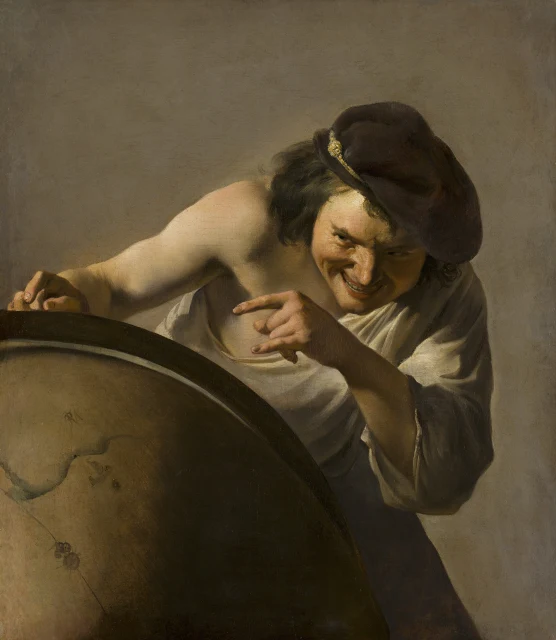
Two faces hang together in the Centraal Museum in Utrecht, one man laughing and one man weeping. They are Democritus and Heraclitus, the ancient Greek philosophers who were said to meet the follies of the world with laughter and with tears, and they are the best-known works of a painter who died young.
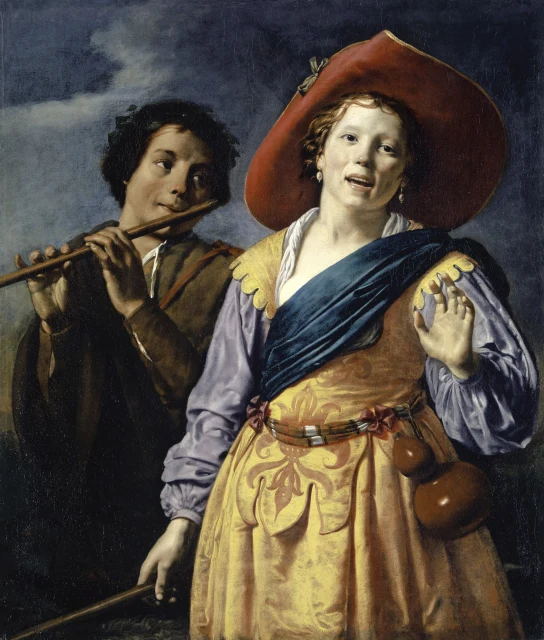
Johannes Moreelse was the son of Paulus Moreelse, a celebrated Utrecht portraitist, and trained first in his father's studio. Around 1627 he went to Rome, where the circle of foreign painters turned him toward the strong light and half-length figures of the followers of Caravaggio. Back in Utrecht he painted philosophers, shepherds and character heads in that shadowed manner.
He died in his home city in October 1634, during an outbreak of plague. So few pictures could be firmly tied to his hand that his small body of work was only sorted out from his father's and others' in the 1970s.