John Quidor
1801–1881 · United States · American Romanticism, Narrative painting
The story
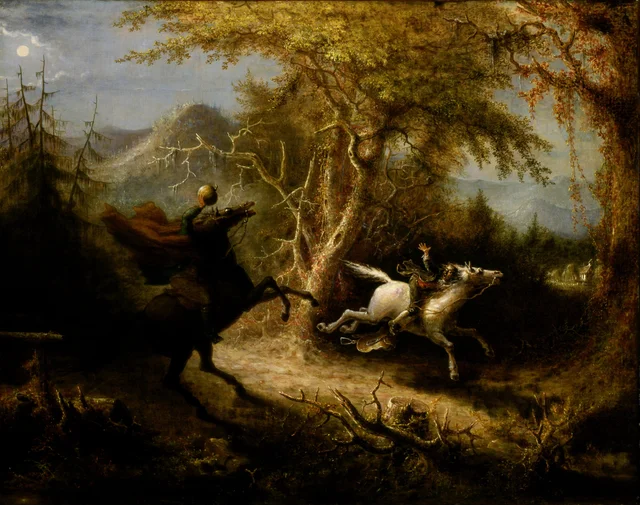
The Headless Horseman Pursuing Ichabod Crane, painted in 1858 and now in the Smithsonian American Art Museum, comes from Washington Irving's tale The Legend of Sleepy Hollow. Irving's stories of old Dutch New York were the subject John Quidor returned to for most of his life, alongside scenes from Cervantes and James Fenimore Cooper.
His start was rocky. In 1818, at 17, he was apprenticed in New York to the portrait painter John Wesley Jarvis, together with Henry Inman, who got far more of the master's attention. In 1822 Quidor sued Jarvis for breach of contract and won $251.35, a victory that mostly advertised how little he had been taught. He earned his living decorating steamboats and the fire engines of New York's fire companies.
Money stayed scarce. He speculated in Illinois land, and in the 1840s he painted seven large Biblical scenes for a Methodist minister in exchange for a farm in Adams County that he never received. Those pictures are now lost. His later works from the 1850s, the Horseman among them, are thinly painted, with nervous figures that nearly vanish into hazy backgrounds. He died in Jersey City in 1881 largely forgotten, and his reputation was revived by an exhibition at the Brooklyn Museum in 1942.