Joris van der Haagen
1669 · Dutch Republic · Dutch Golden Age, Landscape painting
The story
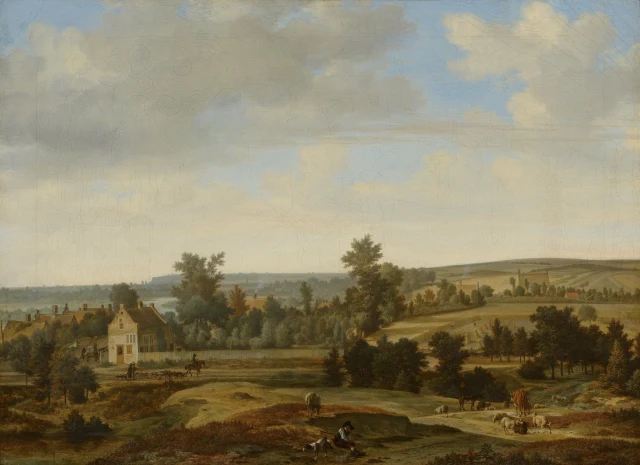
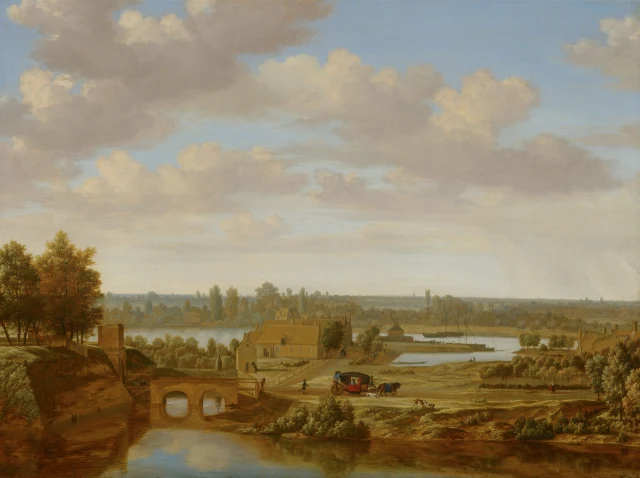
Some 50 years after Joris van der Haagen died, the painter and biographer Arnold Houbraken noticed a problem with his landscapes. Van der Haagen had mixed his greens with blue ash, a copper-based pigment, and by 1715 those greens had faded. Collectors went on paying high prices for his pictures all the same.
Even his beginnings are uncertain. He was born around 1615, in Arnhem or in Dordrecht, and the archives first show him drawing in Arnhem, probably taught by his father Abraham, also a painter. After his father's death he moved to The Hague in 1639, joined its painters' guild in 1643 and became a citizen the next year. In 1656 he was one of the founders of Pictura, the confraternity of Hague painters who broke away from the old guild.
He made his name with views of real places in the east of the Dutch Republic, above all Arnhem and the Rhine valley, and he travelled up the river to Kleve, a German town then governed for the Elector of Brandenburg by Johan Maurits, the count who built the Mauritshuis. Other painters, among them Nicolaes Berchem and Paulus Potter, sometimes added the figures and animals to his scenes. Van der Haagen was buried in The Hague on 23 May 1669.