José Casado del Alisal
1832–1886 · Spain · Academic art
The story
In January 1881 José Casado del Alisal became the first director of the Spanish Academy in Rome, the state school for Spanish artists housed in a former convent on the Janiculum hill. He knew the city. A prize-winning canvas had sent him to Italy on a government grant in the 1850s and he had worked there for years.
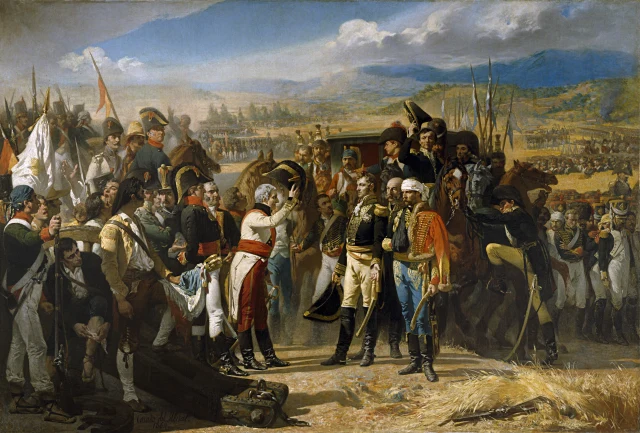
He was a history painter in the decades when Spanish governments bought large canvases of the national past for their ministries and museums. He painted the surrender of Bailén, where a Spanish army forced a French corps to capitulate in 1808, and in 1862 the oath of the Cortes of Cádiz, which still hangs in the Spanish parliament.
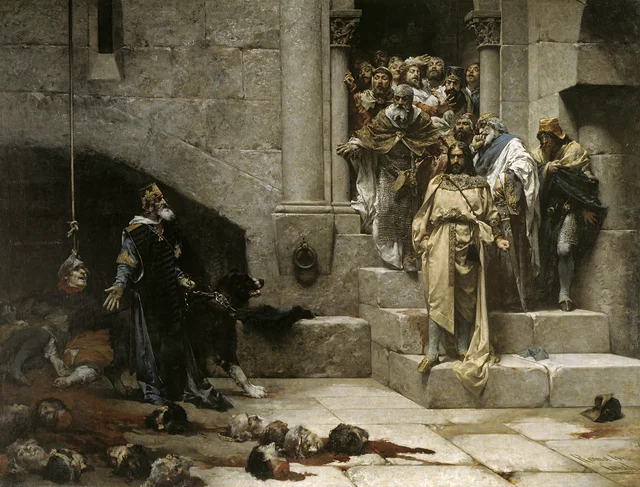
Then came the Bell of Huesca, a 12th-century legend in which King Ramiro II of Aragon is said to have had rebellious nobles beheaded and their heads laid out in a ring. He showed it at the national exhibition of 1881, and the reception disappointed him enough that he gave up the Rome directorship the same year. He died in Madrid in 1886, the year after his election to the San Fernando academy.