Josef Grassi
1757–1838 · Austrian Empire · Neoclassicism, Academic art
The story
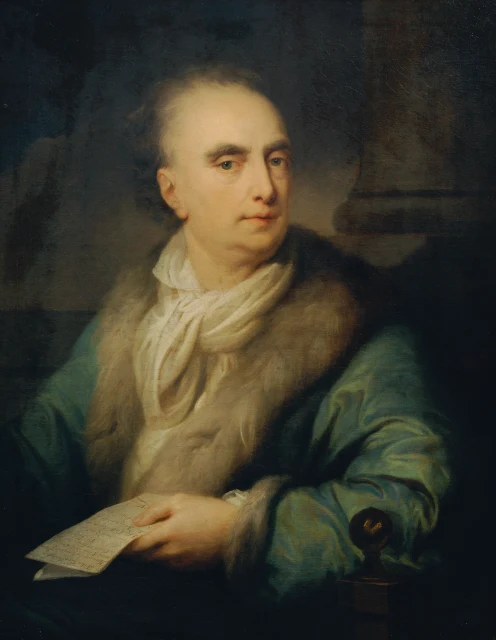
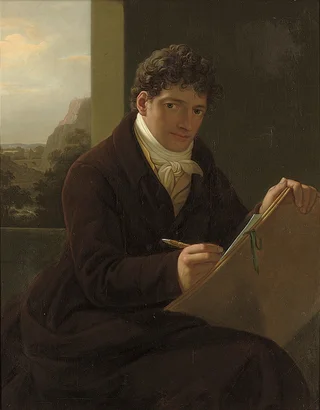
In April 1794 Warsaw rose against its Russian garrison, and a Viennese portrait painter found himself in a city at war. Josef Grassi had come to Warsaw in 1791 and done well painting the Polish aristocracy. He left the war zone with help from Tadeusz Kościuszko, the general leading the uprising, whose portrait he had painted.
Grassi was the son of a goldsmith from Udine who had settled in Vienna. At the Vienna Academy he lost a travelling scholarship to Heinrich Füger, who went on to become the city's leading portraitist, and he felt unfairly treated. In Warsaw he found the steady work Vienna had not given him. His best-known portraits there are of the two Polish military heroes of the age, Kościuszko and Prince Józef Poniatowski, the king's nephew and later a marshal of Napoleon, and he painted each of them more than once.
In 1799 Grassi became a professor at the Dresden Academy, and from 1816 to 1821 he oversaw the young Saxon artists studying in Rome. His soft, graceful portraits of women were much admired in his lifetime. The one still widely known is his portrait of Queen Louise of Prussia, painted in 1804 and kept at Charlottenburg Palace in Berlin.