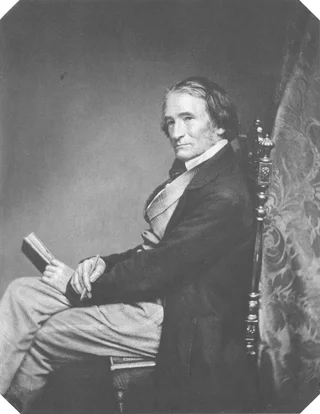
Joseph Karl Stieler
1781–1858 · Kingdom of Bavaria · Neoclassicism
The story
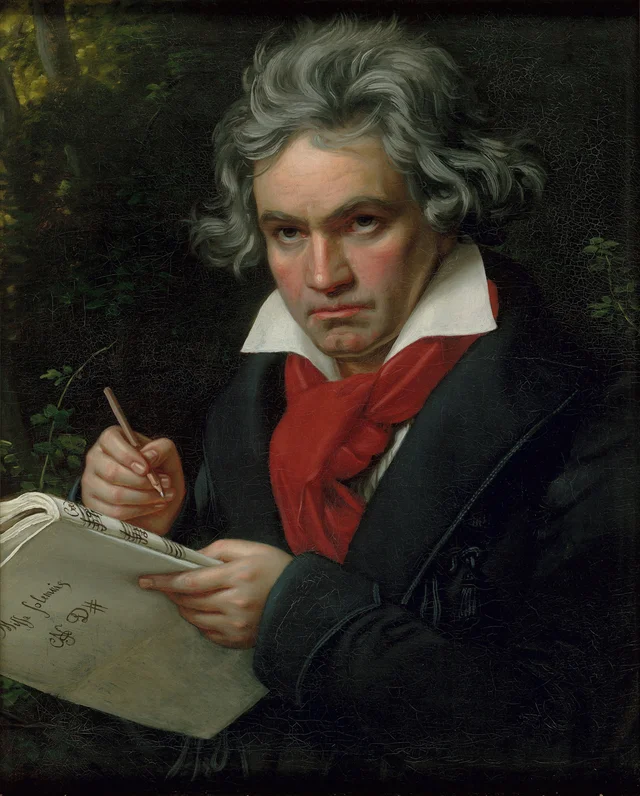
When you picture Beethoven — the wild hair, the fierce stare, the red scarf — you are almost certainly picturing a painting Joseph Karl Stieler made over a few weeks in early 1820. It is the only portrait the composer is known to have sat for, and even then he was a restless model. Stieler had to finish the hands from memory later. He put a manuscript in Beethoven's grip, the Missa Solemnis, the sacred work the composer was wrestling with just then.
Stieler was by that point court painter to the kings of Bavaria in Munich, a post he held for decades. Much of the job was flattery of a refined kind. King Ludwig I set him to paint the Gallery of Beauties, three dozen portraits of the most beautiful women the king could find in his realm, from duchesses to a shoemaker's daughter, hung together at Nymphenburg Palace on the edge of the city.
He painted the aging poet Goethe too, in 1828. Most of those faces are known now only to specialists. The one of Beethoven, glowering over his pencil and his half-finished Mass, became the image printed on concert posters and record sleeves for the next 200 years.