Juan de Pareja
1606–1670 · Spain · Baroque
The story
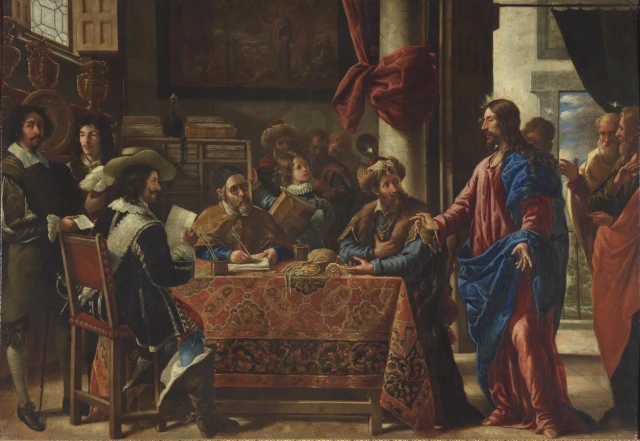
At the far left of The Calling of Saint Matthew, painted in 1661, a man in black stands slightly apart from the biblical scene and looks straight out at you, holding a slip of paper with his name and the date on it. That is Juan de Pareja, then in his fifties, putting his name into the picture twice over, once written and once as his own face.
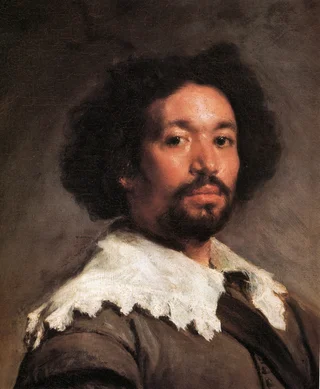
He was born in Antequera, in Andalusia, in the first decade of the 17th century, of African descent and enslaved. From the early 1640s he appears in the Madrid household of Diego Velázquez, court painter to Philip IV, grinding colours, preparing canvases and witnessing legal papers for him, and in 1649 he travelled with Velázquez to Italy. In Rome on 23 November 1650 Velázquez signed a letter of freedom for him that took effect only after four more years of service, on condition that he neither ran away nor committed a crime. Pareja became free in 1654. The charming version of the story, written down about half a century later by the painter Antonio Palomino, has him painting in secret and winning his freedom when the king saw a canvas. The four-year contract is the document that survives, in a Roman archive.
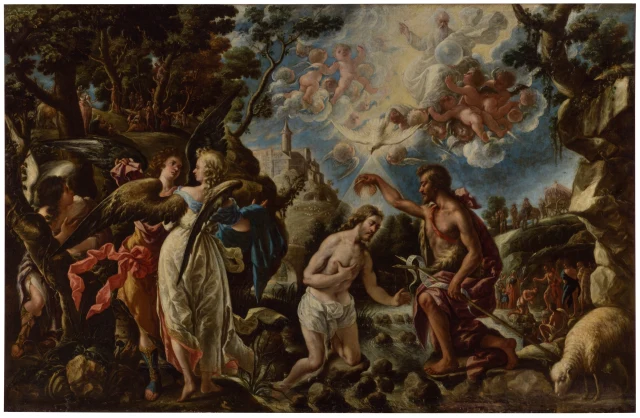
After Velázquez died in 1660 Pareja worked for himself in Madrid for ten years, on religious commissions and portraits, and he signed them plainly. His Baptism of Christ of 1667 runs over three and a half metres wide, painted for a Trinitarian convent in Toledo, with his name and the year cut into the rock in the lower left corner. Since the 1870s it has hung in the provincial museum in Huesca, on loan from the Prado.