Juan Sánchez Cotán
1560–1627 · Spain · Baroque, Realism
The story
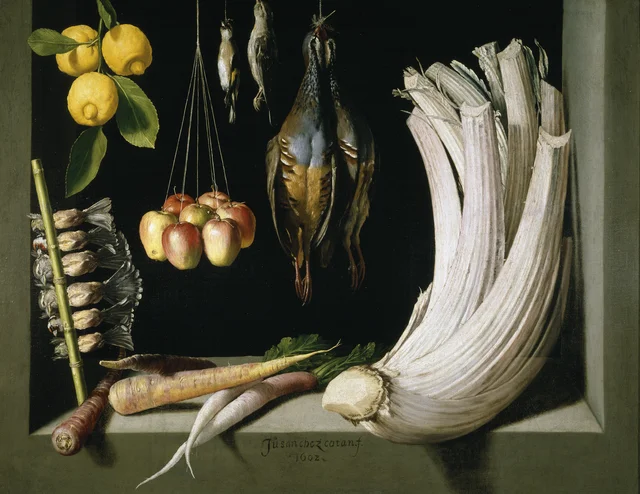
Around 1602, in the Spanish city of Toledo, Juan Sánchez Cotán was painting something almost no one in Europe had thought worth a large canvas: a quince and a cabbage hanging on strings, a melon cut open, a cucumber, all set on a plain stone ledge against a black void. Ordinary kitchen food, arranged with the care usually reserved for saints.
The hanging was practical before it was strange. Cooks suspended fruit and vegetables in a cool, dark larder window to keep them fresh, and Cotán simply painted what he saw, each object lit as if it mattered enormously. These bodegones, named for the Spanish word for a pantry or cheap eating-house, are among the earliest true still lifes in European art.
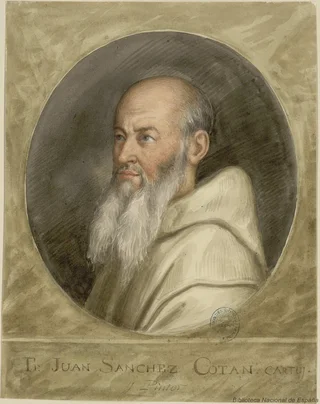
In 1603, at the height of this work, he gave up his workshop and possessions and entered the Carthusian order as a lay brother, a monk under the humblest vows. He kept painting inside the monastery, mostly religious pictures now, and spent his last years at the great charterhouse of Granada in southern Spain, where he died in 1627. Historians have long tied the bare, almost devotional stillness of his food paintings to the austere life he was about to enter.