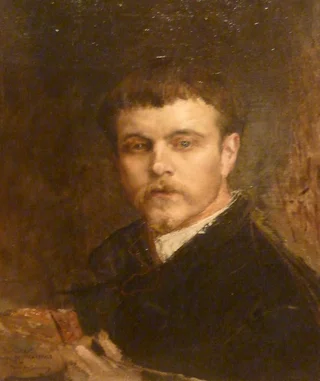
Jules Bastien-Lepage
1848–1884 · France · Naturalism
The story
In the 1870s French painting was arguing about how to show the countryside. The Impressionists were dissolving it into light, while Jules Bastien-Lepage, a farmer's son from the village of Damvillers near the German border, went another way, painting peasants at full life size with the seriousness once reserved for saints and kings.
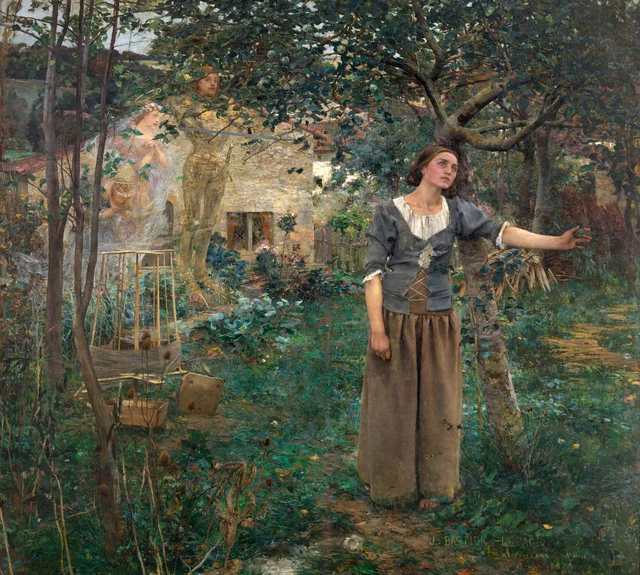
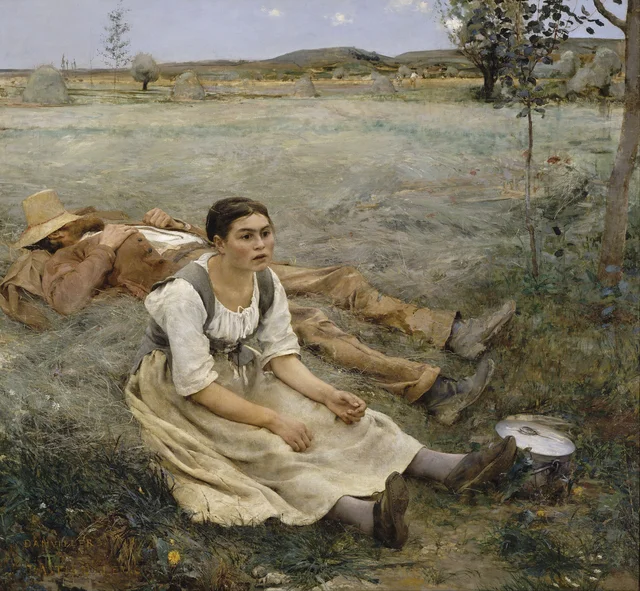
His breakthrough came at the Paris Salon of 1878 with 'Les Foins', 'Haymaking', showing two exhausted labourers slumped in a mown field at midday, the woman staring blankly past the viewer. Almost overnight it made him the leader of the movement called Naturalism. A year later he painted Joan of Arc as a barefoot peasant girl in her parents' garden in Lorraine, at the moment the voices reach her; critics admired the girl and complained about the faint saints he floated among the trees behind her.
Bastien-Lepage came from the same corner of France as Joan, and had lived through its invasion by the Prussians in 1870. He died of stomach cancer in 1884, only 36 years old, at the height of a fame that had rivalled the Impressionists' and then faded as their story took over the century.