Jules-Élie Delaunay
1828–1891 · France · Academic art, Neoclassicism, History painting
The story
When Gustave Moreau, the Symbolist painter of Salome, began teaching at the École des Beaux-Arts in Paris in 1891, he took over the studio of his old friend Jules-Élie Delaunay, who had just died. The two had grown close in Italy in the late 1850s, when both were studying the Renaissance masters.
Delaunay, a Prix de Rome winner from Nantes, spent years on one picture born in Rome. The first drawings for The Plague in Rome date from 1857, prompted by an old fresco of an epidemic in the Roman church of San Pietro in Vincoli, and he showed the finished canvas at the Salon of 1869. It now hangs in the Musée d'Orsay. Much of his career went into public walls, with panels for the new Paris Opéra and scenes of Saint Genevieve, the city's patron saint, facing Attila for the Panthéon, a cycle still unfinished when he died.
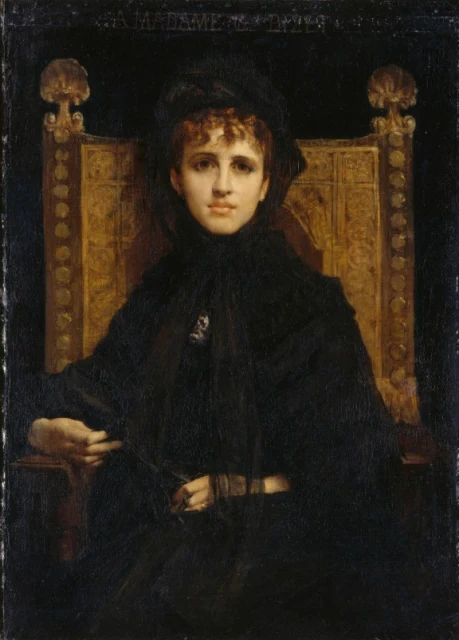
He was also a fine portraitist. His 1878 portrait of Geneviève Halévy, the widow of the composer Georges Bizet, came to the French national collections in 1927 through her own bequest. She was one of the women Marcel Proust drew on for his Duchesse de Guermantes.