Julio Romero de Torres
1874–1930 · Spain · Symbolism
The story
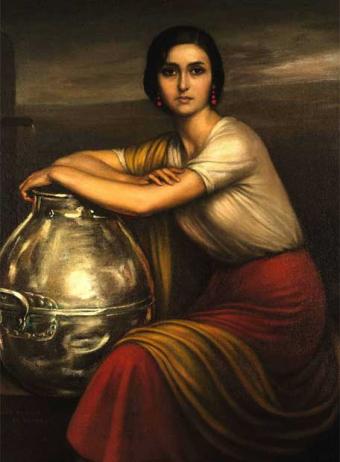
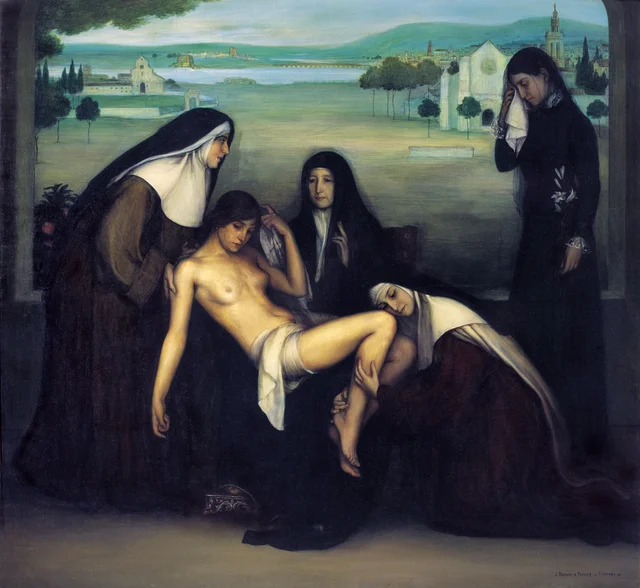
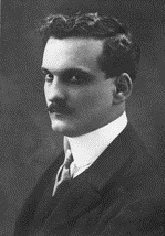
Julio Romero de Torres was born in 1874 inside the Fine Arts Museum of Córdoba, where his father was the founding director, and the city never left his painting. He grew up among its galleries and workshops, learned to draw from his father, and spent his career moving between Córdoba and Madrid while returning again and again to the same subjects: dark-eyed Andalusian women, set against the walls, courtyards and skyline of his home town.
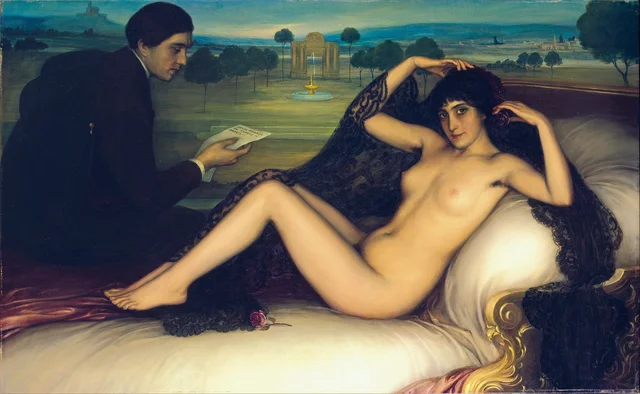
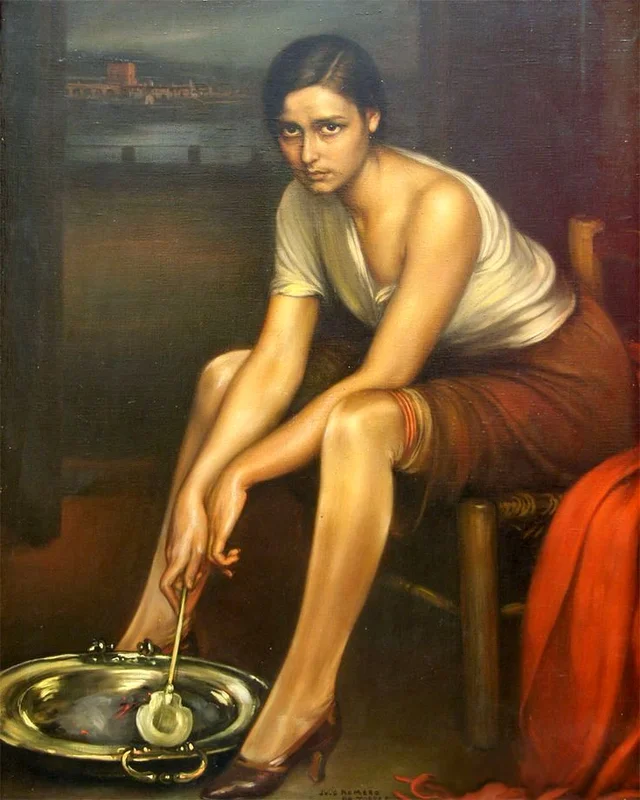
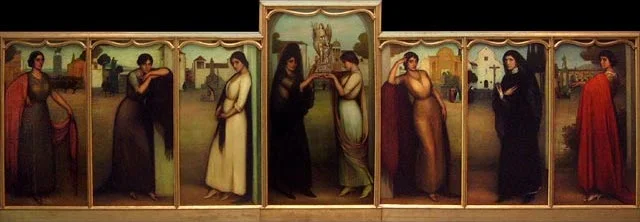
His manner mixes sober realism with a quiet symbolism. The figures, still and enigmatic, often carry an air of melancholy or veiled desire. Works like the 1913 triptych 'Poema de Córdoba' and the much-reproduced 'La chiquita piconera', a girl warming herself at a brazier, made him one of Spain's best-loved painters in the years around 1920, admired by writers such as the novelist Ramón del Valle-Inclán.
When he died in 1930, the whole of Córdoba turned out for his funeral. The city later turned the house where the family had lived into a museum devoted to him alone, and decades afterwards one of his images of an Andalusian woman was printed on the 100-peseta note that Spaniards carried in their pockets.