Kanō Sanraku
1559–1635 · Japan · Kyō-Kanō School
The story
In 1615 Osaka Castle fell, and with it the Toyotomi, the warlord family Kanō Sanraku had served since boyhood. He had started out as a page to Toyotomi Hideyoshi, the ruler of Japan, who noticed his drawing and sent him to Kanō Eitoku, head of the country's leading painting workshop. Eitoku adopted him, and under the name Mitsuyori he painted for Toyotomi castles and temples.
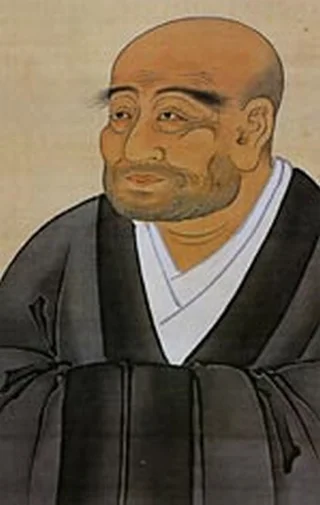
After Osaka, a man so closely tied to the losing side withdrew. He shaved his head, became a Buddhist lay monk and took the name Sanraku. About four years later he was back at work in Kyoto, now for the new Tokugawa rulers, painting rooms in the imperial palace for the marriage of the shogun's daughter Tōfukumon'in to the emperor. A building from her palace quarters was later moved to Daikaku-ji, a temple in western Kyoto, and his large peonies on gold still fill its sliding doors.
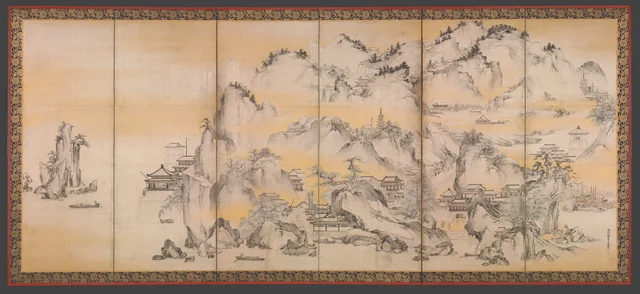
When the other Kanō masters followed the shoguns east to Edo, Sanraku stayed in Kyoto, and his line became known as the Kyoto Kanō. His Dragon and Tiger screens at Myōshin-ji temple show his forceful side. Jinshan Island and West Lake, a pair of folding screens from 1630 now in the Metropolitan Museum of Art, shows a calmer one, with two famous Chinese sights, an island temple on the Yangzi River and the lake at Hangzhou, in ink, colour and gold. He passed the Kyoto line to Kanō Sansetsu, his son-in-law and adopted heir.