Kanuty Rusiecki
1800–1860 · Russian Empire · Romanticism
The story
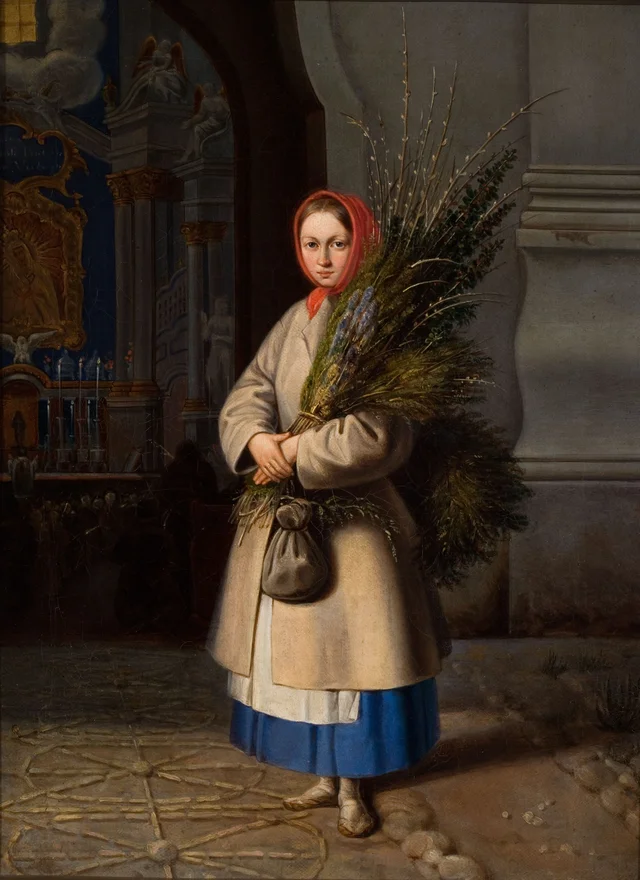
A young woman in Lithuanian peasant dress holds a bundle of pussy-willow branches, the "palms" Lithuanians carry to church on Palm Sunday. Kanuty Rusiecki painted her in Vilnius in the 1840s, along with The Reaper, a girl with a sickle in a rye field. They are still his most often reproduced pictures, and later generations read them as images of a Lithuania that held on to its customs under tsarist rule.
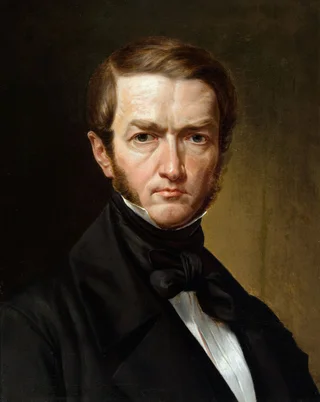
He reached these village subjects by a long road. After studying at Vilnius University under the painter Jan Rustem, he went to Paris in 1821 and then to Rome, where he spent most of the 1820s, studying at the Accademia di San Luca and in the workshop of the Danish sculptor Bertel Thorvaldsen. Back in Vilnius from 1831, he taught drawing at the city's Institute for the Nobility for more than 25 years, painted altarpieces and restored frescoes in small churches. His son Bolesław, also a painter, kept the studio together after his death in 1860, and through him the works reached museums in Lithuania, Poland and Belarus.