Karel Dujardin
1626–1678 · Dutch Republic · Dutch Golden Age painting
The story
Karel Dujardin painted the Netherlands as if it were Italy. Born in Amsterdam around 1626 and trained, it is said, under the Italianate landscapist Nicolaes Berchem, he crossed the Alps young and fell in with the Bentvueghels, the hard-drinking club of Northern artists in Rome who handed each newcomer a nickname. His was Barba di Becco, goat-beard.
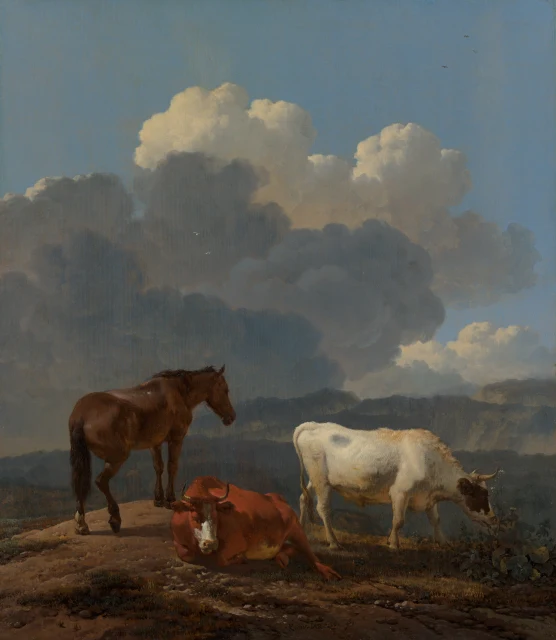
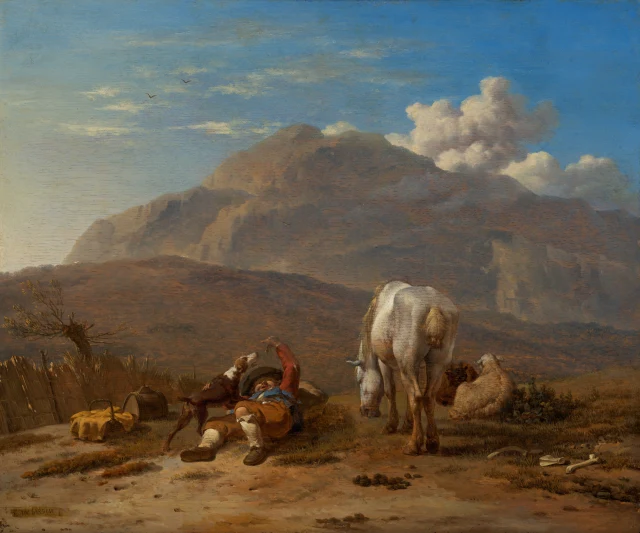
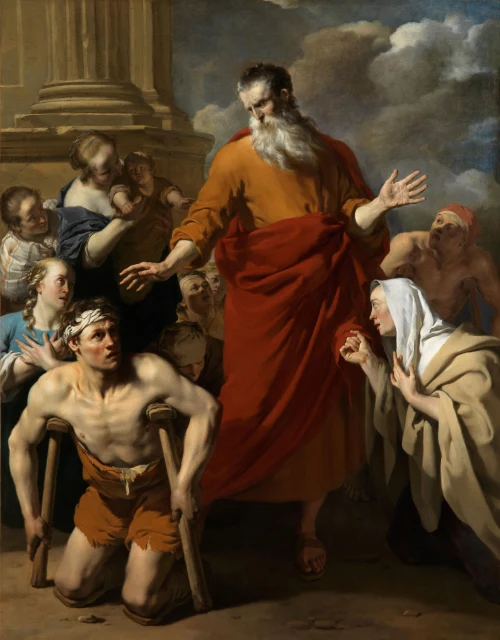
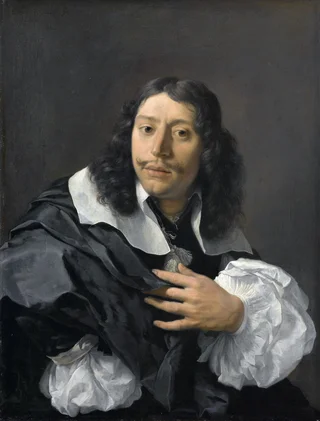
Most of his output is small and sunlit: shepherds resting on a warm road, cattle and goats against a low southern horizon, a smith shoeing an ox in clear Mediterranean light. Back in Holland he prospered and reached beyond the pastoral, into portraits, group scenes of Amsterdam almshouse governors, and religious subjects.
In 1678 the pull of Italy took him south once more. He reached Venice, lodged with a Dutch merchant there, fell ill with a fever in the house, and died. He was buried in the city on 9 October that year, far from the Amsterdam canals where he had begun.